Disconnected systems and AI hype are driving digital fatigue in shipping, warns OrbitMI


OrbitMI calls for technology and a second wave of AI that is truly collaborative and connects with existing workflows and keeps people in control
Shipping’s drive to digitalise risks slowing itself down as fragmented software, weak digital training and growing pressure to adopt artificial intelligence add complexity to operational and commercial decisions, according to OrbitMI.
OrbitMI warns that the sector is entering a period of ‘digital fatigue’: growing scepticism and frustration when technology fails to deliver the promised simplicity or measurable productivity and performance improvement gains. After years of adding platforms and bolt-on applications, many teams still transfer data manually, work across separate dashboards and adapt established processes to generic interfaces. This makes each new digital purchase harder to justify and can delay the adoption of technology that would deliver genuine value.
Egil Husby, Chief Executive Officer, OrbitMI, commented: “Shipping has accumulated technology faster than it has connected it. Commercial and operational teams may have access to more data than ever, yet still spend too much time moving between systems, reconciling conflicting information and deciding which alert matters. This creates more work at precisely the point when technology is supposed to support faster decisions.”
Evidence of this digital disconnect extends beyond system integration. The World Maritime University’s June 2026 study on digital skills surveyed 532 seafarers across 64 countries and interviewed 110 stakeholders. More than 80% of seafarers said they rarely or never receive digital-skills training, while only 13% said shore-based training consistently reflects the systems they encounter onboard. It is safe to assume that similar patterns apply for onshore staff. The findings show how investment in technology can be undermined when the people expected to use it are not given relevant preparation.
AI is adding another source of uncertainty. Research by Thetius and Marcura found that 82% of maritime professionals believe AI can improve efficiency and 81% are running pilots, but only 11% have the policies and governance needed to scale it. Two-thirds are concerned that overreliance on AI could erode human judgement, while 69% worry it may miss critical red flags in contracts or voyage planning. If AI is applied without clear objectives, appropriate governance or access to reliable and trusted operational data, it risks becoming another disconnected layer.
“The first wave of AI tools can remove repetitive work and draw attention to important changes but provide little or no insight on how a recommendation was reached and when human validation is required,” Husby continued.
“Confidence will be lost quickly if AI just produces another layer of alerts or asks people to trust outputs they cannot verify. What users need are tools that are truly collaborative and are fully integrated in their workflows; always present but never intrusive. This is the second wave of AI.”
OrbitMI argues that the next phase of maritime digitalisation should focus on making the technology already in use more coherent. Operators need systems, data feeds and reports to work together within a workspace aligned with their own commercial and operational processes. Effective decision support should identify what requires attention, explain why it matters and recommend a practical response while there is still time to influence the outcome.
Critically, human expertise remains central to that model. Managing a voyage can be a very complex process, and balancing its objectives and constraints is sometimes more an art than a science. Therefore, the operations manager needs to stay in control. Specialists such meteorologists and marine engineers can provide context, advice and verification when a decision requires an operational judgement call. AI should be used selectively to reduce manual work and improve access to relevant information, with responsibility for the final decision remaining with the operator.
OrbitMI has been investing in this approach through the acquisition of AI specialist AuQub and maritime advisory and voyage optimisation business Gale Force, alongside the expansion of its maritime, product and technology leadership over the past 18 months. These investments are shaping the company’s response to the fragmentation and loss of confidence that underpin digital fatigue.
OrbitMI will unveil a new platform in the coming weeks that will redefine the way ship owners and operators harness the power of their data for commercial and operational decisions. The new platform will connect operators’ existing systems and data within a workspace built around their own workflows, combining proactive, AI-supported recommendations with access to human maritime expertise.



Related News.

Beyond Technical Skills: WISTA Cyprus explores the human side of leadership
WISTA Cyprus hosted The Art of Leadership & Emotional Mastery, an interactive workshop held on 15 October at the Alasia Hotel in Limassol,…
The human cost of sending merchant mariners into war zones extends far beyond the immediate danger of missiles and drones. It raises a harder question: who is really protecting the seafarer?
Who protects the seafarer? I have spent much of my professional life at sea. I am a Master Mariner. I have stood on the bridge, made decisions…

Loss of bridge control: Human failure is normal – context is key
When bridge control is lost in a functioning system, it can be easy to blame human error. But accidents rarely happen because of one mistake…

Danish Shipping announces the transport of live animals by sea new rules should improve safety for animals, seafarers and the environment
Revised rules on the transport of live animals by sea are being negotiated in the EU. Danish Shipping wants to ensure good animal welfare,…

Japan’s flawed shipping proposal leaves developing countries adrift
A new analysis by Opportunity Green warns governments of the wide-ranging risks posed by Japan’s proposal at the International Maritime Organization…

Intermodal Report Week 42 2026
Pls find below the Intermodal Report - Week 42 2026 Intermodal Report Week 42 2026

Allied Weekly Market Review Week 42
Pls find below the Allied - Weekly Market Review - Week 42 ALLIED - Weekly Market Report- Week 42
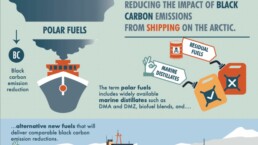
EU Arctic Strategy NGOs welcome EU ambition on on cutting shipping’s Arctic Black Carbon Emissions
Responding to today’s publication of the EU’s Arctic Strategy, which definitively states the EU’s intention to support International Maritime…

The final quarter of 2026 is expected to see softer bauxite flows
Chinese front-loading is expected to have run its course, pointing to softer bauxite flows in 2026 Q4. Global bauxite flows increased by 2.8% y/y…

DP World Foundation and Belewan new container terminal mark groundbreaking of AED 3.7 million school project in Indonesia
Classrooms of Hope initiative expands to Belawan, Medan with a new junior high school designed to provide modern learning facilities and greater…
Subscribe to our newsletter!
if you dont want to swim alone in the ocean of news, sign up for the newsletter, and you will receive daily all the important news of world shipping!
