
A new analysis by Opportunity Green warns governments of the wide-ranging risks posed by Japan’s proposal at the International Maritime Organization , ahead of adoption negotiations on the Net-Zero Frameworkthis November and December in London.
Japan’s latest proposal for changes to the NZF would significantly alter the agreed policy architecture, undermining even further the chances of making the 2023 Revised Strategy a reality. The primary changes involve: removing the Net-Zero Fund, the key pillar of “economic measure”; making the purchase of Surplus Units (SUs) the primary mechanism for addressing compliance deficits; and introducing an industry-led “direct contribution” as a global financing mechanism.
Opportunity Green highlights four interconnected risks for IMO member states in this scenario:
- Scrapping a just and equitable transition: A global IMO Fund is the tool to ensure climate vulnerable developing countries are supported in shipping’s clean transition, which countries committed to under the Revised Strategy. As it stands, the NZF would generate $10-15bn in additional, predictable compliance revenue to help countries meet their needs: investments in zero-emission ship technologies and energy and more resilient trade infrastructure. Removing the Fund also means losing the enforcement mechanism for the Framework.
- Depriving countries of the power to shape the maritime transition: Replacing the Fund with “direct contributions”, a system where companies are in charge of deciding where revenues are directed, effectively transfers decision-making power to companies. It could result in larger fleet owners paying compliance revenues back into their own supply chains and infrastructure, as opposed towards the needs of the global sector or climate vulnerable developing countries.
- Weakening incentives for zero-emission energy: Using SUs for compliance would undermine incentives for early uptake of zero-emission energy and fuels, allowing companies to effectively pay to pollute instead of investing in their transition.
- Undermining emission reduction: Weak incentives for zero-emission energy and fuels would also mean prolonged use of high-emitting fuels such as fossil-based liquefied natural gas (LNG) and biofuels in the industry. This would mean shipping cannot meet the emission reduction targets countries have committed to.
At the upcoming round of negotiations in November and December, countries are urged to retain key principles of the NZF and adopt the agreement in its current form to keep a fighting chance of meeting the IMO Revised Strategy and support states in meeting their international legal obligations on climate change.
Em Fenton, Senior Director at Opportunity Green, said:
“Under Japan’s proposal, countries would be forced to concede the power to shape the global maritime transition to the private sector, with no safeguards or guarantees to deliver justice and equity. It’s like giving up the driving seat and letting big businesses not just hold the wheel but also pick the route. The ones set to lose the most are climate vulnerable and developing countries in the global majority. The Net-Zero Framework as agreed in April last year is the best, fairest and most effective solution on the table that can still drive the clean transition.”



Related News.

Beyond Technical Skills: WISTA Cyprus explores the human side of leadership
WISTA Cyprus hosted The Art of Leadership & Emotional Mastery, an interactive workshop held on 15 October at the Alasia Hotel in Limassol,…
The human cost of sending merchant mariners into war zones extends far beyond the immediate danger of missiles and drones. It raises a harder question: who is really protecting the seafarer?
Who protects the seafarer? I have spent much of my professional life at sea. I am a Master Mariner. I have stood on the bridge, made decisions…
Loss of bridge control: Human failure is normal – context is key
When bridge control is lost in a functioning system, it can be easy to blame human error. But accidents rarely happen because of one mistake…
Danish Shipping announces the transport of live animals by sea new rules should improve safety for animals, seafarers and the environment
Revised rules on the transport of live animals by sea are being negotiated in the EU. Danish Shipping wants to ensure good animal welfare,…

Intermodal Report Week 42 2026
Pls find below the Intermodal Report - Week 42 2026 Intermodal Report Week 42 2026
Allied Weekly Market Review Week 42
Pls find below the Allied - Weekly Market Review - Week 42 ALLIED - Weekly Market Report- Week 42
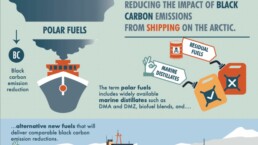
EU Arctic Strategy NGOs welcome EU ambition on on cutting shipping’s Arctic Black Carbon Emissions
Responding to today’s publication of the EU’s Arctic Strategy, which definitively states the EU’s intention to support International Maritime…
The final quarter of 2026 is expected to see softer bauxite flows
Chinese front-loading is expected to have run its course, pointing to softer bauxite flows in 2026 Q4. Global bauxite flows increased by 2.8% y/y…
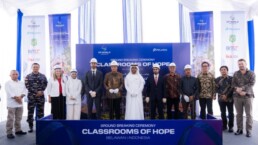
DP World Foundation and Belewan new container terminal mark groundbreaking of AED 3.7 million school project in Indonesia
Classrooms of Hope initiative expands to Belawan, Medan with a new junior high school designed to provide modern learning facilities and greater…

Chapman Freeborn named Air Charter Broker of the Year at Payload Asia Awards 2026
Chapman Freeborn has been named Air Charter Broker of the Year at the 13th Payload Asia Awards, held on 19 October at the Four Seasons Hotel…
Subscribe to our newsletter!
if you dont want to swim alone in the ocean of news, sign up for the newsletter, and you will receive daily all the important news of world shipping!
