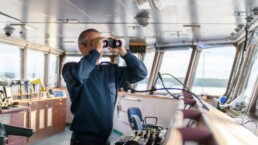

When bridge control is lost in a functioning system, it can be easy to blame human error. But accidents rarely happen because of one mistake alone. Procedures, system design, fatigue, workload, communication and established ways of working can all set people up to fail. Understanding context is key to preventing the next accident.
As investigators stated in one of the accidents featured in this series, human failure is normal and often predictable. The challenge for shipping companies is to understand where it can occur, what makes it more likely, and how humans can be supported to make it less likely.
Risk assessments for safety-critical tasks should therefore identify not just what can go wrong, but also the conditions that make mistakes more or less likely. These are often referred to as performance influencing factors, or PIFs.
Several were present in the accidents discussed in the previous article of this series, where system settings by the crew appeared to be the obvious cause. Looking closer, however, important context emerges.
When routine becomes risky
A misplaced feeling of confidence can occur when a task has been repeated many times without any problems. That appears to have been a factor in the bridge wing joystick case referred to in our previous article. The transfer of control to the bridge wing had a documented procedure but was not followed by experienced crew who had performed the task many times before. Systems that function without problems 99.9 per cent of the time can breed complacency, leading even experienced operators to treat safety critical situations as routine.
Companies may wish to review the extent to which bridge teams conduct briefings prior to entering confined or congested waters. They provide an opportunity for reminders around the safety criticality of bridge control settings.
When local practice replaces procedure
The way things are normally done on board can gradually become accepted practice, even when it differs from the documented practice. This seems to have been the case in the misconfigured steering gear casewhere the crew had formed their own understanding of the correct set-up for emergency steering. This created a latent risk that remained hidden until conditions aligned for an accident.
As mentioned in the first article in this series, emergency steering gear room drills are mandated every three months, which provides regular opportunity to verify correct procedures.
Signage and ergonomics make a difference
Staying with the same case, the signage for “emergency operation” in the steering gear room appears to have contributed to the misunderstanding. The illumination on the panel in the bridge wing joystick case caused confusion as to whether the joystick was active or not. Effective signage and design should support rapid and unambiguous identification of control authority.
Make procedures work in practice
Procedures were also a factor in some of the accidents. In one case, weaknesses in the bridge-to-engine-room control transfer process contributed to a fishing vessel engaging full ahead propulsion while alongside. In other cases, bridge cards contained steps that might have prevented the situation from escalating, but crews did not recall, understand or apply them. Critical steps should be easy to find and understand, not buried in long procedures.
Pressure and fatigue changes performance
Many of the featured accidents unfolded within minutes, creating intense cognitive workload and time pressure. Once control appeared to be lost, operators were required to diagnose the problem, assess risks, communicate, and take corrective action simultaneously. The cases demonstrate how rapidly performance can degrade when crews face unfamiliar situations under pressure.
Fatigue was found to be a factor in at least two cases. In the naval vessel collision case, for example, acute fatigue affected the crew’s ability to respond to the perceived loss of steering. It was also found that fatigue amongst crew was not being actively addressed. Investigators made reference in the report to STCW rest requirements; however, records may not always reflect actual conditions experienced by crew.
Communication matters
Distraction, interrupting attention to a task, was seen as a contributory factor in some of the accidents. Interestingly, the inquiry into the reef grounding case did not find this to be a factor. This was despite the watch officer being asked by his supervisor about drills around a minute before the critical course alteration, and after a period in which the watch officer had manoeuvred the vessel in and out of autopilot many times. In the bridge wing joystick case, the master and second mate each assumed that the other would perform the last check to confirm the joystick was active. There was no closed-loop communication for this safety-critical step.
Human-Machine interface
Modern bridge systems and human-machine interface can help crews operate vessels safely, but increasing integration can also make it harder to understand which system or position has control. Several accidents involved exactly this confusion.
The investigation into the fishing vessel engaging full ahead propulsion while alongside considered rules designed to prevent an unsafe synchronisation between control stations. Class approval was based on rule interpretation and a factory acceptance test. Design considerations may therefore sit more remotely from user experience and system functionality in practice.
The cases highlight the need for clearer mode indication, stronger safeguards against unintended transfers, and system designs that minimise the risk of confusion. Crew feedback on the usability of control systems and how they interact can identify where human-machine interface or ergonomic adjustments ought to be made. Companies should encourage a speak-up culture and especially in the case of safety-critical control systems.
Opportunity to learn and practice
Several investigations found deficiencies in familiarisation or understanding of the systems being used. Even experienced mariners may rarely encounter unintended transfers, or mode confusion in real operations. Written procedures are important, but with safety critical systems, operators need practical experience in recognising and recovering from a loss of control in functioning systems.
Many drills focus on typical mechanical or electrical failures, but atypical scenarios brought about by the crew’s own system settings can also test diagnostic skills for identifying what system is actually controlling the vessel.
Companies can also learn a lot from near misses. In the bridge wing joystick case, the investigators discovered earlier incidents involving the joystick system under previous ship managers. Looking for the performance influencing factors in high severity potential near misses can provide important context to what may first appear as obvious human failure.
Concluding thoughts
Capturing user experience to avoid accidents continues to serve the airline industry well. However, ships are not like aircraft in terms of levels of standardisation. This makes it more challenging for crew working on different vessels to learn and remember individual features.
As we have seen in some of the accidents, it was a challenge for the crew to diagnose problems, and their response sometimes aggravated rather than mitigated the situation. More recently, aircraft have been fitted with a verbal warning system – a human voice that alerts the cockpit offering clear, unambiguous directions at the time of need. Perhaps therein lies some inspiration for helping crew avoid situations brought about by their own system settings, or for taking the right steps when the system does fail.



Related News.
Beyond Technical Skills: WISTA Cyprus explores the human side of leadership
WISTA Cyprus hosted The Art of Leadership & Emotional Mastery, an interactive workshop held on 15 October at the Alasia Hotel in Limassol,…
The human cost of sending merchant mariners into war zones extends far beyond the immediate danger of missiles and drones. It raises a harder question: who is really protecting the seafarer?
Who protects the seafarer? I have spent much of my professional life at sea. I am a Master Mariner. I have stood on the bridge, made decisions…

Danish Shipping announces the transport of live animals by sea new rules should improve safety for animals, seafarers and the environment
Revised rules on the transport of live animals by sea are being negotiated in the EU. Danish Shipping wants to ensure good animal welfare,…

Japan’s flawed shipping proposal leaves developing countries adrift
A new analysis by Opportunity Green warns governments of the wide-ranging risks posed by Japan’s proposal at the International Maritime Organization…

Intermodal Report Week 42 2026
Pls find below the Intermodal Report - Week 42 2026 Intermodal Report Week 42 2026

Allied Weekly Market Review Week 42
Pls find below the Allied - Weekly Market Review - Week 42 ALLIED - Weekly Market Report- Week 42
EU Arctic Strategy NGOs welcome EU ambition on on cutting shipping’s Arctic Black Carbon Emissions
Responding to today’s publication of the EU’s Arctic Strategy, which definitively states the EU’s intention to support International Maritime…

The final quarter of 2026 is expected to see softer bauxite flows
Chinese front-loading is expected to have run its course, pointing to softer bauxite flows in 2026 Q4. Global bauxite flows increased by 2.8% y/y…

DP World Foundation and Belewan new container terminal mark groundbreaking of AED 3.7 million school project in Indonesia
Classrooms of Hope initiative expands to Belawan, Medan with a new junior high school designed to provide modern learning facilities and greater…

Chapman Freeborn named Air Charter Broker of the Year at Payload Asia Awards 2026
Chapman Freeborn has been named Air Charter Broker of the Year at the 13th Payload Asia Awards, held on 19 October at the Four Seasons Hotel…
Subscribe to our newsletter!
if you dont want to swim alone in the ocean of news, sign up for the newsletter, and you will receive daily all the important news of world shipping!
