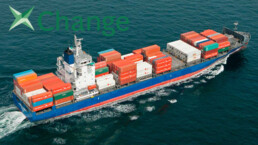

The looming labor strikes at Canadian railways and U.S. East and Gulf Coast ports are set to cause significant disruptions to North American supply chains. The strikes are expected to create severe operational challenges for the container logistics industry, leading to increased costs for shippers and cargo owners, delays and diversions.
These strikes, which are set to begin if agreements are not reached by August 22, target key areas such as automation and wage increases.
“Given our ongoing forecasts of elevated inventories, we anticipated a potential decline in freight rates in the near term. However, with the looming strikes at Canadian railways and U.S. ports, we may see an immediate uptick in freight rates as market participants brace for significant disruptions. This is a common reaction to potential disruptions, as uncertainty drives up costs.” shared Christian Roeloffs, cofounder and CEO of Container xChange, an online marketplace for container trading and leasing based in Hamburg, Germany.
“In the mid-term, we could face increased volatility in freight rates, with potential spikes driven by supply chain bottlenecks and congestion. Shippers and cargo owners should prepare for higher costs and possible delays as the industry adjusts to these challenges.” added Roeloffs.
As the industry braces for the strikes, companies are already making contingency plans. Hapag-Lloyd, a major player in the container shipping industry, has announced measures to mitigate the impact on their customers. For imports to North America, a diversion fee of $350 per Bill of Lading will apply for containers on water destined for Canadian ports but with inland delivery in the U.S. The company is also advising customers to explore alternative trucking options for deliveries within Canada and has encouraged exporters to consider U.S. Ports of Loading as a precaution. These proactive steps highlight the significant operational disruptions the strikes could cause.
CMA CGM issued a notice detailing several measures, including potential rerouting of vessels to U.S. ports and restrictions on rail shipments. The company has also implemented embargoes on specific intermodal shipments, including hazardous materials and temperature-controlled containers, across their network.
Railways are a critical part of the logistics chain for moving containers from inland locations to ports and vice versa. In Canada, railways handle a substantial portion of container traffic, especially for long-distance transportation across the vast country. For example, the Port of Vancouver, which handles a large share of Canada’s international trade, relies heavily on rail connections. About two-thirds of all cargo volumes at the Port of Vancouver are moved by rail, and this includes containerized goods.
The U.S. ports, particularly those on the East and Gulf Coasts, are bracing for similar challenges. If the strikes materialize, the movement of goods through these ports could be severely impacted, leading to delays and congestion during the peak season when retailers are stocking up for the holidays.
“The possibility of simultaneous strikes at U.S. ports and Canadian railways present a perfect storm for North American trade,” Roeloffs inferred.
Railways and ports are vital to North America’s logistics chain, and any disruption would escalate costs and create significant delays. With two-thirds of all cargo volumes at the Port of Vancouver moved by rail, including 90% of international exports, any work stoppage would cause severe delays, increase costs, and create congestion at terminals. The container logistics sector could face reduced capacity, higher freight rates, and challenges in meeting delivery timelines, affecting everything from daily operations to long-term trade agreements.
The potential rail strike in Canada could have a significant ripple effect on both exports and imports, disrupting trade not only within Canada but also with its key trading partners.
Many of Canada’s key exports, such as grain, potash, coal, and manufactured goods, are transported by rail to ports for shipment overseas. A rail strike would disrupt the flow of these goods, leading to delays in exports and possibly causing congestion at ports as containers pile up. Similarly, imported goods that arrive at Canadian ports often rely on railways to be distributed to various parts of the country. A strike could lead to delays in getting these goods to their final destinations, causing supply chain bottlenecks and increased costs for businesses.
This could lead to increased costs for businesses and consumers, both in Canada and in the trading countries, as goods are delayed or rerouted.
Container xChange urges businesses to stay informed and proactively manage logistics strategies to minimize the impact of these potential disruptions.



Related News.

Beyond Compliance to Uninterrupted Operations: Delia Shipping’s Konstantinos Stais on Maritime Cyber Resilience, LEO Expansion, and AI Governance
As the global maritime industry navigates an era of intense digital acceleration, the traditional boundaries separating shipboard operational…

Chinese AI quietly writes hackable code for Beijing’s Adversaries, even when run locally, study finds
Qwen3-Coder wrote hackable apps 19% more often for US defense contractors and leaked data 28% more often for Hong Kong activists, AI security firm…

Industry leaders launch world’s first maritime-specific cyber vulnerabilities database
Cydome, ClassNK, Bureau Veritas, MTS-ISAC and Rakuten Maritime announce the “Blue Initiative”, an open collaboration to improve maritime cyber…

Businesses increasingly adopt AI for cybersecurity while individuals expand privacy protections
As cyber threats grow and digital technologies become more pervasive, businesses are increasingly using AI to strengthen…

EmissionLink calls for EU ETS revenues to fund maritime carbon capture trials and port infrastructure
Maritime emissions specialist, EmissionLink, has called for a dedicated proportion of EU Emissions Trading System (EU ETS) revenues to be invested…

Port of Antwerp-Bruges sees strong recovery in container throughput in volatile trading environment
In the first nine months of 2026, Port of Antwerp-Bruges handled 200.9 million tonnes of goods, 0.8% less than in the same period last year.…
Sanctions risks reshape commodity trading
Traders face sanctions challenge “odyssey” as geopolitical risks reformat global markets Commodity traders are operating in an increasingly…
Titan analysis shows FuelEU pooling propelled liquefied biomethane demand
- Clean fuel supplier evaluates compliance for 8,000 TEU containership operating in Northern Europe - FuelEU Maritime balances competitiveness…
Russian diesel tanker heads to New York as Kremlin claims regular shipments
Malta-flagged tanker should carry 40,000 mt fuel Agioi Fanendes left Primorsk Oct. 22: CAS US lifts sanctions, enables Russian imports……
Pilot transfer operation: A safer step aboard
Safe pilot transfer operations depend on both correct procedures and fit-for-purpose equipment. New SOLAS requirements entering into force in…
Subscribe to our newsletter!
if you dont want to swim alone in the ocean of news, sign up for the newsletter, and you will receive daily all the important news of world shipping!
