Beyond Compliance to Uninterrupted Operations: Delia Shipping’s Konstantinos Stais on Maritime Cyber Resilience, LEO Expansion, and AI Governance


As the global maritime industry navigates an era of intense digital acceleration, the traditional boundaries separating shipboard operational technology (OT) from shoreside information technology (IT) are rapidly disappearing. Vessels are no longer isolated assets at sea; they have transformed into highly connected, data-rich nodes integrated directly into enterprise networks. However, this unprecedented connectivity—further accelerated by Low Earth Orbit (LEO) satellite constellations—emerges alongside acute geopolitical instability, sophisticated cyber threat vectors, and persistent electronic warfare threats such as GPS and GNSS spoofing across key trading corridors.
Meeting these operational realities requires maritime ICT leaders who view digital infrastructure not merely as a back-office support function, but as a critical pillar of vessel safety, risk management, and business continuity.
At the helm of this digital and operational transition at Athens-based Delia Shipping is Konstantinos Stais, the company’s Head of ICT & Security. Known for his pragmatic, governance-first approach to maritime digitalisation, Stais combines technical acumen with a keen understanding of fleet operations. Under his leadership, Delia Shipping has championed a lean, highly resilient, and cloud-first ICT infrastructure, embedding automated risk controls and board-sponsored Artificial Intelligence initiatives while fiercely safeguarding the human element aboard their vessels.
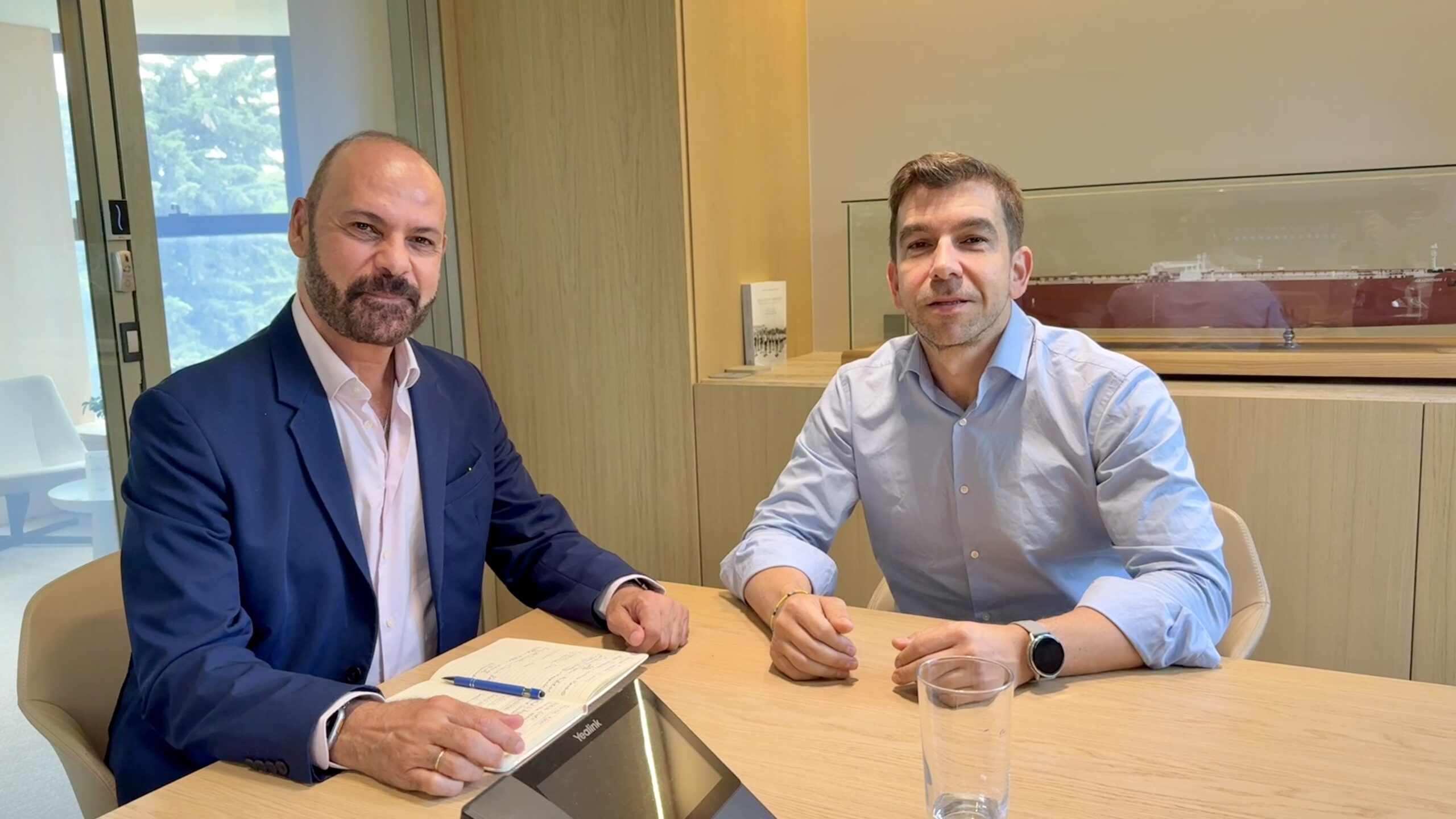
In an extensive dialogue with Adonis Violaris, Managing Director of CSN, Konstantinos Stais shares an insider’s perspective on defending fleets against collateral cyber fallout, mitigating navigation vulnerabilities, securing the ship-to-shore bridge, and why regulatory compliance must never be mistaken for true operational resilience.

Geopolitical Cyber Vectors and Collateral Risk
With maritime infrastructure increasingly targeted amid ongoing regional conflicts, what specific shifts have you observed in the frequency, scale, or sophistication of cyber threats directed at vessels and shoreside offices over the past 12 months?
The past 12 months have not necessarily brought a dramatic increase in successful cyber-attacks against shipping companies, but they have undoubtedly demonstrated a clear evolution in the sophistication, persistence, and professionalism of cyber threats. Phishing campaigns have become increasingly convincing, social engineering is now frequently enhanced by Artificial Intelligence, and attackers are investing significantly more time in reconnaissance before attempting to compromise an organisation.
At the same time, the current geopolitical environment has reinforced an important reality for our industry: shipping companies should be prepared to become collateral targets, even when they are not the intended objective of a cyber campaign. In today’s interconnected world, cyber risk extends well beyond geographical borders, making continuous vigilance and proactive risk management essential.
There is, however, a positive development. Across the maritime sector, cyber security has matured considerably. Regulatory requirements, stronger executive awareness, and increased investment have encouraged organisations to move beyond treating cyber security as a compliance obligation and instead recognise it as a core component of operational resilience and business continuity.
For me, the objective has never been to predict or prevent every possible attack. No organisation can realistically achieve that. The real objective is to build an organisation that can detect threats early, respond effectively, and recover quickly while maintaining safe and efficient operations. That resilience is created through sound governance, layered security, continuous improvement, and, above all, a culture where every employee understands that cyber security is not solely an ICT responsibility—it is a shared business responsibility. The question is no longer whether shipping companies will face cyber threats, but whether they have built the resilience, governance, and culture required to continue operating successfully when those threats inevitably arise.
Satellite Connectivity and GNSS Interference
The widespread instances of GPS/GNSS jamming and spoofing in volatile corridors like the Eastern Mediterranean and the Red Sea pose severe navigational and operational risks. How are your IT and fleet management teams mitigating these disruptions, and what backup systems are proving most resilient?
The increasing frequency of GPS/GNSS jamming and spoofing incidents, particularly in regions such as the Eastern Mediterranean and the Red Sea, has demonstrated how dependent modern shipping has become on reliable positioning and communications. While navigational decisions remain firmly under the responsibility of the bridge team, these developments require close collaboration between Marine, Technical, and ICT departments to ensure operational resilience.
The objective should never be to rely on a single technology or communication channel. Instead, resilience is achieved through a layered approach that combines diverse communication services, clearly defined contingency procedures, and close cooperation with trusted communications providers. Equally important is ensuring that crews understand how to operate safely under degraded conditions, should satellite services or positioning signals become unreliable.
These events also remind us of an important principle: digital information should support decision-making, but it should never replace professional judgement. Whether the challenge is a cyber incident, GNSS interference, or equipment malfunction, organisations should have procedures that allow anomalies to be recognised quickly, verified through alternative sources where possible, and escalated appropriately.
As digital connectivity continues to transform maritime operations, organisations must avoid creating single points of dependency. Building redundancy into communication services, maintaining practical fallback procedures, and regularly exercising contingency plans are equally important aspects of resilience. Reliable connectivity is a tremendous operational advantage, but the ultimate objective is not uninterrupted communications—it is uninterrupted operations, even when technology does not perform exactly as expected.

Managing the LEO Revolution
The rapid onboarding of Low Earth Orbit (LEO) satellite constellations has dramatically upgraded onboard bandwidth. How are you balancing the immense operational benefits of high-speed connectivity against the significantly expanded cyber-attack surface it introduces on board?
The rapid adoption of Low Earth Orbit (LEO) satellite networks is transforming maritime connectivity. Higher bandwidth and lower latency are enabling shipping companies to rethink the way they operate, from real-time collaboration with vessels and remote technical support to enhanced crew welfare and improved operational efficiency. In many respects, LEO connectivity represents one of the most significant digital enablers the industry has seen in recent years.
However, every improvement in connectivity also expands the potential attack surface. More connected systems, greater volumes of data, and increased remote access create additional cyber security considerations that must be addressed as part of the overall solution, rather than afterwards. The objective should not be to limit connectivity, but to deploy it within a secure, well-governed, and resilient architecture.
As organisations accelerate the adoption of LEO services, security should be embedded from the design stage. Strong network segmentation, secure remote access, continuous monitoring, and clear access governance remain fundamental principles, ensuring that operational benefits are realised without introducing unnecessary risk.
I also believe the maritime industry has an opportunity to engage more collectively with LEO service providers. Shipping companies often face similar operational challenges, security requirements, and connectivity expectations. By sharing feedback, operational experience, and common requirements, the industry can help providers better understand maritime needs and prioritise capabilities that strengthen both operational performance and cyber resilience. LEO technology is not simply changing how ships connect to shore—it is changing how shipping companies operate. The organisations that will gain the greatest value will be those that combine technological innovation with strong governance, ensuring that increased connectivity translates into increased resilience rather than increased exposure.

Securing the Ship-to-Shore Bridge
As vessels become highly interconnected, data-driven nodes within corporate networks, the distinction between operational technology (OT) on board and information technology (IT) ashore continues to blur. What strategy are you deploying to enforce strict network segmentation and prevent cross-contamination during a breach?
As vessels become increasingly connected to shoreside operations, the traditional boundary between Operational Technology (OT) and Information Technology (IT) continues to evolve. This convergence offers significant opportunities to improve operational efficiency, collaboration, and decision-making, but it also requires a fundamental shift in how cyber security is governed.
The objective is not to isolate ship and shore, but to ensure that connectivity is implemented securely and according to operational requirements. Network segmentation remains a cornerstone of any secure architecture, helping to separate critical onboard systems from business networks while ensuring that communication between environments is tightly controlled, monitored, and proportionate to operational needs.
However, technology alone is only part of the solution. Strong identity and access management, secure remote access, continuous monitoring, and well-defined incident response procedures are equally important. Every connection between ship and shore should be treated as a managed trust relationship rather than an inherently trusted pathway.
One of the biggest challenges I see across the industry is ownership. As IT and OT continue to converge, responsibility for cyber security can easily become fragmented between ICT, Technical, and Marine departments. During normal operations this may go unnoticed, but during an incident, uncertainty over roles, responsibilities, and decision-making can delay the response when time matters most. Establishing ownership should never be viewed as assigning blame; it is about enabling timely, informed, and confident decisions that protect both the vessel and the business.
Successful cyber security at the ship-to-shore interface is therefore not achieved through technology alone. It depends on governance, collaboration, and a shared understanding that cyber security is an operational responsibility spanning the entire organisation. Technology connects ships to shore; clear ownership is what keeps that connection secure.Beyond Paper Compliance to Operational Stress-Testing
Meeting the evolving cyber risk management standards set by the IMO, IACS, and incoming European directives requires continuous validation. How are you embedding hardware stress-testing and dynamic vulnerability assessments into your standard operating procedures rather than treating compliance as a paper-based exercise?
The maritime industry has made significant progress in strengthening cyber security through initiatives such as the IMO cyber risk management guidelines, the IACS Unified Requirements, and the evolving European regulatory framework. These developments have been instrumental in elevating cyber security from a technical concern to a recognised operational and business risk.
However, compliance should never become the primary objective. Producing policies, procedures, or audit evidence may satisfy regulatory requirements, but it does not automatically improve an organisation’s resilience. The real objective is to ensure that security controls remain effective under real operational conditions.
This requires cyber security to become part of everyday business operations rather than an annual compliance exercise. Regular vulnerability assessments, periodic reviews of critical systems, validation of backup and recovery procedures, incident response exercises, and the continuous evaluation of lessons learned all contribute to a cycle of continuous improvement. Equally important is defining measurable security objectives and regularly assessing whether implemented controls continue to reduce risk while supporting business operations.
As regulations continue to evolve, organisations should view compliance as a valuable framework rather than the destination. Mature cyber security programmes continuously adapt to new technologies, emerging threats, and changing operational requirements, regardless of audit schedules or regulatory deadlines. Compliance may satisfy an auditor, but continuous improvement is what protects a fleet. The organisations that will remain resilient are those that embed cyber security into everyday decision-making, measure its effectiveness, and treat it as an integral part of operational excellence.
The Human Defence Layer at Sea
Technology alone cannot fully secure a fleet if human literacy lags behind. In light of modern social engineering tactics and sophisticated phishing campaigns targeting crews on extended rotations, how are you updating seafarer training frameworks to build a resilient security culture at sea?
No technology can fully protect a fleet if the people operating it are not prepared to recognise, question, and respond to cyber threats. As phishing campaigns and social engineering attacks become increasingly sophisticated, organisations should move beyond viewing cyber awareness as a training programme and instead foster a genuine security culture.
Shipping already has a deeply embedded safety culture. Crews routinely assess risks, follow procedures, and make decisions that protect people, vessels, and cargo. Cyber security should become a natural extension of that same operational mindset rather than being perceived as a separate ICT responsibility or another compliance requirement.
Awareness initiatives therefore need to be continuous, practical, and relevant to everyday operations. Realistic phishing simulations, scenario-based discussions, and regular communication are far more effective than annual awareness sessions alone. The objective is not to create cyber security experts on board, but to help every individual recognise when something does not look right, understand the potential implications, and know how to respond or escalate the issue appropriately.
At Delia, one advantage of operating a relatively small fleet is the ability to maintain direct and personal communication with our Masters and crews. This allows cyber security to become an ongoing conversation rather than a periodic exercise. Equally important is creating an environment where people feel comfortable reporting mistakes or suspicious activity without fear of blame. In many cases, early reporting is the difference between a minor security event and a major operational disruption. Technology remains an essential part of cyber defence, but resilient organisations are built by people. The strongest security culture is one where every individual understands that protecting the business is a shared responsibility, both ashore and at sea.
Third-Party Risk and Supply Chain Governance
Modern shipmanagement heavily relies on interconnected external software, remote maintenance tools, and third-party vendor access. What protocols have you established to audit vendor software exposure and protect your corporate ecosystem from supply-chain vulnerabilities?
Modern shipping relies on a complex ecosystem of software vendors, equipment manufacturers, cloud providers, satellite communications partners, and remote support services. These partnerships are essential to improving efficiency and supporting daily operations, but every external connection also introduces a degree of cyber risk that must be understood and managed.
Managing that risk should begin well before a system is connected to the corporate environment. ICT and cyber security teams should be involved early in procurement discussions so that security requirements become part of vendor selection, contractual negotiations, and solution design, rather than being addressed after implementation. The earlier security is considered, the easier and more cost-effective it is to build resilient solutions.
Not every supplier presents the same level of risk, which is why vendor management should follow a risk-based approach. The level of assurance should reflect the criticality of the service, the sensitivity of the data involved, and the level of access granted. Particular attention should be given to remote access, ensuring that it is authorised, monitored, limited to the minimum privileges required, and enabled only for the time necessary to perform the agreed work.
Ultimately, third-party cyber risk is not about eliminating trust—it is about managing it responsibly. Strong governance, clear expectations, and open collaboration with suppliers create partnerships that support both operational efficiency and cyber resilience. In an increasingly connected maritime environment, security should be viewed as a shared responsibility between shipping companies and their technology partners.

Strategic AI Deployment in Lean Operations
Artificial intelligence is a double-edged sword, utilised by cybercriminals to automate attacks but also deployed by defenders for predictive maintenance and real-time threat detection. Where are you currently directing your targeted tech investments regarding AI-driven operational tools or automated security operations?
Artificial Intelligence is rapidly reshaping both cyber security and maritime operations. On one hand, it enables cybercriminals to develop more sophisticated phishing campaigns, automate attacks, and accelerate the discovery of vulnerabilities. On the other, it provides organisations with powerful opportunities to improve operational efficiency, strengthen decision-making, and enhance cyber resilience.
The real opportunity, however, is not simply adopting AI—it is applying it where it creates measurable business value. At Delia, Artificial Intelligence has become a strategic discussion at board level rather than remaining solely an ICT initiative. Our CEO strongly believes that AI will be one of the most significant enablers of change in the coming years and is fully committed to investing in this area. This executive sponsorship allows us to explore AI not as a technology trend, but as a business transformation opportunity.
Our strategy is not to replace existing systems simply because new technology is available. Instead, we aim to maximise the value of our current software landscape by leveraging AI to streamline workflows, automate repetitive tasks, improve reporting, extract better insights from data, and support faster, better-informed decision-making. Only after fully exploiting those capabilities would we consider broader system replacements.
AI is also changing what smaller organisations can achieve. By automating routine activities, making knowledge more accessible, and augmenting the capabilities of existing teams, AI enables lean ICT departments to deliver outcomes that previously required significantly larger organisations. However, AI should complement human expertise rather than replace it. Sound judgement, governance, and accountability remain essential, particularly in an industry where operational reliability, safety, and trust are paramount. The organisations that will gain the greatest value from AI will not necessarily be those that invest the most, but those that integrate it thoughtfully into their business processes. AI is a powerful accelerator—but its real value lies in enabling people to make better decisions, not in making decisions for them.
Disaster Recovery and Safe Continuity at Sea
In the event of a total communication blackout or a major ransomware deployment affecting a vessel in transit, what realistic, decoupled fallback procedures do your IT departments maintain to ensure continuity of navigation and safety of life at sea?
In shipping, disaster recovery is not simply about restoring IT systems—it is about ensuring the continuity of safe vessel operations. Whether the trigger is a ransomware attack, a prolonged communications outage, or another major disruption, the priority must always remain the safety of life at sea while enabling the business to continue operating with the least possible disruption.
True resilience is designed long before an incident occurs. It is built through sound architecture, clearly documented recovery procedures, regular testing, effective communication plans, and close collaboration between ICT, Technical, and Marine departments. When these foundations are in place, organisations can respond confidently and recover far more efficiently when unexpected events occur.
At Delia, we have deliberately designed our ICT environment to be lean, resilient, and independent of a physical office location. Our business-critical applications are either web-based or hosted on Microsoft Azure, enabling our teams to continue working effectively even if access to the office is unavailable. This flexibility forms a key part of our overall business continuity strategy rather than simply being a technology decision.
The same philosophy applies to our vessels. We have implemented multiple independent satellite communication services operating over different technologies, together with layered security controls and clearly defined fallback procedures for critical operations. Should one communication channel become unavailable, alternative services and established manual procedures allow the vessel to maintain safe operations and effective communication with shore.
Technology alone, however, is never enough. Recovery procedures should be simple, accessible, and regularly rehearsed. During a crisis, people rely on familiar processes and clear responsibilities rather than lengthy documentation. Regular exercises, post-incident reviews, and continuous improvement ensure that resilience evolves alongside the business. The objective is not to build systems that never fail, but organisations that continue to operate safely when individual systems do. In the maritime industry, resilience is measured not by avoiding every incident, but by maintaining safe operations, protecting people, and recovering quickly when disruption inevitably occurs.
The Outlook: Leadership and Adaptability
Looking ahead, what do you anticipate will be the single greatest technological or regulatory challenge facing maritime ICT and security officers across the Cyprus and Greece shipping clusters, and how should companies prepare today?
Looking ahead, I believe the greatest challenge facing maritime ICT and cyber security leaders will not be a single technology or regulatory requirement, but the pace of change itself. Artificial Intelligence, increasing vessel connectivity, evolving satellite communications, new regulatory frameworks, and an increasingly sophisticated cyber threat landscape are all evolving simultaneously. The real challenge is ensuring that organisations evolve with the same speed and discipline.
Technology is no longer the limiting factor. The differentiator will be leadership, governance, and the ability to adapt. Shipping companies must continue investing not only in modern infrastructure, but also in developing their people, strengthening their processes, and building organisations that can embrace change without compromising operational stability or safety.
One of the advantages of being a relatively small organisation is the ability to make decisions quickly and translate ideas into action without lengthy approval cycles. At Delia, we also benefit from strong executive sponsorship for technology initiatives. Our CEO firmly believes that technology—and particularly Artificial Intelligence—will be a key business enabler and is willing to invest where innovation delivers measurable business value. That combination of leadership commitment and organisational agility allows us to move quickly while remaining focused on business outcomes.
Looking further ahead, I believe collaboration across the maritime industry will become increasingly important. Shipping companies, technology providers, classification societies, regulators, and industry organisations all share responsibility for strengthening the resilience of our sector. Cyber threats do not recognise company boundaries, and the exchange of knowledge, operational experience, and best practices will become increasingly valuable. Ultimately, the organisations that succeed will not necessarily be those with the largest ICT budgets or the most advanced technologies. They will be those that remain adaptable, continue learning, and embed resilience into every aspect of their business. The future belongs not to the companies with the most technology, but to those that adapt the fastest.



Related News.
Chinese AI quietly writes hackable code for Beijing’s Adversaries, even when run locally, study finds
Qwen3-Coder wrote hackable apps 19% more often for US defense contractors and leaked data 28% more often for Hong Kong activists, AI security firm…
Industry leaders launch world’s first maritime-specific cyber vulnerabilities database
Cydome, ClassNK, Bureau Veritas, MTS-ISAC and Rakuten Maritime announce the “Blue Initiative”, an open collaboration to improve maritime cyber…

Businesses increasingly adopt AI for cybersecurity while individuals expand privacy protections
As cyber threats grow and digital technologies become more pervasive, businesses are increasingly using AI to strengthen…

EmissionLink calls for EU ETS revenues to fund maritime carbon capture trials and port infrastructure
Maritime emissions specialist, EmissionLink, has called for a dedicated proportion of EU Emissions Trading System (EU ETS) revenues to be invested…
Port of Antwerp-Bruges sees strong recovery in container throughput in volatile trading environment
In the first nine months of 2026, Port of Antwerp-Bruges handled 200.9 million tonnes of goods, 0.8% less than in the same period last year.…

Sanctions risks reshape commodity trading
Traders face sanctions challenge “odyssey” as geopolitical risks reformat global markets Commodity traders are operating in an increasingly…
Titan analysis shows FuelEU pooling propelled liquefied biomethane demand
- Clean fuel supplier evaluates compliance for 8,000 TEU containership operating in Northern Europe - FuelEU Maritime balances competitiveness…

Russian diesel tanker heads to New York as Kremlin claims regular shipments
Malta-flagged tanker should carry 40,000 mt fuel Agioi Fanendes left Primorsk Oct. 22: CAS US lifts sanctions, enables Russian imports……
Pilot transfer operation: A safer step aboard
Safe pilot transfer operations depend on both correct procedures and fit-for-purpose equipment. New SOLAS requirements entering into force in…

Khalifa Port rises five positions to 34th in Lloyd’s List Top 100 Container PortsRanking
Khalifa Port records highest year-on-year throughput growth among the world’s top 40 container ports in the 2026 ranking Abu Dhabi’s flagship port…
Subscribe to our newsletter!
if you dont want to swim alone in the ocean of news, sign up for the newsletter, and you will receive daily all the important news of world shipping!
