

Maritime emissions specialist, EmissionLink, has called for a dedicated proportion of EU Emissions Trading System (EU ETS) revenues to be invested in onboard carbon capture trials and supporting port infrastructure, warning that the technology risks remaining commercially unviable without targeted financial support.
Philippos Ioulianou, Managing Director of EmissionLink, believes Europe has an opportunity to accelerate the development of maritime carbon capture by directing emissions trading revenues towards full-scale demonstrations that establish whether the technology can deliver verified emissions reductions at an economically sustainable cost.
The call comes as the International Maritime Organisation (IMO) moves to develop interim safety guidelines for onboard carbon capture systems. While welcoming the initiative, Mr Ioulianou argues that regulatory progress must be matched by investment in the infrastructure, emissions accounting mechanisms and commercial arrangements necessary to make the technology attractive to shipowners.
“Developing safety guidelines is an important step, but regulation alone will not persuade shipowners to invest in carbon capture,” said Mr Ioulianou. “Owners need a credible business case, backed by verified emissions savings, workable carbon disposal arrangements and a clear understanding of the financial benefits.
“Europe is well positioned to lead this work. Allocating a proportion of EU ETS revenues to onboard trials and port reception infrastructure would help establish whether carbon capture can become a commercially viable decarbonisation solution for shipping.”
EmissionLink is advocating investment in demonstration projects that assess every stage of the carbon capture process, from onboard collection and storage to offloading, transportation and permanent storage or approved use. Such projects should operate against clearly defined performance criteria and generate independently verifiable emissions data that can inform regulatory development and future investment decisions. However, EmissionLink cautions that onboard carbon capture is unlikely to be a practical solution for every vessel.
Ships operating on fixed and predictable routes offer the most promising early applications, as operators can plan carbon storage capacity and establish offloading arrangements at designated ports. For vessels trading on irregular routes or spot charters, the logistical challenges are considerably greater, particularly where carbon reception facilities and onward transportation arrangements are unavailable.
Technical suitability will also depend on factors including vessel age, available space, additional power demand and remaining commercial life. Ship owners and charterers must also resolve contractual questions surrounding additional fuel consumption, offloading delays and the allocation of regulatory compliance benefits.
“Installing carbon capture equipment introduces responsibilities that extend well beyond the initial investment,” Mr Ioulianou explained. “Shipowners must consider the operational impact, the demands placed on crews and who ultimately bears the additional costs. These questions need answering before the technology can be adopted with confidence.”
A further concern is the need for greater clarity around emissions accounting and regulatory recognition. While the EU ETS recognises qualifying carbon capture and permanent geological storage or chemical binding, practical monitoring, reporting and verification arrangements for maritime carbon capture remain underdeveloped.
Mr Ioulianou also warned that shipowners should not assume carbon capture benefits recognised under the EU ETS will automatically provide equivalent compliance advantages under FuelEU Maritime, which regulates the greenhouse gas intensity of energy used onboard ships rather than absolute emissions.
“Capturing carbon is not necessarily the same as delivering a verified reduction in emissions,” he said. “Shipowners need certainty over how those savings will be measured, independently verified and recognised under the relevant regulations. Without that clarity, it becomes extremely difficult to justify the capital and operating expenditure.”
EmissionLink believes the period during which the IMO develops its safety framework should be used to advance commercial trials, emissions verification procedures and port infrastructure in parallel.



Related News.

Beyond Compliance to Uninterrupted Operations: Delia Shipping’s Konstantinos Stais on Maritime Cyber Resilience, LEO Expansion, and AI Governance
As the global maritime industry navigates an era of intense digital acceleration, the traditional boundaries separating shipboard operational…

Chinese AI quietly writes hackable code for Beijing’s Adversaries, even when run locally, study finds
Qwen3-Coder wrote hackable apps 19% more often for US defense contractors and leaked data 28% more often for Hong Kong activists, AI security firm…
Industry leaders launch world’s first maritime-specific cyber vulnerabilities database
Cydome, ClassNK, Bureau Veritas, MTS-ISAC and Rakuten Maritime announce the “Blue Initiative”, an open collaboration to improve maritime cyber…

Businesses increasingly adopt AI for cybersecurity while individuals expand privacy protections
As cyber threats grow and digital technologies become more pervasive, businesses are increasingly using AI to strengthen…
Port of Antwerp-Bruges sees strong recovery in container throughput in volatile trading environment
In the first nine months of 2026, Port of Antwerp-Bruges handled 200.9 million tonnes of goods, 0.8% less than in the same period last year.…

Sanctions risks reshape commodity trading
Traders face sanctions challenge “odyssey” as geopolitical risks reformat global markets Commodity traders are operating in an increasingly…
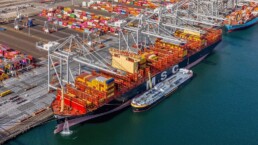
Titan analysis shows FuelEU pooling propelled liquefied biomethane demand
- Clean fuel supplier evaluates compliance for 8,000 TEU containership operating in Northern Europe - FuelEU Maritime balances competitiveness…
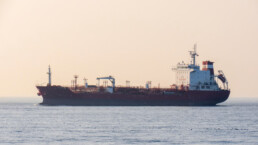
Russian diesel tanker heads to New York as Kremlin claims regular shipments
Malta-flagged tanker should carry 40,000 mt fuel Agioi Fanendes left Primorsk Oct. 22: CAS US lifts sanctions, enables Russian imports……
Pilot transfer operation: A safer step aboard
Safe pilot transfer operations depend on both correct procedures and fit-for-purpose equipment. New SOLAS requirements entering into force in…
Khalifa Port rises five positions to 34th in Lloyd’s List Top 100 Container PortsRanking
Khalifa Port records highest year-on-year throughput growth among the world’s top 40 container ports in the 2026 ranking Abu Dhabi’s flagship port…
Subscribe to our newsletter!
if you dont want to swim alone in the ocean of news, sign up for the newsletter, and you will receive daily all the important news of world shipping!
