

New IEA medium-term outlook sees comfortably supplied oil markets to 2030, though unwavering focus on energy security will remain crucial as powerful forces transform sector
Growth in the world’s demand for oil is expected to slow in the coming years as energy transitions advance. At the same time, global oil production is set to ramp up, easing market strains and pushing spare capacity towards levels unseen outside of the Covid crisis, according to the IEA’s new oil market outlook.
Oil 2024, the latest edition of the IEA’s annual medium-term market report, examines the far-reaching implications of these dynamics for oil supply security, refining, trade and investment. Based on today’s policies and market trends, strong demand from fast-growing economies in Asia, as well as from the aviation and petrochemicals sectors, is set to drive oil use higher in the coming years, the report finds. But those gains will increasingly be offset by factors such as rising electric car sales, fuel efficiency improvements in conventional vehicles, declining use of oil for electricity generation in the Middle East, and structural economic shifts. As a result, the report forecasts that global oil demand, which including biofuels averaged just over 102 million barrels per day in 2023, will level off near 106 million barrels per day towards the end of this decade.
In parallel, a surge in global oil production capacity, led by the United States and other producers in the Americas, is expected to outstrip demand growth between now and 2030. Total supply capacity is forecast to rise to nearly 114 million barrels a day by 2030 – a staggering 8 million barrels per day above projected global demand, the report finds. This would result in levels of spare capacity never seen before other than at the height of the Covid-19 lockdowns in 2020. Spare capacity at such levels could have significant consequences for oil markets – including for producer economies in OPEC and beyond, as well as for the US shale industry.
“As the pandemic rebound loses steam, clean energy transitions advance, and the structure of China’s economy shifts, growth in global oil demand is slowing down and set to reach its peak by 2030. This year, we expect demand to rise by around 1 million barrels per day,” said IEA Executive Director Fatih Birol. “This report’s projections, based on the latest data, show a major supply surplus emerging this decade, suggesting that oil companies may want to make sure their business strategies and plans are prepared for the changes taking place.”
Despite the slowdown in growth, global oil demand is still forecast to be 3.2 million barrels per day higher in 2030 than in 2023 unless stronger policy measures are implemented or changes in behaviour take hold. The increase is set to be driven by emerging economies in Asia – especially higher oil use for transport in India – and by greater use of jet fuel and feedstocks from the booming petrochemicals industry, notably in China. By contrast, oil demand in advanced economies is expected to continue its decades-long decline, falling from close to 46 million barrels per day in 2023 to less than 43 million barrels per day by 2030. Apart from during the pandemic, the last time oil demand from advanced economies was that low was 1991.
Producers outside of OPEC+ are leading the expansion of global production capacity to meet this anticipated demand, accounting for three-quarters of the expected increase to 2030. The United States alone is poised to account for 2.1 million barrels per day of non-OPEC+ gains, while Argentina, Brazil, Canada and Guyana contribute a further 2.7 million barrels per day.
The report’s forecast finds that as the flow of approved projects fizzles out towards the end of this decade, capacity growth slows and then stalls among the leading non-OPEC+ producers. However, if companies continue to approve additional projects already on the drawing board, a further 1.3 million barrels per day of non-OPEC+ capacity could become operational by 2030.
According to the report, global refining capacity is on track to expand by 3.3 million barrels per day between 2023 and 2030, well below historical trends. However, this should be sufficient to meet demand for refined oil products during this period, given a concurrent surge in the supply of non-refined fuels such as biofuels and natural gas liquids (NGLs). This raises the prospect of refinery closures towards the end of the outlook period, as well as a slowdown in capacity growth in Asia after 2027.
Source: IEA



Related News.

Beyond Technical Skills: WISTA Cyprus explores the human side of leadership
WISTA Cyprus hosted The Art of Leadership & Emotional Mastery, an interactive workshop held on 15 October at the Alasia Hotel in Limassol,…

The human cost of sending merchant mariners into war zones extends far beyond the immediate danger of missiles and drones. It raises a harder question: who is really protecting the seafarer?
Who protects the seafarer? I have spent much of my professional life at sea. I am a Master Mariner. I have stood on the bridge, made decisions…

Loss of bridge control: Human failure is normal – context is key
When bridge control is lost in a functioning system, it can be easy to blame human error. But accidents rarely happen because of one mistake…

Danish Shipping announces the transport of live animals by sea new rules should improve safety for animals, seafarers and the environment
Revised rules on the transport of live animals by sea are being negotiated in the EU. Danish Shipping wants to ensure good animal welfare,…

Japan’s flawed shipping proposal leaves developing countries adrift
A new analysis by Opportunity Green warns governments of the wide-ranging risks posed by Japan’s proposal at the International Maritime Organization…

Intermodal Report Week 42 2026
Pls find below the Intermodal Report - Week 42 2026 Intermodal Report Week 42 2026

Allied Weekly Market Review Week 42
Pls find below the Allied - Weekly Market Review - Week 42 ALLIED - Weekly Market Report- Week 42
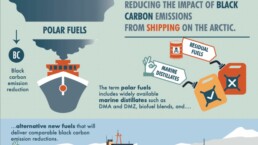
EU Arctic Strategy NGOs welcome EU ambition on on cutting shipping’s Arctic Black Carbon Emissions
Responding to today’s publication of the EU’s Arctic Strategy, which definitively states the EU’s intention to support International Maritime…

The final quarter of 2026 is expected to see softer bauxite flows
Chinese front-loading is expected to have run its course, pointing to softer bauxite flows in 2026 Q4. Global bauxite flows increased by 2.8% y/y…

DP World Foundation and Belewan new container terminal mark groundbreaking of AED 3.7 million school project in Indonesia
Classrooms of Hope initiative expands to Belawan, Medan with a new junior high school designed to provide modern learning facilities and greater…
Subscribe to our newsletter!
if you dont want to swim alone in the ocean of news, sign up for the newsletter, and you will receive daily all the important news of world shipping!
