Major maritime companies join forces to cut emissions through triple win of operational efficiency
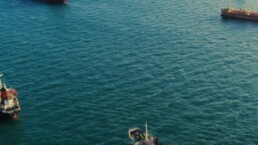

Leading maritime companies voice their ambition to adopt vessel optimisation strategies that can decrease annual fuel consumption by 20%, reduce annual emissions by more than 200 million tonnes of CO2, and enable the uptake of more expensive, scalable zero-emission fuels in the long run.
The Global Maritime Forum has identified five key action areas to improve the operational efficiency of vessels. The implementation of operational efficiency strategies plays a critical role in reducing shipping emissions today, while also preparing the industry for a more manageable long-term transition to a zero-emission future.
These five actions cover: data collection and transparency; contractual changes; pilot projects; ports, terminals, and value chains; and culture and leadership. Participating companies and supporting organisations have signed an ambition statement agreeing to take collective action in these five areas, diligently assess their maturity and progress, and take a leadership role in bringing operational efficiency to the forefront of the shipping agenda.
Shipping voyages are inherently complex, involving multiple parties from commodity owners to shipowners and charterers coordinating with ports and terminals, all guided by contracts and informed by data. Depending on the shipping environment, operators are often incentivised to ‘sail fast then wait’, causing inefficiencies. Vessel operations and speed are inextricably linked to fuel consumption, emissions, and charterparty contracts, all of which can be reduced materially through actions within the five identified action areas.
A series of insight briefs published by the Global Maritime Forum highlighted that operational efficiencies can decrease annual fuel consumption by 20% and reduce annual emissions by more than 200 million tonnes of CO2.
Optimising shipping operations provides an opportunity to act now, using existing technologies and not requiring high capital investments or complex regulatory compliance. Rather, optimisation requires bold leadership, changing mindsets, and a willingness to embrace existing solutions that will minimise the environmental impact of operations—all in a commercially viable way.
“Capitalising fully on operational efficiency will be a prerequisite to achieving the 2030, 2040, and 2050 emissions reduction targets that were recently introduced as part of the International Maritime Organization’s revised greenhouse gas emissions strategy,” says Jesse Fahnestock, the Global Maritime Forum’s Project Director for Decarbonisation. “Operational efficiency measures should and can be taken now, without waiting for new technological advancements like the procurement of zero-emission fuels and newbuild vessels.”
The signatories of the operational efficiency ambition statement are: Amaggi, Blue Visby, Bunge, Cargill, Chevron Shipping, COFCO International, Copenhagen Commercial Platform (CCP), Euronav, Genco Shipping, Lloyd’s Register, Louis Dreyfus Company, Maersk Tankers, NAPA, NYK Group, OCIMF, Oldendorff Carriers, Port of Açu, Port of Rotterdam, PSA International Pte Ltd, Rubis Energie, Siglar Carbon, Signol, Stena Bulk, Stephenson Harwood, Torvald Klaveness, UKHO, Viterra, Watson Farley & Williams LLP (WFW), Wisdom Marine Group, and Zero North.
Three participating companies – Chevron, Euronav, and Cargill – announced the joint ambition statement as part of the Global Maritime Forum Annual Summit in Athens.
“Chevron Shipping is proud to support the Global Maritime Forum’s ambition statement on operational efficiency. Chevron and the Global Maritime Forum are aligned on increasing efficiencies, decreasing fuel consumption, and lowering the carbon intensity of operations. We look forward to collaborating with our partners and engaging with stakeholders across the maritime value chain to help reach our common goals,’’ says Mark Ross, President, Chevron Shipping.
“The decarbonisation pathway starts today – not in 2030 or even in 2050. This is the reason Euronav joined the Global Maritime Forum’s operational efficiency work in the first place, and why signing and acting on the ambition statement was a no-brainer. The initiative enables cross-industry peers to pool actionable knowledge and to share actual real-life experiences – resulting in an impact on both the environment and the bottom line of the company,” says Lieve Logghe, Interim CEO, Euronav.
“In an industry built around vessels that remain in service for decades, only through operational efficiencies, reducing fuel usage, costs, and carbon emissions will we be able to afford future green fuels and achieve our decarbonisation targets’’ says Eman Abdalla, Global Operations and Supply Chain Director, Cargill Ocean Transportation. “There is no decarbonisation without collaboration, and Cargill is proud to support this initiative. It is the right catalyst to bring the necessary collective and transformational change.”



Related News.
Beyond Technical Skills: WISTA Cyprus explores the human side of leadership
WISTA Cyprus hosted The Art of Leadership & Emotional Mastery, an interactive workshop held on 15 October at the Alasia Hotel in Limassol,…
The human cost of sending merchant mariners into war zones extends far beyond the immediate danger of missiles and drones. It raises a harder question: who is really protecting the seafarer?
Who protects the seafarer? I have spent much of my professional life at sea. I am a Master Mariner. I have stood on the bridge, made decisions…
Loss of bridge control: Human failure is normal – context is key
When bridge control is lost in a functioning system, it can be easy to blame human error. But accidents rarely happen because of one mistake…
Danish Shipping announces the transport of live animals by sea new rules should improve safety for animals, seafarers and the environment
Revised rules on the transport of live animals by sea are being negotiated in the EU. Danish Shipping wants to ensure good animal welfare,…

Japan’s flawed shipping proposal leaves developing countries adrift
A new analysis by Opportunity Green warns governments of the wide-ranging risks posed by Japan’s proposal at the International Maritime Organization…

Intermodal Report Week 42 2026
Pls find below the Intermodal Report - Week 42 2026 Intermodal Report Week 42 2026

Allied Weekly Market Review Week 42
Pls find below the Allied - Weekly Market Review - Week 42 ALLIED - Weekly Market Report- Week 42
EU Arctic Strategy NGOs welcome EU ambition on on cutting shipping’s Arctic Black Carbon Emissions
Responding to today’s publication of the EU’s Arctic Strategy, which definitively states the EU’s intention to support International Maritime…
The final quarter of 2026 is expected to see softer bauxite flows
Chinese front-loading is expected to have run its course, pointing to softer bauxite flows in 2026 Q4. Global bauxite flows increased by 2.8% y/y…
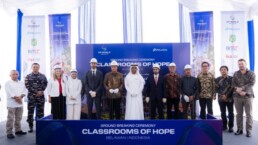
DP World Foundation and Belewan new container terminal mark groundbreaking of AED 3.7 million school project in Indonesia
Classrooms of Hope initiative expands to Belawan, Medan with a new junior high school designed to provide modern learning facilities and greater…
Subscribe to our newsletter!
if you dont want to swim alone in the ocean of news, sign up for the newsletter, and you will receive daily all the important news of world shipping!
