ClassNK joins major classification societies by amending rules for seawater lubricated shafts
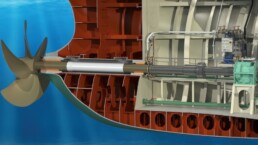

Nippon Kaiji Kyokai has joined the major classification societies to amend its rules relating to the inspection of seawater-lubricated propeller shaft systems.
The amendment means that ships with open seawater-lubricated propeller shafts that are built to ClassNK rules are subject to the same 15-year shaft withdrawal inspection periods as oil-lubricated shafts and sterntubes, subject to monitoring criteria.
The announcement brings ClassNK’s requirements in line with those of other large class societies, including Lloyds Register (LR), the American Bureau of Shipping (ABS), Det Norske Veritas (DNV), Bureau Veritas (BV) and the China Classification Society (CCS), which have already stipulated 15-year or longer intervals between inspections, some of them since 2016.
In its amendments to the Rules and Guidance for the Survey and Construction of Steel Ships , published on 30 June 2023, ClassNK clarified its reasons for the change: “In recent years, the development of mechanical type sealing devices, and bearings with lower wear properties as well as improvements in corrosion prevention technology, have led to fewer wear and corrosion defects in both shafts and bearings. In addition, interest in seawater-lubricated bearings, which do not use lubricating oil, and their effectiveness has increased among relevant industry members due to concerns for the environment.”
ClassNK also noted that the amendment follows requests received from industry stakeholders relating to the developments made in advanced seawater-lubrication system technology.
Thordon Bearings is one of the companies that has supported calls for industry-wide standardization of extended shaft withdrawals for seawater-based lubrication solutions that are now comparable to sealed oil lubricated systems.
Craig Carter, Vice President of Business Development, Thordon Bearings, said: “We are delighted that ClassNK has now joined the other major classification societies in dispensing with the wholly unnecessary and costly need to withdraw a seawater-lubricated propeller shaft for inspection every five years. Technology has come a long way since the first-generation seawater-lubricated lignum vitae bearings of the 1950s.”
While the risk of shaft corrosion in open seawater-based systems was historically a concern with first-generation bearings, leading some classification societies to continue demanding enhanced inspection regimes, new materials and technologies mean seawater-based systems can exceed the performance and reliability of their oil-based counterparts.
Elena Corin, Senior Manager, Special Marine Projects, Thordon Bearings, explained: “Aside from our pioneering polymer bearing technology, Thordon has enabled the development of Thor-Coat – a toughened, modified epoxy coating, which is applied to exposed steel areas of the shaft between the liners to eliminate the need for shaft withdrawal. In the event of damage, seawater cannot wick under the coating along the shaft and the epoxy coating is spot repairable.”
As the global leader among seawater-lubricated propeller shaft bearing manufacturers, Thordon Bearings has concentrated over 40 years of research and development to produce a solution proven to be more in line with the decarbonization movement of the 21st century than its antiquated oil-lubricated cousin.
“It is undeniable that the increasing number of ocean-going tankers, bulkers, dry cargo vessels, passenger ferries, cruise ships and containers that now routinely specify a Thordon propeller shaft bearing are significantly more environmentally and operationally efficient than their oil-based equivalents,” Corin said. “Thordon’s COMPAC open seawater-lubricated propeller shaft bearing system ensures zero environmental impact, improves fuel efficiency and eliminates the costs associated with managing oil discharges.”
In addition to the amendment regarding the inspection of seawater-based propulsion systems, Class NK has also updated several other requirements. These include new formulae for sloshing loads and new requirements for the maintenance and management of offshore wind turbine installations.
Other changes include clarification of scope for protection against fire when transferring cargo to other vessels on liquefied gas carriers, clarification of the NOx emission standards for biofuel, new requirements for cast and forged steel products, and amendments to safety requirements for reciprocating internal combustion engines.



Related News.
Beyond Technical Skills: WISTA Cyprus explores the human side of leadership
WISTA Cyprus hosted The Art of Leadership & Emotional Mastery, an interactive workshop held on 15 October at the Alasia Hotel in Limassol,…
The human cost of sending merchant mariners into war zones extends far beyond the immediate danger of missiles and drones. It raises a harder question: who is really protecting the seafarer?
Who protects the seafarer? I have spent much of my professional life at sea. I am a Master Mariner. I have stood on the bridge, made decisions…
Loss of bridge control: Human failure is normal – context is key
When bridge control is lost in a functioning system, it can be easy to blame human error. But accidents rarely happen because of one mistake…
Danish Shipping announces the transport of live animals by sea new rules should improve safety for animals, seafarers and the environment
Revised rules on the transport of live animals by sea are being negotiated in the EU. Danish Shipping wants to ensure good animal welfare,…

Japan’s flawed shipping proposal leaves developing countries adrift
A new analysis by Opportunity Green warns governments of the wide-ranging risks posed by Japan’s proposal at the International Maritime Organization…

Intermodal Report Week 42 2026
Pls find below the Intermodal Report - Week 42 2026 Intermodal Report Week 42 2026
Allied Weekly Market Review Week 42
Pls find below the Allied - Weekly Market Review - Week 42 ALLIED - Weekly Market Report- Week 42
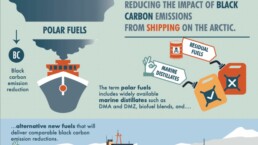
EU Arctic Strategy NGOs welcome EU ambition on on cutting shipping’s Arctic Black Carbon Emissions
Responding to today’s publication of the EU’s Arctic Strategy, which definitively states the EU’s intention to support International Maritime…
The final quarter of 2026 is expected to see softer bauxite flows
Chinese front-loading is expected to have run its course, pointing to softer bauxite flows in 2026 Q4. Global bauxite flows increased by 2.8% y/y…
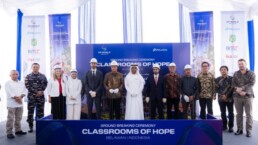
DP World Foundation and Belewan new container terminal mark groundbreaking of AED 3.7 million school project in Indonesia
Classrooms of Hope initiative expands to Belawan, Medan with a new junior high school designed to provide modern learning facilities and greater…
Subscribe to our newsletter!
if you dont want to swim alone in the ocean of news, sign up for the newsletter, and you will receive daily all the important news of world shipping!
