Loss prevention measures must adapt as shipping innovates, says IUMI


Shipping continues to innovate in terms of vessel capacities, greener technologies and more modern operating practices. At the same time, the way that goods are being carried, particularly unitized cargoes, are also changing. Innovation and change will inevitably bring about new risks which must be understood and mitigated with new or updated loss prevention methods.
At this week’s International Union of Marine Insuranceconference in Edinburgh, Chair of IUMI’s Loss Prevention Committee, Pascal Dubois highlighted this growing issue:
“The sheer number of containers being carried on ships of 24,000 TEU or more means that, statistically, there is a greater chance of an individual cargo combusting. Sadly, there have been many fire-related incidents on-board large containerships in recent years. Tackling fires on such large vessels is an ongoing concern and a significant body of research is underway to find workable solutions to both fire-fighting and fire prevention. IUMI has been one of the prime-movers at IMO to address this.”
Global vehicle transportation at sea has been in the limelight in recent years. High profile casualties, such as Grande Europa, Felicity Ace, and more recently Grande California, Grande Costa d’Avorio and Freemantle Highway, underline the reality where loss prevention methods need to be aligned and improved. Aside from the tragic loss of life, financial losses running to many hundreds of millions of dollars are often the result. However, Pascal Dubois urges caution when apportioning blame and wants the industry to rely on the science when it comes to preventative measures:
“Although we have witnessed a number of car carrier fires lately, none have been found, conclusively, to have been started by an electric vehicle (EV). We must take care to understand the cause and nature of any vehicle fire if we are to implement the required loss control measures to extinguish the fire and, as importantly, prevent them from happening.”
“Research shows that EV fires are no more dangerous than those caused by internal combustion engine (ICEV) vehicles – the growth rate, the peak heat release, and the total energy released is no different. That’s because most of the fire’s energy comes from sources within the vehicle, such as plastics, and not the battery. However, we must not ignore the potential for thermal runaway where the battery may self-heat and re-ignite. The risks are not necessarily greater but they are different and this is where we need a new and different approach”.
“Loss prevention is a virtuous circle including assureds, brokers, underwriters and regulators”, says Pascal Dubois. “We can’t innovate without recognizing new and different risks and then implementing adequate loss control measures. Insurance and loss prevention go hand-in-hand – you can’t have one without the other”.
IUMI has recently issued a comment and a position paper on the transport of EVs which are available here:



Related News.

Beyond Technical Skills: WISTA Cyprus explores the human side of leadership
WISTA Cyprus hosted The Art of Leadership & Emotional Mastery, an interactive workshop held on 15 October at the Alasia Hotel in Limassol,…

The human cost of sending merchant mariners into war zones extends far beyond the immediate danger of missiles and drones. It raises a harder question: who is really protecting the seafarer?
Who protects the seafarer? I have spent much of my professional life at sea. I am a Master Mariner. I have stood on the bridge, made decisions…

Loss of bridge control: Human failure is normal – context is key
When bridge control is lost in a functioning system, it can be easy to blame human error. But accidents rarely happen because of one mistake…

Danish Shipping announces the transport of live animals by sea new rules should improve safety for animals, seafarers and the environment
Revised rules on the transport of live animals by sea are being negotiated in the EU. Danish Shipping wants to ensure good animal welfare,…

Japan’s flawed shipping proposal leaves developing countries adrift
A new analysis by Opportunity Green warns governments of the wide-ranging risks posed by Japan’s proposal at the International Maritime Organization…

Intermodal Report Week 42 2026
Pls find below the Intermodal Report - Week 42 2026 Intermodal Report Week 42 2026

Allied Weekly Market Review Week 42
Pls find below the Allied - Weekly Market Review - Week 42 ALLIED - Weekly Market Report- Week 42
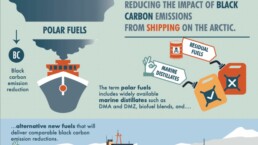
EU Arctic Strategy NGOs welcome EU ambition on on cutting shipping’s Arctic Black Carbon Emissions
Responding to today’s publication of the EU’s Arctic Strategy, which definitively states the EU’s intention to support International Maritime…

The final quarter of 2026 is expected to see softer bauxite flows
Chinese front-loading is expected to have run its course, pointing to softer bauxite flows in 2026 Q4. Global bauxite flows increased by 2.8% y/y…

DP World Foundation and Belewan new container terminal mark groundbreaking of AED 3.7 million school project in Indonesia
Classrooms of Hope initiative expands to Belawan, Medan with a new junior high school designed to provide modern learning facilities and greater…
Subscribe to our newsletter!
if you dont want to swim alone in the ocean of news, sign up for the newsletter, and you will receive daily all the important news of world shipping!
