Career Pathfinding on the AI Frontier become the talent behind the tech


If digital transformation has ushered in a profound wave of global technological change, then artificial intelligence specifically, has become the tsunami topic of our time.
Today’s hype around AI tools like ChatGPT inspires a future state for AI in the world. But business AI is all around us right now, playing a role in helping our customers’ businesses become more agile. Right now, AI helps to power SAP’s cloud ERP, spend management, customer relationship management, and human capital management business processes. More than 24,000 SAP cloud customers can already use hundreds of built-in AI capabilities.
AI growth means almost every industry needs people with AI skills at different levels and different depths. As one might expect, AI engineers, coding, and SAP developer skills are in demand. But there can be other opportunities to enter the field, depending on your interests. Here are five ideas to find your path to a first, second, or even third career in AI.
Spoiler alert: Curiosity and an openness to learning are key!
1. First, Find Your Starting Block
It’s okay to be a novice!
Every path into the AI arena starts with a foundational understanding of AI concepts, terminology, and applications. Become familiar with key terms like machine learning, deep learning, neural networks, natural language processing, and data analytics. Understand how AI can impact business processes and improve customers’, employees’, partners’, and suppliers’ experiences. Then, explore online resources, demos, tutorials, and introductory courses to understand basic AI principles. SAP’s AI communities are a great place to start learning in a peer-to-peer setting. Keep watching SAP Learning for a beginner’s AI learning journey.
2. Think AI Ethics
Humans give AI systems the data they need to function. But if humans provide biased data to an AI system, then the resulting AI system will perform in biased ways. For example, if we deploy AI systems to screen candidates during the hiring process, and the AI system has been given data biased against certain groups, then the AI system could make discriminatory candidate interviewing recommendations.
For AI to work in ways that make our world better, ethics must be interwoven. AI ethicists promote the positive benefits of AI while mitigating potential risks and ensuring fairness, transparency, and respect for privacy and human values in collaborative processes around developing AI solutions. openSAP has a free option to learn the basics.
3. Build Your Project Management Skills
Successful AI project development and implementation require skilled project managers.
Project managers are critical thinkers. They coordinate cross-functional teams, establish project timelines, watch over budgets and schedules, and ensure effective communication between project stakeholders. You will need to understand AI foundational concepts and oftentimes will need to translate between business users and technical teams. Practice breaking down problems into smaller components, identifying relevant variables, and designing effective solutions.
4. Brush Up on Data Science, Analytics, and Data Visualization Skills
AI is only as successful as the data it draws from. Without data, AI systems cannot deliver value. Our customers recognize this as they invest in their data infrastructures as they develop AI applications. When data is valid, accurate, complete, consistent, and uniform across an entire enterprise—and contextualized within the business—AI can deliver relevant results.
Seek out learning opportunities, communities, and mentors who can help you learn the different types of data, data collection methods, and data processing techniques. Understand trends and relationships within data. One of the most exciting things about business AI is that there are opportunities to find patterns and insights in data that were formerly undiscoverable. Tools like Python libraries or data analysis platforms like Tableau can be relevant.
5. Tap into Governance, Accountability, and Responsibility
Collaborative AI systems should have clear safety, governance, accountability, and responsibility frameworks. Frameworks should include structures, processes, and regulatory and risk management practices that align with laws, regulations, policies, ethics principles, and the broader ecosystem. As AI develops across industries and individual companies, there will be a need for people who understand the principles of governance, including how to establish metrics, standards, and accountability practices for an AI system’s behavior.
Embrace the Journey
The rise of AI has transformed the landscape of career opportunities for people — the potential for new, better jobs that will require a mixture of technical and human skills. The demand is there — and growing — for great talent to stand behind the tech! An open mind, genuine curiosity, and a willingness to learn will set you on the right path and will also be necessary as you grow your career.
I am wishing you well in finding the right skills toward a role in shaping the future of AI and its impact on society. Here’s to a terrific learning journey!



Related News.

Beyond Technical Skills: WISTA Cyprus explores the human side of leadership
WISTA Cyprus hosted The Art of Leadership & Emotional Mastery, an interactive workshop held on 15 October at the Alasia Hotel in Limassol,…

The human cost of sending merchant mariners into war zones extends far beyond the immediate danger of missiles and drones. It raises a harder question: who is really protecting the seafarer?
Who protects the seafarer? I have spent much of my professional life at sea. I am a Master Mariner. I have stood on the bridge, made decisions…

Loss of bridge control: Human failure is normal – context is key
When bridge control is lost in a functioning system, it can be easy to blame human error. But accidents rarely happen because of one mistake…

Danish Shipping announces the transport of live animals by sea new rules should improve safety for animals, seafarers and the environment
Revised rules on the transport of live animals by sea are being negotiated in the EU. Danish Shipping wants to ensure good animal welfare,…

Japan’s flawed shipping proposal leaves developing countries adrift
A new analysis by Opportunity Green warns governments of the wide-ranging risks posed by Japan’s proposal at the International Maritime Organization…

Intermodal Report Week 42 2026
Pls find below the Intermodal Report - Week 42 2026 Intermodal Report Week 42 2026

Allied Weekly Market Review Week 42
Pls find below the Allied - Weekly Market Review - Week 42 ALLIED - Weekly Market Report- Week 42
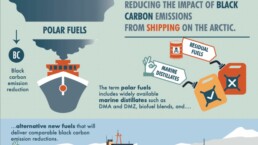
EU Arctic Strategy NGOs welcome EU ambition on on cutting shipping’s Arctic Black Carbon Emissions
Responding to today’s publication of the EU’s Arctic Strategy, which definitively states the EU’s intention to support International Maritime…

The final quarter of 2026 is expected to see softer bauxite flows
Chinese front-loading is expected to have run its course, pointing to softer bauxite flows in 2026 Q4. Global bauxite flows increased by 2.8% y/y…

DP World Foundation and Belewan new container terminal mark groundbreaking of AED 3.7 million school project in Indonesia
Classrooms of Hope initiative expands to Belawan, Medan with a new junior high school designed to provide modern learning facilities and greater…
Subscribe to our newsletter!
if you dont want to swim alone in the ocean of news, sign up for the newsletter, and you will receive daily all the important news of world shipping!
