Meeting the digital demands of the Offshore Energy Market


Floating production platforms are a complex blend of users with different needs and the solutions they require need expert management and delivery.
All three stakeholders require their own bandwidth and digital tools, with varying priorities for bandwidth and latency. Each will demand its own level of guaranteed uptime and throughput, with both revenue and safety depending on it.
Unlike the maritime industry, in which operations are to a greater extent commoditized within their sectors, a fleet whether large or small will need common systems and likely specify a baseline of performance that only needs occasional adjustment.
The energy sector is a project by project business and, although there are similarities, each one has its own challenges and requirements. In addition, the costs of rig operations can be staggering and the penalties for non-delivery of promised services can be just as serious; ensuring these assets run smoothly is essential. This makes them ideal for very high bandwidth services in MEO orbit which have lower latency than GEO solutions.
Until recently, connectivity options for oil and gas rigs have been focused on the provision of VSAT and LTE solutions that provided the required throughput and the highest levels of redundancy, so that operations could continue even if one or more hardware components or service was unavailable.
A combination of VSAT options, including medium Earth orbit (MEO), geostationary equatorial orbit (GEO), and low Earth orbit (LEO) services including back-ups, also means that solutions providers like Marlink can provide flexible service levels with maximum and committed information rates (CIR) tailored to application demand and client preference.
The most significant development for customers in the energy industry is the emergence of LEO connectivity, providing a further layer of high bandwidth, low latency service that can be combined with existing networks. This means that solutions providers can combine guaranteed CIR bandwidth over GEO VSAT and MIR services over LEO, for applications where throughput and latency are more important than the need for guaranteed bandwidth.
Although, each of the three stakeholders’ traffic is important, not every piece of data needs to move at the same speed or priority. To make the network fit the client’s requirements, Marlink provisions SD-WAN technology to enable the relay of vital data and information across any network regardless of orbit or frequency.
Historical definitions of network optimization have involved selecting a bearer based on type of data, whether video, text, voice or static files. SD-WAN works by recognizing and classifying the applications in use on a network and assigning that application’s traffic with specific routing. For example, allowing Teams to run over a LEO connection, while having Enterprise Resource Management or drilling analytics software run across the GEO VSAT.
For any type of customer, SD-WAN enables a competitive supply of third-party applications and the ability to potentially reduce Capex, Opex, space and power consumption, changing the game for users by designing a network around performance of applications and dramatically improving the quality of user experience.
The ability to use a wider range of applications over multiple carriers and prioritize traffic by service at protocol level – rather than by carrier or channel – provides offshore clients with a truly bespoke package designed around true operational optimization.
Marlink’s provision of tailored digital solutions enables customers in the offshore sector to manage complex and critical operations with the flexibility and scalability required. This enables multiple stakeholders to utilize different bandwidth at different times, while always having the ability to access applications they require. Marlink is able to deliver this required user experience based on an intimate understanding of the business and customer needs.
Of course, the digital oilfield requires digital solutions, but it is not simply a question of putting in large amounts of connectivity. An appreciation of what each customer wants to achieve, how these demands interact, and how to blend the best in class into a customer solution will define a successful and long-lasting relationship.



Related News.

Beyond Technical Skills: WISTA Cyprus explores the human side of leadership
WISTA Cyprus hosted The Art of Leadership & Emotional Mastery, an interactive workshop held on 15 October at the Alasia Hotel in Limassol,…
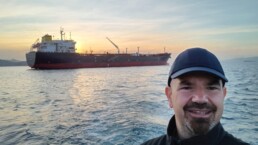
The human cost of sending merchant mariners into war zones extends far beyond the immediate danger of missiles and drones. It raises a harder question: who is really protecting the seafarer?
Who protects the seafarer? I have spent much of my professional life at sea. I am a Master Mariner. I have stood on the bridge, made decisions…
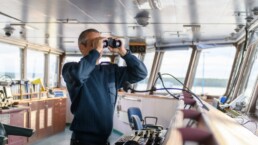
Loss of bridge control: Human failure is normal – context is key
When bridge control is lost in a functioning system, it can be easy to blame human error. But accidents rarely happen because of one mistake…
Danish Shipping announces the transport of live animals by sea new rules should improve safety for animals, seafarers and the environment
Revised rules on the transport of live animals by sea are being negotiated in the EU. Danish Shipping wants to ensure good animal welfare,…

Japan’s flawed shipping proposal leaves developing countries adrift
A new analysis by Opportunity Green warns governments of the wide-ranging risks posed by Japan’s proposal at the International Maritime Organization…

Intermodal Report Week 42 2026
Pls find below the Intermodal Report - Week 42 2026 Intermodal Report Week 42 2026
Allied Weekly Market Review Week 42
Pls find below the Allied - Weekly Market Review - Week 42 ALLIED - Weekly Market Report- Week 42
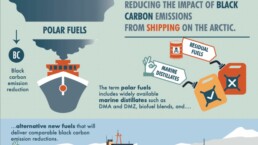
EU Arctic Strategy NGOs welcome EU ambition on on cutting shipping’s Arctic Black Carbon Emissions
Responding to today’s publication of the EU’s Arctic Strategy, which definitively states the EU’s intention to support International Maritime…
The final quarter of 2026 is expected to see softer bauxite flows
Chinese front-loading is expected to have run its course, pointing to softer bauxite flows in 2026 Q4. Global bauxite flows increased by 2.8% y/y…

DP World Foundation and Belewan new container terminal mark groundbreaking of AED 3.7 million school project in Indonesia
Classrooms of Hope initiative expands to Belawan, Medan with a new junior high school designed to provide modern learning facilities and greater…
Subscribe to our newsletter!
if you dont want to swim alone in the ocean of news, sign up for the newsletter, and you will receive daily all the important news of world shipping!
