newcleo Fincantieri and RINA working together on feasibility study for nuclear naval propulsion

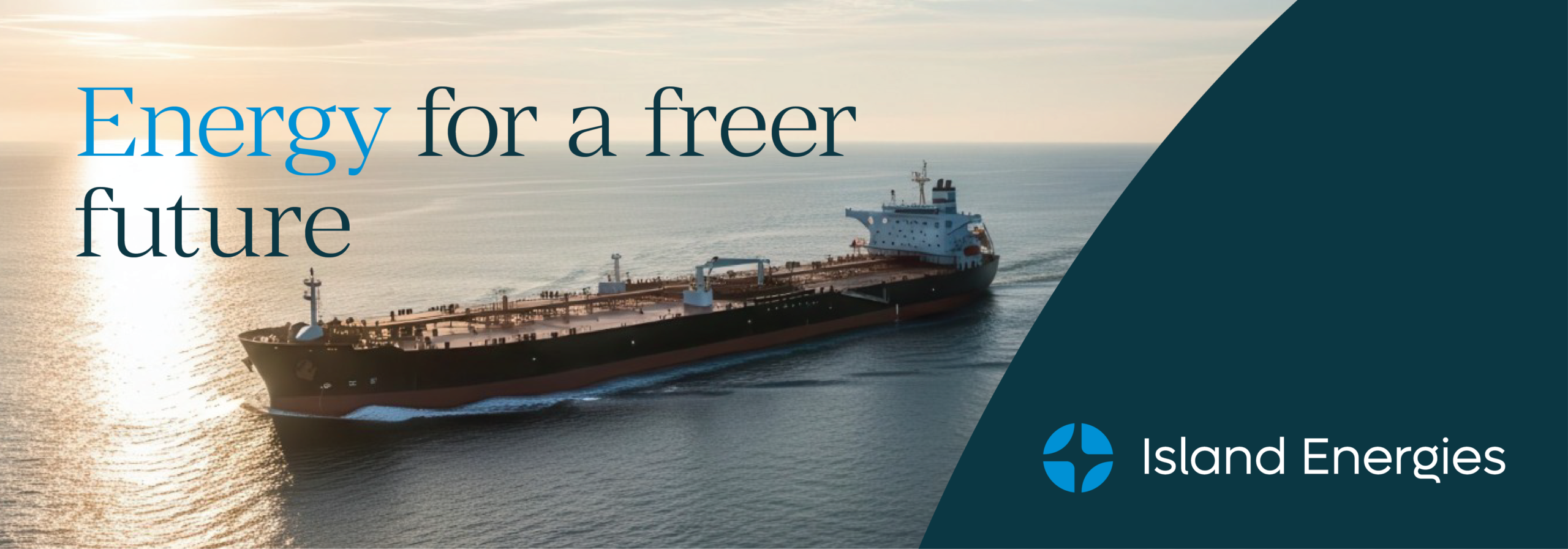
Companies sign agreement to explore closed mini reactor design application for use on large vessels, with potential to decarbonise shipping industry
newcleo, the clean and safe nuclear technology company developing innovative Generation IV reactors using nuclear waste as fuel, announced today that it has signed an agreement with Fincantieri , one of the largest shipbuilding companies in the world, and RINA, the inspection, certification, ship classification and consulting engineering multinational.
Under the terms of this agreement, the three companies are combining their deep international expertise and innovation experience to carry out together a feasibility study for nuclear applications to the shipping industry, including newcleo’s lead-cooled small modular reactors (SMRs) technology.
The deployment of newcleo’s innovative LFR (Lead-cooled Fast Reactor) for naval propulsion would involve placing a closed mini reactor on vessels as a small nuclear battery producing a 30MW electric output. This would require infrequent refuelling (only once every 10-15 years), very limited maintenance and easy replacement at end of life.
Using clean nuclear energy to power marine vessels would help rapidly decarbonise a sector grappling with huge fossil fuel consumption and its consequent carbon emissions. The shipping industry, via the International Maritime Organization (IMO), approved last week at MEPC(80) the new targets for GHG emission reduction, to reach net-zero GHG emissions by or around (i.e. close to) 2050.
While the shipping industry still carries 90% of the world’s goods, and the fourth IMO GHG Study 2020confirms that its carbon dioxide emissions are less than 3% of the total global man-made CO2 emissions, the actions of the big players of this industry have the potential to drive trends and markets.
Also, using nuclear power on ships would safeguard the marine ecosystem in the event of an accident. With newcleo’s design the liquid lead inside the reactor would solidify as it cools down in contact with the cold water, enclosing the reactor core in a solid casing, and containing all radiation thanks to the shielding properties of lead.
Finally, the newcleo naval propulsion reactors would eliminate the current need for frequent refuelling, and at the end of its life, the whole LFR unit would be simply removed and replaced with a new one in the ship, and the spent unit taken away for decommissioning and reprocessing.
Stefano Buono, newcleo Chairman and CEO, commented: “I am delighted that we are launching a project for civil nuclear naval propulsion with this important feasibility study. Fincantieri and RINA are two global leaders in the shipping sector, and combining their expertise with our technology innovation can bring a real solution to the issue of carbon emissions in maritime transport. From our conception, newcleo’s ambition is to contribute to accelerating decarbonisation and providing clean, sustainable and affordable energy to meet the needs of communities and businesses. I look forward to the results of the feasibility study and the next steps of the project.”
Pierroberto Folgiero, CEO and General Manager of Fincantieri, commented: “Today Fincantieri reaffirms its vocation to be a pioneer and catalyst for progress in the maritime sector with cutting-edge, efficient and sustainable technologies. Indeed, the agreement allows us to explore the possibility of adding a new and visionary solution among those at our disposal to achieve the ambitious decarbonisation goals the industry has set for itself. Nuclear power holds enormous potential and, as such, it needs the best expertise to be expressed, and we are proud to join with partners like newcleo and Rina to help get this done.”
Ugo Salerno, Chairman and CEO of RINA, commented: “The improvement of fuel efficiency and vessel design is already giving good results in reducing shipping footprint. But, in order to reach the targets fixed for this industry, we need alternative fuels with low carbon content from well to waste. Nuclear will be one of the answers to these objectives. In addition, small modular reactors will be the most efficient solution to apply nuclear to shipping. We are proud to cooperate with newcleo and Fincantieri in order to make feasible, as soon as possible, the implementation of SMRs on vessels.”



Related News.

Beyond Technical Skills: WISTA Cyprus explores the human side of leadership
WISTA Cyprus hosted The Art of Leadership & Emotional Mastery, an interactive workshop held on 15 October at the Alasia Hotel in Limassol,…
The human cost of sending merchant mariners into war zones extends far beyond the immediate danger of missiles and drones. It raises a harder question: who is really protecting the seafarer?
Who protects the seafarer? I have spent much of my professional life at sea. I am a Master Mariner. I have stood on the bridge, made decisions…
Loss of bridge control: Human failure is normal – context is key
When bridge control is lost in a functioning system, it can be easy to blame human error. But accidents rarely happen because of one mistake…
Danish Shipping announces the transport of live animals by sea new rules should improve safety for animals, seafarers and the environment
Revised rules on the transport of live animals by sea are being negotiated in the EU. Danish Shipping wants to ensure good animal welfare,…

Japan’s flawed shipping proposal leaves developing countries adrift
A new analysis by Opportunity Green warns governments of the wide-ranging risks posed by Japan’s proposal at the International Maritime Organization…

Intermodal Report Week 42 2026
Pls find below the Intermodal Report - Week 42 2026 Intermodal Report Week 42 2026
Allied Weekly Market Review Week 42
Pls find below the Allied - Weekly Market Review - Week 42 ALLIED - Weekly Market Report- Week 42
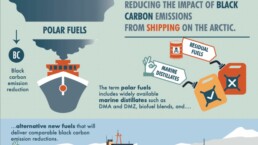
EU Arctic Strategy NGOs welcome EU ambition on on cutting shipping’s Arctic Black Carbon Emissions
Responding to today’s publication of the EU’s Arctic Strategy, which definitively states the EU’s intention to support International Maritime…
The final quarter of 2026 is expected to see softer bauxite flows
Chinese front-loading is expected to have run its course, pointing to softer bauxite flows in 2026 Q4. Global bauxite flows increased by 2.8% y/y…
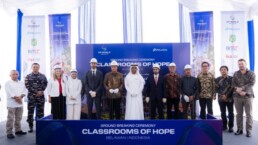
DP World Foundation and Belewan new container terminal mark groundbreaking of AED 3.7 million school project in Indonesia
Classrooms of Hope initiative expands to Belawan, Medan with a new junior high school designed to provide modern learning facilities and greater…
Subscribe to our newsletter!
if you dont want to swim alone in the ocean of news, sign up for the newsletter, and you will receive daily all the important news of world shipping!
