Why MEO satellites are the answer to Indonesia’s digital divide

The article was first published on The Jakarta Post.
As the largest digital economy in Southeast Asia, Indonesia is full steam ahead in its agenda to accelerate its transformation. The archipelago has made huge strides in this space since 2017 with more than 70% increase in mobile broadband penetration across the country.
Yet, higher mobile internet penetration does not necessarily equate to quality; mobile broadband still lags behind fixed broadband due to quality of service and bandwidth constraints.
Considering digital technologies now pervade our everyday lives, those lacking access to reliable and performant connectivity are increasingly left behind, missing out on opportunities for individual economic growth as well as access to education and healthcare.
The challenges of keeping the world’s largest archipelago connected
While internet penetration grows across the country, an urban-rural connectivity divide persists, with the majority of those unconnected residing in rural areas across the western part of the country – mainly Kalimantan, Sulawesi, Maluku and Papua regions.
The most significant reason for this persisting digital divide is Indonesia’s complex and varied geographic landscapes with over 6,000 inhabited islands across what is the world’s largest archipelago, making it difficult to connect individuals residing in remote regions with terrestrial network infrastructure.
Additionally, with Indonesia located in an area prone to natural disasters such as earthquakes, tsunamis, volcano eruptions and floods, terrestrial network infrastructure is at constant risk of damage and loss of service.
A solution at 8,000 km in the sky
With digital connectivity being a vital necessity in many aspects of life for people in Indonesia, it is essential to address the challenges and hurdles for digital inclusion in the country.
The Indonesian government has long recognised the importance of bridging the connectivity divide, with significant investments in digital inclusion initiatives to provide equitable access to digital technologies to the population. This includes the Universal Service Obligation Fund set up by the government to enhance the accessibility and affordability of broadband services for all Indonesians.
To address the challenge of delivering reliable high-speed internet connectivity to remote and hard-to-reach regions, the government has turned to satellite technologies as a viable, cost-effective alternative to optical fibre cables, with Indonesia being the second country in the world to have a domestic satellite network.
For decades, a handful of rural communities scattered across Indonesia have managed to stay connected as logistically challenging terrestrial infrastructure projects get implemented. However, as people demand more connectivity to stream content regardless of where they are and stay connected 24/7 via social and access apps online seamlessly, it’s not enough to rely on satellite technology as we know it. It’s time for more powerful, more efficient and smarter satellites.
MEO constellations – the future of global connectivity
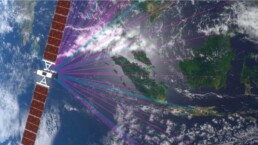
Fortunately, a new and powerful generation of satellites offers a solution: Medium Earth Orbit (MEO) satellites, like the recently launched SES O3b mPOWER, have the capacity to provide guaranteed high-performance connectivity at scale.
Orbiting between 5,000 and 12,000km above Earth, MEO satellites occupy a sweet spot between Low Earth Orbit (LEO) and Geostationary Equatorial Orbit (GEO) – high enough to deliver nationwide coverage to Indonesia and low enough to predict low latency and high throughput up to multiple gigabits.
This means MEO satellites like O3b mPOWER can play a major role in complementing the government’s digital inclusion initiatives by guaranteeing unrivalled connectivity to even the most hard-to-reach regions in the country, ensuring people and businesses in these areas have equitable access to digital resources to leverage economic opportunities.
Now more than ever, Indonesia is at a critical stage to close its persisting digital divide and ensure its citizens can all benefit from the government’s digital initiatives. In March this year, the Indonesian Ministry of Communication and Informatics announced a plan to collaborate with the private sector to improve network infrastructure and accelerate digitalisation in rural and remote areas.
An all-connected future for Indonesians may soon be within reach – the digital divide that has previously denied certain populations of opportunities could, at last, be closed to enable self-development and entertainment for these communities, propelled by the unique performance and reliability only MEO satellites offer.



Related News.

Beyond Technical Skills: WISTA Cyprus explores the human side of leadership
WISTA Cyprus hosted The Art of Leadership & Emotional Mastery, an interactive workshop held on 15 October at the Alasia Hotel in Limassol,…

The human cost of sending merchant mariners into war zones extends far beyond the immediate danger of missiles and drones. It raises a harder question: who is really protecting the seafarer?
Who protects the seafarer? I have spent much of my professional life at sea. I am a Master Mariner. I have stood on the bridge, made decisions…

Loss of bridge control: Human failure is normal – context is key
When bridge control is lost in a functioning system, it can be easy to blame human error. But accidents rarely happen because of one mistake…

Danish Shipping announces the transport of live animals by sea new rules should improve safety for animals, seafarers and the environment
Revised rules on the transport of live animals by sea are being negotiated in the EU. Danish Shipping wants to ensure good animal welfare,…

Japan’s flawed shipping proposal leaves developing countries adrift
A new analysis by Opportunity Green warns governments of the wide-ranging risks posed by Japan’s proposal at the International Maritime Organization…

Intermodal Report Week 42 2026
Pls find below the Intermodal Report - Week 42 2026 Intermodal Report Week 42 2026

Allied Weekly Market Review Week 42
Pls find below the Allied - Weekly Market Review - Week 42 ALLIED - Weekly Market Report- Week 42
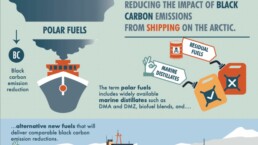
EU Arctic Strategy NGOs welcome EU ambition on on cutting shipping’s Arctic Black Carbon Emissions
Responding to today’s publication of the EU’s Arctic Strategy, which definitively states the EU’s intention to support International Maritime…
The final quarter of 2026 is expected to see softer bauxite flows
Chinese front-loading is expected to have run its course, pointing to softer bauxite flows in 2026 Q4. Global bauxite flows increased by 2.8% y/y…
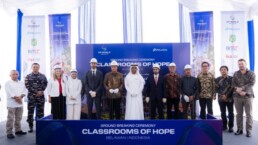
DP World Foundation and Belewan new container terminal mark groundbreaking of AED 3.7 million school project in Indonesia
Classrooms of Hope initiative expands to Belawan, Medan with a new junior high school designed to provide modern learning facilities and greater…
Subscribe to our newsletter!
if you dont want to swim alone in the ocean of news, sign up for the newsletter, and you will receive daily all the important news of world shipping!
