Fostering Refugee Inclusion Lessons learned from social entrepreneurs
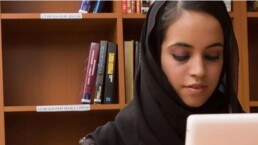

SAP recently marked two significant events: World Refugee Day on June 20 and the United Nations Micro-, Small, and Medium-Sized Enterprise Day on June 27.
To underscore the vital role of partnerships in creating a global environment where refugees are fully integrated and valued members of society, we hosted a webinar, “Hope, Inclusion, Action: Building Opportunity for Refugees.” Joining me were two remarkable social entrepreneurs, Innocent Tshilombo, co-founder of Kakuma Ventures, and Mozamel Aman, co-founder and CEO of StartSteps and founder of Startupistan.
In 2022, the number of forcibly displaced people for the first time exceeded 100 million due to war, violence, and persecution. Unfortunately, this number is expected to rise even further given the current global challenges, such as conflicts, political tensions, and climate change.
These social entrepreneurs are among many who are playing a role in supporting refugees to integrate into their new environment by finding meaningful work and education opportunities. After an hour with Tshilombo and Aman, I felt privileged to hear their personal narratives and gain valuable insights into navigating challenges with authenticity and vulnerability.
To provide some context: Tshilombo, an entrepreneur and humanitarian professional, has spearheaded educational, business, and humanitarian initiatives in the Kakuma refugee camp in Kenya. As the co-founder of Kakuma Ventures, a renowned social enterprise, Tshilombo aims to enhance the well-being of refugees and host communities by leveraging digital services and opportunities through energy and internet access for education, trades, and employment. Meanwhile, Aman is deeply passionate about the intersection of technology, entrepreneurship, and social impact. Through his involvement in various startup organizations, Aman has developed a unique perspective on problem-solving. He firmly believes that privilege comes with great responsibility, forming the foundation of sustainable social ventures.
The Transformative Power of Social Entrepreneurship
Despite operating in challenging environments with limited resources, these founders did not seek traditional employment for stability and security. Instead, they cultivated their own skills and forged ahead, building their social businesses in the face of adversity while remaining driven.
The Kakuma Camp hosts approximately 200,000 refugees, and Germany, where Aman operates, is home to around 2 million refugees. One might assume that scaling their ventures should be a top priority from the get-go. However, both entrepreneurs emphasized the significance of starting small and witnessing the impact created. By demonstrating success, they gradually gained access to additional resources, facilitating further growth.
This reminded me of a powerful notion: systemic change doesn’t necessarily require focusing on the big picture; it can begin by positively impacting one individual at a time. Through this approach, social enterprises have the opportunity to learn, adapt, and secure the resources needed to expand their efforts over time.
Partnerships Are Crucial to Overcoming Challenges
Many corporations have strict criteria and predefined standards that often hinder the inclusion of individuals from diverse backgrounds. However, more companies have started to recognize the potential in these individuals and consider them as potential employees. This realization has led to the development of tailored programs in collaboration with companies. However, there is a challenge in Germany, for example, where many open positions exist. Still, the skills companies require are often too specific or need to be adequately addressed in generic training programs. It is, therefore, essential to work with employers and partners to design and develop programs that meet their specific needs.
These entrepreneurs have managed to navigate this barrier by forging strategic alliances and fostering a mindset shift among potential hiring partners. By showcasing the skills and potential of their participants, they have successfully broken down these barriers and opened doors to new opportunities.
Sustainability and Scalability Make the World Run Better
Both Tshilombo and Aman’s experiences highlight the importance of sustainability and scalability in social enterprises. While charitable and nonprofit organizations undoubtedly play a crucial role, integrating a business model offers long-term viability. Social enterprises create a continuous cycle of positive impact by generating profits and reinvesting them into sustainable projects. This approach supports self-sufficiency and allows for scalability, replication, and the ability to address specific community needs effectively.
At SAP, we are dedicated to accelerating social enterprises and take great pride in providing continuous pro bono consulting support to organizations like these. The recent discussion held in commemoration of World Refugee Day and SME Day underscores a powerful message: when we work together, we have the ability to create a transformative ecosystem that empowers purpose-driven enterprises and positively impacts the lives of individuals in need.
Recognizing the importance of creating economic opportunities and education for refugees and migrants, SAP has established robust partnerships that began several years ago. One notable program is Digital Skills for Today in the Middle East, which aims to equip young refugees with the necessary skills to pursue employment opportunities in the IT sector. Additionally, SAP collaborates with the University of the People, offering free scholarships to refugees seeking bachelor’s and master’s degrees. The nonprofit tuition-free American accredited online university has an impressive enrollment of more than 120,000 students from 200 countries, including 16,500 refugees.
If you are a social enterprise in need of our support or an experienced professional who can offer skilled expertise, join us on the TRANSFORM Support Hub.
Together, we can create change and be changed.



Related News.
Beyond Technical Skills: WISTA Cyprus explores the human side of leadership
WISTA Cyprus hosted The Art of Leadership & Emotional Mastery, an interactive workshop held on 15 October at the Alasia Hotel in Limassol,…
The human cost of sending merchant mariners into war zones extends far beyond the immediate danger of missiles and drones. It raises a harder question: who is really protecting the seafarer?
Who protects the seafarer? I have spent much of my professional life at sea. I am a Master Mariner. I have stood on the bridge, made decisions…
Loss of bridge control: Human failure is normal – context is key
When bridge control is lost in a functioning system, it can be easy to blame human error. But accidents rarely happen because of one mistake…

Danish Shipping announces the transport of live animals by sea new rules should improve safety for animals, seafarers and the environment
Revised rules on the transport of live animals by sea are being negotiated in the EU. Danish Shipping wants to ensure good animal welfare,…

Japan’s flawed shipping proposal leaves developing countries adrift
A new analysis by Opportunity Green warns governments of the wide-ranging risks posed by Japan’s proposal at the International Maritime Organization…

Intermodal Report Week 42 2026
Pls find below the Intermodal Report - Week 42 2026 Intermodal Report Week 42 2026

Allied Weekly Market Review Week 42
Pls find below the Allied - Weekly Market Review - Week 42 ALLIED - Weekly Market Report- Week 42
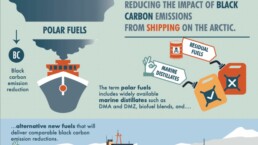
EU Arctic Strategy NGOs welcome EU ambition on on cutting shipping’s Arctic Black Carbon Emissions
Responding to today’s publication of the EU’s Arctic Strategy, which definitively states the EU’s intention to support International Maritime…
The final quarter of 2026 is expected to see softer bauxite flows
Chinese front-loading is expected to have run its course, pointing to softer bauxite flows in 2026 Q4. Global bauxite flows increased by 2.8% y/y…
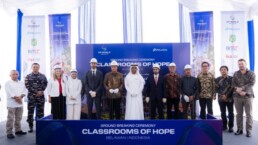
DP World Foundation and Belewan new container terminal mark groundbreaking of AED 3.7 million school project in Indonesia
Classrooms of Hope initiative expands to Belawan, Medan with a new junior high school designed to provide modern learning facilities and greater…
Subscribe to our newsletter!
if you dont want to swim alone in the ocean of news, sign up for the newsletter, and you will receive daily all the important news of world shipping!
