Ariane 5 breaking new ground right to the end
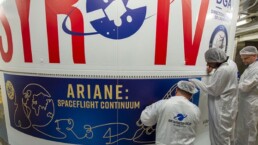

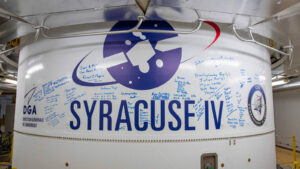
The very final Ariane 5 mission was a dual launch, the European rocket’s trademark configuration.
A dual launch in more ways than one – for its last trip into space, the Franco–German-built launcher’s passengers were the French SYRACUSE 4B military communications satellite and the German Heinrich-Hertz-Satellit communications satellite for testing new technologies in space.
If SYRACUSE 4B will be performing a classic defence role – providing the most advanced communications capabilities to the French armed forces – the Heinrich-Hertz-Satellit experimental telecommunications mission, an example of civil–military cooperation, has a double function: a platform for conducting technical satellite communications experiments for the German Aerospace Center (DLR) on behalf of the German Ministry of Economic Affairs and Climate Action, it will also carry a separate payload dedicated to secure communications for the German armed forces.
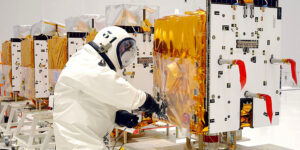
ArianeGroup’s role in this launch is also two-fold. Our launcher provided the delivery into space for the passengers, and we also designed and supplied the propulsion system for the Heinrich Hertz satellite which will enable it to carry out its planned 15-year mission. The thrusters were developed and manufactured at our Lampoldshausen site, which is where overall propulsion system–satellite integration took place, and the tanks came from our Bremen sit
As the Ariane 5 launcher bows out, its last mission could hardly be a more fitting symbol of the steadfast service that it has delivered over the years to safeguard and drive the future of European security – a true SpaceEnabler.
Ariane 5: a pillar of European defense
Throughout its 27-year career, Ariane 5 has been a backbone for European defense, responsible for placing in orbit many satellites for military and security missions. Ariane 5-launched satellites represent the whole scope of domains where space-based systems play an essential role in meeting security and defense requirements: reconnaissance for intelligence-gathering, secure communications for operations command and control, early-warning for threat monitoring and response.
Satellite systems launched by Ariane 5 have changed the landscape of European defense.
Ensuring cutting-edge technologies for Europe
Ariane 5 has placed in orbit all the latest generations of the communications systems of major European states for their military and security functions (Skynet 5 for the UK, SYRACUSE 3 & 4 for France, Sicral-2 for Italy, Secomsat – XTAR-EUR and Spainsat – for Spain). For Germany, Ariane 5 gave the Bundeswehr their first fully-owned, dedicated communications capability, with the launch of the two SatcomBW system satellites in 2009 and 2010.
Ariane 5 has been the vector for advancing unique-in-Europe technologies for defense. The French four-satellite demonstrator satellite constellation Essaim (the name means “swarm”) for signal intelligence-gathering was launched in 2004 on a six-year mission, paving the way for today’s operational SIGINT system CERES. In 2009, an Ariane 5 ECA launched another premiere – in the first demonstration of its kind to be conducted in Europe, the pair of Spirale early warning micro-satellites for the French MoD collect and analyze infrared imagery against a land background, in order to detect ballistic missiles during their boost phase just after launch. Here too, the mission’s aim is to prepare the ground for a future operational system, a strategic link in an anti-ballistic missile defense system.
Creating the framework for European cooperation
When Ariane 5 launched Helios 2A, the first of two second-generation French optical reconnaissance satellites, in 2004, it marked not only a significant step up in European military observation capability, but also new dimension in European space, by setting up new forms of cooperation which prefigured the concept of a common European defense and security framework.
Galvanized by the experience of the conflict in Kosovo in 1999, which had highlighted Europe’s intelligence deficit relative to the US and its impact on decision-making autonomy, innovative bilateral international agreements were signed between France and Italy and France and German for capacity- and data-exchange between the Helios 2 optical satellite system and the radar satellite systems Cosmo-SkyMed and SAR-Lupe respectively. The participating countries could now access all the benefits of complementary optical and radar imagery, giving much enhanced reconnaissance capability.
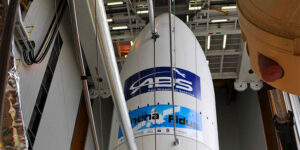
The successful international cooperation model took root and expanded. Two military telecoms satellites, Athena-Fidus and Sicral-2, launched by Ariane 5 in 2014 and 2015, are characterized by a full partnership between France and Italy: the satellites were both developed jointly for the French and Italian defense ministries, both provide services for the two countries’ armed forces, each carries both French and Italian payloads, and both countries have their own ground segment.
Thank you, Ariane 5!



Related News.
Beyond Technical Skills: WISTA Cyprus explores the human side of leadership
WISTA Cyprus hosted The Art of Leadership & Emotional Mastery, an interactive workshop held on 15 October at the Alasia Hotel in Limassol,…
The human cost of sending merchant mariners into war zones extends far beyond the immediate danger of missiles and drones. It raises a harder question: who is really protecting the seafarer?
Who protects the seafarer? I have spent much of my professional life at sea. I am a Master Mariner. I have stood on the bridge, made decisions…
Loss of bridge control: Human failure is normal – context is key
When bridge control is lost in a functioning system, it can be easy to blame human error. But accidents rarely happen because of one mistake…

Danish Shipping announces the transport of live animals by sea new rules should improve safety for animals, seafarers and the environment
Revised rules on the transport of live animals by sea are being negotiated in the EU. Danish Shipping wants to ensure good animal welfare,…
Japan’s flawed shipping proposal leaves developing countries adrift
A new analysis by Opportunity Green warns governments of the wide-ranging risks posed by Japan’s proposal at the International Maritime Organization…

Intermodal Report Week 42 2026
Pls find below the Intermodal Report - Week 42 2026 Intermodal Report Week 42 2026

Allied Weekly Market Review Week 42
Pls find below the Allied - Weekly Market Review - Week 42 ALLIED - Weekly Market Report- Week 42
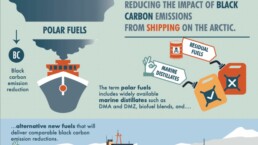
EU Arctic Strategy NGOs welcome EU ambition on on cutting shipping’s Arctic Black Carbon Emissions
Responding to today’s publication of the EU’s Arctic Strategy, which definitively states the EU’s intention to support International Maritime…
The final quarter of 2026 is expected to see softer bauxite flows
Chinese front-loading is expected to have run its course, pointing to softer bauxite flows in 2026 Q4. Global bauxite flows increased by 2.8% y/y…
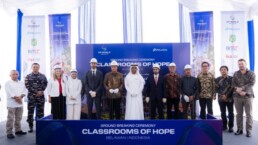
DP World Foundation and Belewan new container terminal mark groundbreaking of AED 3.7 million school project in Indonesia
Classrooms of Hope initiative expands to Belawan, Medan with a new junior high school designed to provide modern learning facilities and greater…
Subscribe to our newsletter!
if you dont want to swim alone in the ocean of news, sign up for the newsletter, and you will receive daily all the important news of world shipping!
