Joint research team from Korea and Germany seeks to enhance production efficiency of fuel cells with laser machining technology
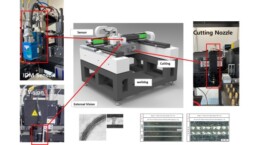

Fuel cells used for vessels and airplanes are becoming increasingly lighter to improve efficiency, and this is leading to a decline in the thickness of bipolar plate. In this regard, a laser machining technology for thin bipolar plate, which can help to enhance the production efficiency and quality of fuel cells, has been developed through international R&D innovative collaboration project.
Through international joint research between Korea and Germany, the joint research team consisting of the Korea Institute of Machinery and Materials (President Sang-jin Park, hereinafter referred to as KIMM), an institute under the jurisdiction of the Ministry of Science and ICT, K-Lab (Representative Goo-cheol Kwon), a Korean small and medium-sized enterprise, and Germany’s Fraunhofer Gesellschaft and BBW Lasertechnik GmbH developed a new 2D on-the-fly* composite equipment by applying a scanner that allows for laser welding and cutting of materials for bipolar plates for fuel cells with thickness of 0.075mm.
* 2D laser scanner-stage real-time cross-coupling control technology (2D on-the-fly): 2D on-the-fly is a laser machining technology whereby the stage continuously moves through an algorithm that generates the optimal route, and the scanner corrects position errors.
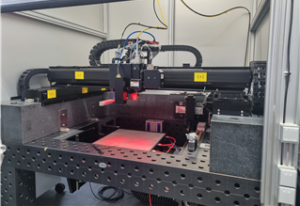
Principal Researcher Su-jin Lee of KIMM Department of Industrial Laser Technology and the joint research team focused their attention on the demands from fuel cell manufacturers that require the welding of large-scale thin plates of various forms as well as high-quality cutting at the same time. The joint research team used the conventional technology where the stage and the scanner move simultaneously, and succeeded in developing a Top-Lamp* composite processing machine capable of welding and cutting large areas (400mm x 400mm or larger) in various forms by cross-coupling the cutting gas output nozzle to the stage.
* Top-Lamp: Top-Lamp is the name of the newly developed equipment, and it is also the name of the international joint project (Technology platform for advanced laser beam processes of metallic fuel cell plates).
Additionally, the research team developed and utilized the function of maintaining machining accuracy by automatically correcting the work area through the same axle of the scanner and the vision system of the external angle in real-time. Using this function, a technology that enables the correction of the center position of the diameter of the nozzle throat and irradiation of the laser beam within 3mm from the diameter of the nozzle during the process has been applied. The hybrid composite equipment developed as above, which can perform high-speed welding and nozzle cutting at the same time, has been installed at and is being operated by BBW Lasertechnik GmbH, a German partner institution.
* Irradiation: the act of exposing or directing laser beams onto a target material surface.
With the conventional 2D on-the-fly technology, it has been difficult to precisely control the form of the material because of the change in speed caused by acceleration or deceleration at the time of turnaround (cornering) while the material is being processed. In addition, because it has also been difficult to make corrections to the machining process, it has been necessary to improve the quality thereof. Meanwhile, as it is not easy to attach cutting gas nozzles to conventional high-speed scanners, it has been necessary to use separate equipment for welding and cutting, which has led to increases in processing time and expense.
The newly developed technology helps to enhance machining quality by reducing cross-coupling errors through a more precise position correction by the vision system of the scanner. Additionally, the cutting gas nozzle can be attached separately to the scanner or another stage, improving cutting quality. Furthermore, the vision system corrects the center position for laser beam irradiation at the nozzle throat. This allows high-speed welding and partial cutting at the same time, which helps reducing costs and processing time.
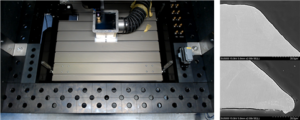
Principal Researcher Su-jin Lee of KIMM was quoted as saying, “The German research team is also expecting that the latest technology, developed through international joint research, will be applicable to various sectors. The newly developed technology is meaningful in that it can respond to the demands from the fuel cell market for the improvement of machining quality as the thickness of bipolar plates for fuel cells becomes increasingly thinner.”
Meanwhile, this research was carried out with the support of the project for the “development of advanced laser machining technologies for the manufacture of fuel cells,” an international co-development project of the Ministry of Trade, Industry and Energy. In May 2022, KIMM signed an MoU with Germany’s Fraunhofer Gesellschaft, one of the institutions that participated in the research, for the expansion of international cooperation and sustainable networking and cooperation among researchers in major fields.



Related News.
Beyond Technical Skills: WISTA Cyprus explores the human side of leadership
WISTA Cyprus hosted The Art of Leadership & Emotional Mastery, an interactive workshop held on 15 October at the Alasia Hotel in Limassol,…

The human cost of sending merchant mariners into war zones extends far beyond the immediate danger of missiles and drones. It raises a harder question: who is really protecting the seafarer?
Who protects the seafarer? I have spent much of my professional life at sea. I am a Master Mariner. I have stood on the bridge, made decisions…

Loss of bridge control: Human failure is normal – context is key
When bridge control is lost in a functioning system, it can be easy to blame human error. But accidents rarely happen because of one mistake…

Danish Shipping announces the transport of live animals by sea new rules should improve safety for animals, seafarers and the environment
Revised rules on the transport of live animals by sea are being negotiated in the EU. Danish Shipping wants to ensure good animal welfare,…

Japan’s flawed shipping proposal leaves developing countries adrift
A new analysis by Opportunity Green warns governments of the wide-ranging risks posed by Japan’s proposal at the International Maritime Organization…

Intermodal Report Week 42 2026
Pls find below the Intermodal Report - Week 42 2026 Intermodal Report Week 42 2026

Allied Weekly Market Review Week 42
Pls find below the Allied - Weekly Market Review - Week 42 ALLIED - Weekly Market Report- Week 42
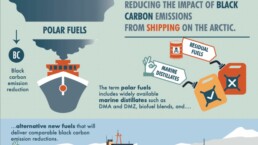
EU Arctic Strategy NGOs welcome EU ambition on on cutting shipping’s Arctic Black Carbon Emissions
Responding to today’s publication of the EU’s Arctic Strategy, which definitively states the EU’s intention to support International Maritime…
The final quarter of 2026 is expected to see softer bauxite flows
Chinese front-loading is expected to have run its course, pointing to softer bauxite flows in 2026 Q4. Global bauxite flows increased by 2.8% y/y…
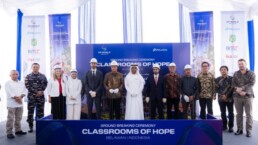
DP World Foundation and Belewan new container terminal mark groundbreaking of AED 3.7 million school project in Indonesia
Classrooms of Hope initiative expands to Belawan, Medan with a new junior high school designed to provide modern learning facilities and greater…
Subscribe to our newsletter!
if you dont want to swim alone in the ocean of news, sign up for the newsletter, and you will receive daily all the important news of world shipping!
