Shortage looming as Europe’s demand for offshore wind towers to surpass manufacturing capacity by 2028
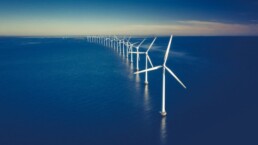

Offshore wind developments are a critical component of Europe’s energy transition plans, but a supply headache could be on the horizon for the industry before the end of the decade. Rystad Energy’s modeling shows that in 2028, demand for offshore turbine towers will outstrip manufacturing capacity, signaling that time is running out for the continent to address the issue and ramp up production capabilities.
Rystad Energy’s offshore wind capacity outlook shows that wind tower manufacturing capacity will keep pace and exceed demand before 2028. However, that year is the turning point, and in 2029, demand will surpass manufacturing capacity by a significant margin. Steel demand for offshore wind towers will total more than 1.7 million tonnes in 2029, but manufacturing capacity will be a maximum of around 1.3 million tonnes, meaning supply can only meet about 70% of demand.
If Europe is to reverse this trend, manufacturers need to initiate expansion in the next two years, since it takes between two and three years to build new facilities. These forecasts assume no major steel shortage, so manufacturers can work at full capacity. If a shortage materializes, Europe could face a supply issue even earlier than expected.
Turbine sizes keep growing as the importance of offshore wind to the global power grid accelerates, and tower demand is projected to surge accordingly. This is a golden opportunity for manufacturers to capitalize on increased demand, but new capacity needs to be added imminently if Europe is going to avoid a supply headache.


Learn more with Rystad Energy’s Wind Solution.
Since constructing a tower manufacturing facility can take three years, European producers must initiate more expansions within the next two years, at the latest. They should not find this problematic as wind towers are made of steel, with no particularly complex or specialized machinery required.
While the average turbine capacity fixed in Europe in 2023 is expected to reach almost 10 megawatts (MW), Rystad Energy estimates that 50% of the total turbines installed between 2029 and 2035 will be bigger than 14 MW, with some projects forecasting to build 20-MW at the beginning of 2030.
It is instructive to note that a tower’s weight varies with the hub height, which is required to be more than half of the rotor diameter – excluding the clearance to the water surface – and which fluctuates from country to country.
In addition, as rotor dimensions grow, turbine sizes increase and larger towers are required. This growth is more prominent in Europe, where offshore wind developers have requested turbines of 12 MW or larger for their projects.


Spain and Denmark lead European offshore wind tower supply, accounting for about 90% of the estimated 1.1 million tonnes of the continent’s supply.



Related News.

Beyond Technical Skills: WISTA Cyprus explores the human side of leadership
WISTA Cyprus hosted The Art of Leadership & Emotional Mastery, an interactive workshop held on 15 October at the Alasia Hotel in Limassol,…

The human cost of sending merchant mariners into war zones extends far beyond the immediate danger of missiles and drones. It raises a harder question: who is really protecting the seafarer?
Who protects the seafarer? I have spent much of my professional life at sea. I am a Master Mariner. I have stood on the bridge, made decisions…

Loss of bridge control: Human failure is normal – context is key
When bridge control is lost in a functioning system, it can be easy to blame human error. But accidents rarely happen because of one mistake…

Danish Shipping announces the transport of live animals by sea new rules should improve safety for animals, seafarers and the environment
Revised rules on the transport of live animals by sea are being negotiated in the EU. Danish Shipping wants to ensure good animal welfare,…

Japan’s flawed shipping proposal leaves developing countries adrift
A new analysis by Opportunity Green warns governments of the wide-ranging risks posed by Japan’s proposal at the International Maritime Organization…

Intermodal Report Week 42 2026
Pls find below the Intermodal Report - Week 42 2026 Intermodal Report Week 42 2026

Allied Weekly Market Review Week 42
Pls find below the Allied - Weekly Market Review - Week 42 ALLIED - Weekly Market Report- Week 42
EU Arctic Strategy NGOs welcome EU ambition on on cutting shipping’s Arctic Black Carbon Emissions
Responding to today’s publication of the EU’s Arctic Strategy, which definitively states the EU’s intention to support International Maritime…

The final quarter of 2026 is expected to see softer bauxite flows
Chinese front-loading is expected to have run its course, pointing to softer bauxite flows in 2026 Q4. Global bauxite flows increased by 2.8% y/y…

DP World Foundation and Belewan new container terminal mark groundbreaking of AED 3.7 million school project in Indonesia
Classrooms of Hope initiative expands to Belawan, Medan with a new junior high school designed to provide modern learning facilities and greater…
Subscribe to our newsletter!
if you dont want to swim alone in the ocean of news, sign up for the newsletter, and you will receive daily all the important news of world shipping!
