LR issues new recommendations for design and operation of ammonia fuelled vessels
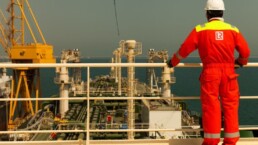

Safety risks of ammonia as a fuel can only be mitigated if effective technical and operational safeguards are implemented whilst addressing human factors considerations.
A joint study into ammonia safety onboard ships undertaken by the Lloyd’s Register Maritime Decarbonisation Hub and the Mærsk Mc-Kinney Møller Center for Zero Carbon Shipping , has found that a range of mitigation methods, from ship design to crew training and operations, are required to keep toxicity risks to crew within published tolerable limits.
‘Recommendations for Design and Operation of Ammonia-Fuelled Vessels based on Multi-disciplinary Risk Analysis’ presents the most comprehensive study to date of the effectiveness of risk mitigation measures in three ammonia-fuelled vessels – a container ship, a tanker and a bulk carrier.
Seen as one of the most promising alternative fuels for the maritime energy transition, ammonia can be combusted with almost no carbon dioxide (CO2) emissions. However, using ammonia as a shipping fuel can create potential safety hazards, including toxicity. It is crucial for shipping’s stakeholders to understand the risks of ammonia as a shipping fuel and the safeguards that can be implemented to reduce them to tolerable levels.
Using Quantitative Risk Assessment (QRA) analysis, a powerful data-driven method that allows users to assess risk in a quantitative and granular manner, the joint study has been able to identify vessel design and operational measures that would reduce ammonia risks to a tolerable level.
The QRA provides recommendations for design and operation of ammonia-fuelled vessels to embed higher levels of safety for crew. Recommendations included lower storage temperatures to reduce safety risk; provision for two or more separate spaces containing different groups of equipment that could leak ammonia; monitoring and minimising of access to and length of time spent in spaces containing ammonia equipment; ventilation outlets from spaces containing ammonia equipment placed in a safe location, adequately separated from areas accessed by crew; and installation of multiple sensors of different types to detect ammonia leaks.
To complement the QRA, the second section of this report summarises insights from an analysis of human factors considerations that will be impacted by a transition to ammonia fuel use. These include competence and training needed to improve safety on ammonia-fuelled vessels; safe work practices and standard procedures that need to be implemented through systematic change management programmes; and effective occupational health safeguards, such as personal protective equipment (PPE).

Dr. Andy Franks, Senior Decarbonisation Risk Specialist, LR Maritime Decarbonisation Hub, said: “The global energy transition drives a move from fossil fuels to alternative energy sources, which inevitably brings about new safety challenges and the need for shipping to manage more complex hazards. Our approach to understanding and mitigating the risks of ammonia as a shipping fuel incorporates both a quantitative data-driven approach to ship design as well as a human factors approach to address crew safety. Through these two approaches we provide practical insights that will support the industry in managing safety risks to crew within published tolerable limits.”
Claus Winter Graugaard, Chief Technology Officer, Onboard Vessel Solutions, Mærsk Mc-Kinney Møller Center for Zero Carbon Shipping, said: “To enable sustainable and scalable new energy pathways such as ammonia as a marine fuel, we must advance technological developments. However, in the eagerness to transform, we must do so without compromising safety and reliability, by employing a strong risk-based change management approach. Care of our seafarers and strong safety management are imperative. This study has given us deep insights into risk and will provide critical understanding and intelligence to help guide the industry towards safe application of ammonia as a marine fuel.”
The two decarbonisation centres have been involved in a number of ammonia projects. LR is undertaking key feasibility studies into using clean ammonia to refuel ships at the world-scale ports in the Pilbara region of Western Australia. The MMMZCS and its partners are jointly conducting a feasibility study to establish a supply chain for the provision of green ammonia ship-to-ship bunkering at the Port of Singapore.



Related News.
Beyond Technical Skills: WISTA Cyprus explores the human side of leadership
WISTA Cyprus hosted The Art of Leadership & Emotional Mastery, an interactive workshop held on 15 October at the Alasia Hotel in Limassol,…
The human cost of sending merchant mariners into war zones extends far beyond the immediate danger of missiles and drones. It raises a harder question: who is really protecting the seafarer?
Who protects the seafarer? I have spent much of my professional life at sea. I am a Master Mariner. I have stood on the bridge, made decisions…
Loss of bridge control: Human failure is normal – context is key
When bridge control is lost in a functioning system, it can be easy to blame human error. But accidents rarely happen because of one mistake…
Danish Shipping announces the transport of live animals by sea new rules should improve safety for animals, seafarers and the environment
Revised rules on the transport of live animals by sea are being negotiated in the EU. Danish Shipping wants to ensure good animal welfare,…
Japan’s flawed shipping proposal leaves developing countries adrift
A new analysis by Opportunity Green warns governments of the wide-ranging risks posed by Japan’s proposal at the International Maritime Organization…
Intermodal Report Week 42 2026
Pls find below the Intermodal Report - Week 42 2026 Intermodal Report Week 42 2026
Allied Weekly Market Review Week 42
Pls find below the Allied - Weekly Market Review - Week 42 ALLIED - Weekly Market Report- Week 42
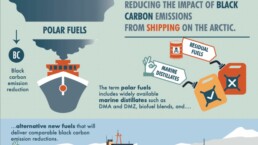
EU Arctic Strategy NGOs welcome EU ambition on on cutting shipping’s Arctic Black Carbon Emissions
Responding to today’s publication of the EU’s Arctic Strategy, which definitively states the EU’s intention to support International Maritime…
The final quarter of 2026 is expected to see softer bauxite flows
Chinese front-loading is expected to have run its course, pointing to softer bauxite flows in 2026 Q4. Global bauxite flows increased by 2.8% y/y…
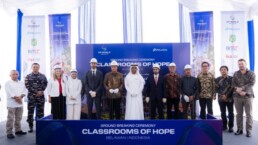
DP World Foundation and Belewan new container terminal mark groundbreaking of AED 3.7 million school project in Indonesia
Classrooms of Hope initiative expands to Belawan, Medan with a new junior high school designed to provide modern learning facilities and greater…
Subscribe to our newsletter!
if you dont want to swim alone in the ocean of news, sign up for the newsletter, and you will receive daily all the important news of world shipping!
