Ports play a major role in reducing shipping emissions highlighting the limitations of slow steaming

The International Maritime Organization has long been committed to reducing the industry’s carbon footprint, aiming for a minimum 50% reduction in GHG emissions by 2050 through stricter regulations and improved energy efficiency. However, recent discussions at the Green4Sea Forum in Athens have highlighted IMO’s challenges in developing credible plans and policies. Suppose the IMO fails to provide effective solutions. In that case, there is a risk that regional and national authorities will take unilateral actions to regulate emissions, potentially fragmenting the global shipping industry’s operations.
In the quest to reduce the shipping industry’s greenhouse gas (GHG) emissions, it has become increasingly evident that slow-steaming, a commonly employed strategy, may not be the ultimate solution everyone thought. Recent studies by Simpson Spence & Young and Clarksons have cast doubt on the effectiveness of slow-steaming, a widely employed strategy. These studies suggest that the benefits of slow steaming may have been overestimated due to unrealistic assumptions about fuel consumption and ship speed. Real-world evidence indicates that the relationship between ship speed and fuel consumption is more nuanced than previously believed, challenging the assumptions underlying the International Maritime Organization’s (IMO) Carbon Intensity Indicator (CII) regulation. This calls for a re-evaluation of strategies.
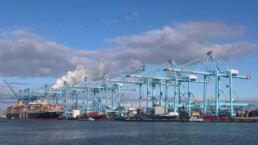
Instead, a greater focus on the role of ports in achieving emission reduction goals is beginning to be recognized and their role in helping shipping lines achieve emission reduction targets. Acknowledging ports as key partners in the fight against emissions highlights the need for a comprehensive approach to environmental sustainability in the maritime sector.
This recognition highlights the need for a comprehensive approach to environmental sustainability in the maritime sector, with ports serving as vital partners in the fight against emissions. So as the industry navigates these complexities, there is an urgent call for holistic approaches encompassing the entire logistics chain, with ports playing a pivotal role in achieving emission reduction targets.
The maritime sector is also increasingly turning to data-driven decision-making and digital solutions to address these challenges and accelerate the industry’s adaptation to a changing world. One notable example that brings these two ways of thinking together is the Port of Rotterdam, which has embarked on a sustainability journey to minimize its environmental impact. However, obtaining accurate real-time data on transport emissions proved to be a significant hurdle for the port, hampering the implementation of targeted improvement strategies.
To overcome this challenge, the Port of Rotterdam employed PortXchange Synchronizer developed by PortXchange, a spinoff of the Port of Rotterdam, a digital solution designed to align all stakeholders in a port call, reduce emissions and facilitate just-in-time arrivals. In addition to the implementation of PortXchange Synchronizer, the port Port of Rotterdam launched PortXchange EmissionInsider, a solution to monitor and analyze transport-related emissions. This solution enabled the port to gain unprecedented visibility into its transport emissions, standardize reporting and identify areas with the greatest potential for decarbonization. By leveraging AI algorithms and data triangulation, the platform provided comprehensive emissions profiles for each ship within the port’s jurisdiction, enabling data-driven decision-making to support emission reduction strategies.
Through the implementation of PortXchange Synchronizer, the port achieved a 20% reduction in CO2 emissions from shipping operations and a 15% decrease in NOx emissions. Collaboration with shipping companies was pivotal in promoting greener practices and driving sustainability initiatives forward.
The maritime industry is at a critical juncture where embracing digitalization, data-driven decision-making, and collaboration between ports and shipping lines are vital. By leveraging innovative technologies and taking a comprehensive approach to emissions reduction, the industry can pave the way for a greener and more sustainable future.



Related News.

Beyond Technical Skills: WISTA Cyprus explores the human side of leadership
WISTA Cyprus hosted The Art of Leadership & Emotional Mastery, an interactive workshop held on 15 October at the Alasia Hotel in Limassol,…
The human cost of sending merchant mariners into war zones extends far beyond the immediate danger of missiles and drones. It raises a harder question: who is really protecting the seafarer?
Who protects the seafarer? I have spent much of my professional life at sea. I am a Master Mariner. I have stood on the bridge, made decisions…

Loss of bridge control: Human failure is normal – context is key
When bridge control is lost in a functioning system, it can be easy to blame human error. But accidents rarely happen because of one mistake…

Danish Shipping announces the transport of live animals by sea new rules should improve safety for animals, seafarers and the environment
Revised rules on the transport of live animals by sea are being negotiated in the EU. Danish Shipping wants to ensure good animal welfare,…

Japan’s flawed shipping proposal leaves developing countries adrift
A new analysis by Opportunity Green warns governments of the wide-ranging risks posed by Japan’s proposal at the International Maritime Organization…

Intermodal Report Week 42 2026
Pls find below the Intermodal Report - Week 42 2026 Intermodal Report Week 42 2026

Allied Weekly Market Review Week 42
Pls find below the Allied - Weekly Market Review - Week 42 ALLIED - Weekly Market Report- Week 42
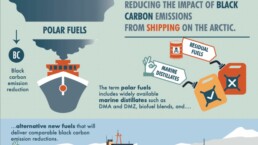
EU Arctic Strategy NGOs welcome EU ambition on on cutting shipping’s Arctic Black Carbon Emissions
Responding to today’s publication of the EU’s Arctic Strategy, which definitively states the EU’s intention to support International Maritime…

The final quarter of 2026 is expected to see softer bauxite flows
Chinese front-loading is expected to have run its course, pointing to softer bauxite flows in 2026 Q4. Global bauxite flows increased by 2.8% y/y…

DP World Foundation and Belewan new container terminal mark groundbreaking of AED 3.7 million school project in Indonesia
Classrooms of Hope initiative expands to Belawan, Medan with a new junior high school designed to provide modern learning facilities and greater…
Subscribe to our newsletter!
if you dont want to swim alone in the ocean of news, sign up for the newsletter, and you will receive daily all the important news of world shipping!
