Developers and Researchers Drive Outside-In Innovation


Evolution in the tech world happens fast. To keep up with the industry’s pace, SAP works closely with academia to help ensure that the company never loses touch with the latest trends and innovations.
To facilitate this, SAP Innovation Center Network, which is part of the New Ventures and Technologies unit, has established the academic partnership program. In this initiative, theory and practice go hand in hand. Academic research plays a crucial role in exploring new technology trends, but without a link back to the business, it can sometimes remain purely theoretical.
By partnering with academic institutions like the MIT Computer Science and Artificial Intelligence Lab, the Hasso Plattner Institute, and the University of Southern California, SAP can bring knowledge about emerging technology trends into the company.
This targeted exploration of forward-looking technologies with external experts from the academic community is referred to as “outside-in innovation.” It enables the company to identify trends at an early stage and to evaluate whether it is worth investing in a particular trend or not.
The academic partnership program includes engagements with several top-ranked universities around the globe. “We take a proactive approach,” explains Matthias Uflacker, location lead at the SAP Innovation Center Network location in Munich. “Once we have identified a promising topic area, we address academic experts directly.”
Uflacker says that flexibility is particularly important when exploring new fields of technology: “We want to take small steps and learn along the way.”
The individual projects with the universities are designed to run for a relatively short time, starting with a six-month or one-year plan, but with the option of extending them whenever results are promising.
An important criterion is always the relevance for SAP’s own mid- to long-term strategic goals and product visions. The program is therefore designed to help ensure that collaboration projects are either linked to existing projects and teams or supervised by SAP engineers.
SAP Innovation Center Network has been working on establishing three main pillars within their academic partnership program: academic fellowships, research sponsorships and community outreach.
The academic fellowship program started in 2020. Under it, SAP Innovation Center Network invites renowned university faculty to join SAP as visiting researchers. They then work on new ideas and promising exploration topics as members of an SAP team or multiple teams simultaneously. This enables them to bring their own research into an SAP context and validate it against real-world use cases. It also gives them a chance to influence SAP’s exploration and incubation of new technology and to earn reputation as a technology advisor.
Academic fellowships can be set up as full-time or part-time engagements – in the form of a sabbatical or freelance consulting work, for example. The program addresses different tiers of academic staff, ranging from post-doctoral researchers to junior and senior faculty.
Felix Naumann, professor for Information Systems at the Hasso Plattner Institute (HPI) in Potsdam, was one of the first scholars to dive into the SAP world as part of this program. He says he was able to garner a lot of knowledge and practical experience that he can bring back into his daily work at HPI.
Asked how the cooperation went, Naumann shares, “In academia, I try to generalize problems and find elegant solutions, while at SAP — very understandably — sometimes the thinking is much more practical, to solve the problem at hand and not think about it in a principled way. I think that both sides very much benefited from this difference.”
Naumann says that he can now use his insights to provide more valuable feedback to his PhD students.
He believes that this alliance is essential for innovation and progress.
“To solve real-world problems we need the real-world input and that remains a large difficulty, because SAP – for very good reasons – cannot share much of its data,” he explains. “This problem will not go away, so this is exactly why we need a close collaboration between academia and SAP.”
Research sponsorships through SAP Innovation Center Network support PhD-level and post-doctoral research projects in the area of computer science and related fields at relevant academic institutions. These can be either unrestricted donations or third-party budgets provided for contracted research services working on jointly defined projects.
A current example for a sponsored research project is the research on human-human dialogue understanding at the University of California, Irvine. From April 2020 to March 2021, researchers sponsored by SAP are working in collaboration with SAP employees at the SAP Innovation Center location in Newport Beach.
The project seeks to develop machine learning and natural language processing (NLP) algorithms to automatically analyze transcripts of human conversations in order to detect questions in the conversations and to characterize the quality of responses.
“It is common in academic research in this area to work with somewhat idealized testbed datasets,” explains Padhraic Smyth, Chancellor’s Professor at the Departments of Computer Science and Statistics. “These are very useful for building initial prototypes and testing research ideas, but they often underestimate the challenges of real-world environments, such as the variety of ways that we as humans express ideas and concepts through natural language.”
That is why the feedback of SAP researchers was so beneficial.
Community outreach is the third pillar of the academic partnership program, where SAP Innovation Center Network teams up with university students to tackle problems in technology.
This engagement happens through internships, campus events, student projects, and hackathons. The array of on-site and off-site events has so far included the support of the TEDx conference in Potsdam and other events such as the symposium on natural language processing in California.
One example of a successful community outreach cooperation is user behavior mining, which started out as a thesis project for a bachelor’s course at the Hasso Plattner Institute in 2019. The students worked together with the SAP teams based in Potsdam, Walldorf, and Newport Beach and delivered concepts and prototypes for tracking behavioral patterns when using SAP Fiori apps. The prototypes have been successfully evaluated with customers, and have now been productized by teams in the New Ventures and Technologies unit.
Overall, the academic partnership program benefits both SAP and the research institutions: SAP can sound out which new business and technology trends should be addressed within the company while researchers can validate their studies in a real-world environment.



Related News.
Beyond Technical Skills: WISTA Cyprus explores the human side of leadership
WISTA Cyprus hosted The Art of Leadership & Emotional Mastery, an interactive workshop held on 15 October at the Alasia Hotel in Limassol,…

The human cost of sending merchant mariners into war zones extends far beyond the immediate danger of missiles and drones. It raises a harder question: who is really protecting the seafarer?
Who protects the seafarer? I have spent much of my professional life at sea. I am a Master Mariner. I have stood on the bridge, made decisions…

Loss of bridge control: Human failure is normal – context is key
When bridge control is lost in a functioning system, it can be easy to blame human error. But accidents rarely happen because of one mistake…
Danish Shipping announces the transport of live animals by sea new rules should improve safety for animals, seafarers and the environment
Revised rules on the transport of live animals by sea are being negotiated in the EU. Danish Shipping wants to ensure good animal welfare,…

Japan’s flawed shipping proposal leaves developing countries adrift
A new analysis by Opportunity Green warns governments of the wide-ranging risks posed by Japan’s proposal at the International Maritime Organization…
Intermodal Report Week 42 2026
Pls find below the Intermodal Report - Week 42 2026 Intermodal Report Week 42 2026
Allied Weekly Market Review Week 42
Pls find below the Allied - Weekly Market Review - Week 42 ALLIED - Weekly Market Report- Week 42
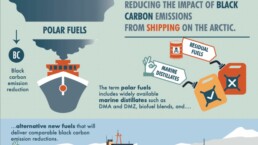
EU Arctic Strategy NGOs welcome EU ambition on on cutting shipping’s Arctic Black Carbon Emissions
Responding to today’s publication of the EU’s Arctic Strategy, which definitively states the EU’s intention to support International Maritime…
The final quarter of 2026 is expected to see softer bauxite flows
Chinese front-loading is expected to have run its course, pointing to softer bauxite flows in 2026 Q4. Global bauxite flows increased by 2.8% y/y…
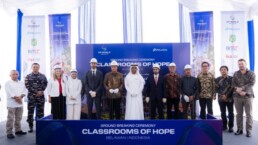
DP World Foundation and Belewan new container terminal mark groundbreaking of AED 3.7 million school project in Indonesia
Classrooms of Hope initiative expands to Belawan, Medan with a new junior high school designed to provide modern learning facilities and greater…
Subscribe to our newsletter!
if you dont want to swim alone in the ocean of news, sign up for the newsletter, and you will receive daily all the important news of world shipping!
