Augmented Reality and the Shipping Industry: 2010 – 2020 in Review


According to Statista, the augmented reality (AR) and virtual reality (VR) sector would grow to become a $75 billion behemoth by 2024. Goldman Sachs forecasts that the sector would have a market size of $95 billion by 2025. For an industry that was worth $6 billion just four years ago (in 2016), these numbers are staggering.
However, they accurately represent the meteoric rise of AR and VR on the world stage. Over the past 10 years in particular, the technologies have seen more global business sectors adopt them and build viable use-cases around them. From entertainment to healthcare, education, automotive, retail, aerospace, and maritime.
In this post, we bring into focus the budding relationship between the shipping industry and augmented/virtual reality. We highlight some progress made since 2010 and how it bodes well for future growth in both sectors.
- Winterthur Gas & Diesel (WinGD) opened up its Full Mission Simulator (FMS) for virtual reality training of engine room crew in 2017. The FMS is situated at the Marine Power Academy Training Center in Shanghai China, a facility that trains over 500 crew members every year. WinGD’s simulator is just one of 20+ such installations spread around the world.
- Mitsui O.S.K. Lines (MOL) launched a VR-powered training goggle that provides a deeper level of immersion and realism, enabling seafarers to safely train and onboard, as well as replicate training scenarios and difficult work operations beforehand.
- In 2019, the UK government announced plans to leverage AR and VR for seafarer training in the region. According to the release, an innovation hub will be created at a UK port before 2030, and legislation will be passed that supports further testing of autonomous vehicles in the United Kingdom. These initiatives are geared towards reducing emissions and improving training.
- The European Union recently established a project that develops and tests AR bridge systems; this is expected to improve navigation safety and efficiency in Arctic ship operations. €6.5 million has been earmarked for this 3-year-long undertaking. Partners in this project include recognized maritime stakeholders like Lloyd’s Register, Stena Rederi, and Aker Arctic, along with institutions like the University College London, Cork Institute of Technology, Harbin Engineering University, and Aalto University.
- In 2020, SEAHARMONY launched its augmented reality web platform, creating a way for maritime industry participants to leverage remote capabilities. Via the platform, shipowners can conduct virtual tours of their vessels, carry out emergency repairs and maintenance checks, facilitate collaboration between officers at sea and technical experts in another country, and so on. You can learn more about the SEAHARMONY platform here.
Crew training, shipping logistics, remote collaboration, virtual tours, and seafarer safety are just some ways AR and VR can be adopted for the maritime sector. In the coming years, the expectation is that more use-cases will be discovered and the current AR/VR models would have been improved significantly.



Related News.

Beyond Technical Skills: WISTA Cyprus explores the human side of leadership
WISTA Cyprus hosted The Art of Leadership & Emotional Mastery, an interactive workshop held on 15 October at the Alasia Hotel in Limassol,…
The human cost of sending merchant mariners into war zones extends far beyond the immediate danger of missiles and drones. It raises a harder question: who is really protecting the seafarer?
Who protects the seafarer? I have spent much of my professional life at sea. I am a Master Mariner. I have stood on the bridge, made decisions…
Loss of bridge control: Human failure is normal – context is key
When bridge control is lost in a functioning system, it can be easy to blame human error. But accidents rarely happen because of one mistake…

Danish Shipping announces the transport of live animals by sea new rules should improve safety for animals, seafarers and the environment
Revised rules on the transport of live animals by sea are being negotiated in the EU. Danish Shipping wants to ensure good animal welfare,…

Japan’s flawed shipping proposal leaves developing countries adrift
A new analysis by Opportunity Green warns governments of the wide-ranging risks posed by Japan’s proposal at the International Maritime Organization…

Intermodal Report Week 42 2026
Pls find below the Intermodal Report - Week 42 2026 Intermodal Report Week 42 2026

Allied Weekly Market Review Week 42
Pls find below the Allied - Weekly Market Review - Week 42 ALLIED - Weekly Market Report- Week 42
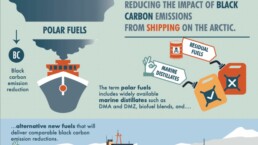
EU Arctic Strategy NGOs welcome EU ambition on on cutting shipping’s Arctic Black Carbon Emissions
Responding to today’s publication of the EU’s Arctic Strategy, which definitively states the EU’s intention to support International Maritime…

The final quarter of 2026 is expected to see softer bauxite flows
Chinese front-loading is expected to have run its course, pointing to softer bauxite flows in 2026 Q4. Global bauxite flows increased by 2.8% y/y…

DP World Foundation and Belewan new container terminal mark groundbreaking of AED 3.7 million school project in Indonesia
Classrooms of Hope initiative expands to Belawan, Medan with a new junior high school designed to provide modern learning facilities and greater…
Subscribe to our newsletter!
if you dont want to swim alone in the ocean of news, sign up for the newsletter, and you will receive daily all the important news of world shipping!
