World’s First Truly Global, Real-Time Maritime Emergency Service (GMDSS) launched by Iridium
The Global Maritime Distress and Safety System (GMDSS) now covers 100% of the globe with real-time satellite connectivity for the first time
Iridium Communications Inc. (NASDAQ: IRDM) today announced a historic achievement with the launch of the Iridium® Global Maritime Distress and Safety System (GMDSS) service. The system commenced operation on Friday, December 11th and with it, for the first time in history, Iridium has given seafarers a real-time emergency response and rescue service that works everywhere in the world. No other maritime emergency response system matches the coverage and real-time communications capability of the Iridium GMDSS service. The announcement came during a virtual press conference held featuring Iridium leadership, industry officials and experts.
GMDSS is an internationally regulated service, governed by the International Maritime Organization’s (IMO) Safety of Life at Sea (SOLAS) convention. It provides life-saving assistance to seafarers in distress and has required equipment on board more than 60,000 ships today, with many ships carrying multiple terminals. Iridium’s service functions much like an international SOS button, however, unlike other options it includes as standard real-time emergency voice calling service, distress alert (SOS button) and maritime safety information with Iridium’s unmatched truly global coverage.
Iridium’s GMDSS service is built on the company’s upgraded $3 billion satellite network, completed in 2019, and utilizes the company’s valuable L-band satellite spectrum. This spectrum serves as a weather-resilient complement to other satellite broadband capabilities on ships, aircraft and vehicles and is also a requirement for GMDSS terminals on SOLAS-class vessels. With over 1.4 million subscribers around the world, including communications systems on tens of thousands of ships and aircraft today, Iridium’s GMDSS service launch epitomizes the company’s commitment and tradition of creating a safer environment for the approximately 85% of the world that lacks any or reliable cell phone coverage.
The press event included remarks from Iridium CEO Matt Desch; International Maritime Organization Director of Maritime Safety Heike Deggim; International Mobile Satellite Organization (IMSO) Director General Captain Moin Ahmed; MAERSK Master Mariner and Senior Marine Specialist Captain Brian Soberg Petersen and Rescue Coordination Center of New Zealand (RCCNZ) Watch Leader and Senior Search and Rescue Officer David Wilson.
“This is a historic moment in both the satellite and maritime industries,” said Matt Desch, CEO of Iridium. “It is not every day that you get to announce the launch of a service that will most certainly save lives and is bringing innovation to this important maritime service.”
IMO Director of Maritime Safety Heike Deggim shared, “On behalf of the International Maritime Organization, I extend my sincere congratulations to Iridium for announcing the formal launch of its GMDSS services.”
Captain Moin Ahmed, Director General of IMSO, regulator of the GMDSS system, provided some additional context regarding the qualification process for Iridium noting, “Overall, our formal evaluation of Iridium took more than four years, and at each step Iridium successfully demonstrated that its Safety Voice, Distress Alert and Iridium SafetyCastSM maritime environment broadcasts not only met all IMO requirements but in many cases exceeded them. I am proud to be a part of this event and this historic moment.”
Master Mariner and Senior Marine Specialist for MAERSK Captain Brian Soberg Petersen shared his experience as part of the testing process and stated, “At Maersk, we have been very satisfied with the capabilities of the Iridium system and are presently analyzing our future communications plans, where we believe Iridium GMDSS could serve an additional function as a backup data connection as well, in lieu of our existing system.”
Speaking from the Rescue Coordination Center perspective, Watch Leader and Senior Search and Rescue Officer for RCC New Zealand Dave Wilson spoke towards their experience with the new system; “Having played a significant role in the developmental testing of the Iridium GMDSS, both from shore-to-ship and the ship-to-shore pathways, this new system is the type of technological advancement that will enhance GMDSS. Our team at the Rescue Coordination Center of New Zealand, and the crew of the New Zealand research vessel that has been assisting with the testing, have been very impressed with the Iridium GMDSS system.”
As the successor to safety measures originally established after the sinking of the RMS Titanic, the technological capabilities of the GMDSS have now reached a new pinnacle with voice, data, and maritime safety information (MSI) all available through one affordable terminal. The first terminal available is the Lars Thrane LT-3100S, which combines the three key GMDSS services – distress alert, distress voice and MSI. It can be used for both primary and emergency ship communications. The combination of all three services in one cost-effective terminal is a first for the industry and one that makes the GMDSS even more accessible to smaller vessels that may not otherwise be able to afford the equipment.
Desch continued, “When we started this process, there was no process. No company had ever tried to do what we have now achieved. In partnership with the IMO, U.S. Coast Guard and IMSO, a system to allow for Iridium to provide GMDSS service had to be invented.”
“Developing and qualifying a GMDSS system was extremely challenging, so we didn’t want to just do the minimum or what has been done before. We wanted to make our system more accessible, affordable and feature-rich,” Desch stated.
Here’s how it works:
Once a vessel holds down the red ‘distress’ button, indicating that it needs assistance, a signal is immediately routed through the Iridium satellite network and delivered in moments to a designated Rescue Coordination Center (RCC). Unique to the Iridium system, this is then followed automatically by a distress phone call, allowing the vessel to immediately speak with the RCC. The RCC then can quickly understand the nature of the emergency, while also alerting nearby vessels and local search and rescue authorities to provide the required immediate assistance.
Iridium started the process to become a GMDSS service provider in 2013 and had to meet several objectives before formally ending what was a decades-long monopoly held by another satellite company. After being recognized by the IMO’s Maritime Safety Committee to provide GMDSS service, Iridium has worked closely with its regulator, IMSO, to meet all conditions required for service introduction. Aside from technical integrations around the world, this has included the signing of a Public Services Agreement with IMSO in April of 2019, which details the conditions for IMSO to act as regulator and maintain oversight of Iridium’s GMDSS services and a Letter of Compliance in December 2019 stating that Iridium was authorized to begin providing service when ready.



Related News.

Beyond Technical Skills: WISTA Cyprus explores the human side of leadership
WISTA Cyprus hosted The Art of Leadership & Emotional Mastery, an interactive workshop held on 15 October at the Alasia Hotel in Limassol,…
The human cost of sending merchant mariners into war zones extends far beyond the immediate danger of missiles and drones. It raises a harder question: who is really protecting the seafarer?
Who protects the seafarer? I have spent much of my professional life at sea. I am a Master Mariner. I have stood on the bridge, made decisions…
Loss of bridge control: Human failure is normal – context is key
When bridge control is lost in a functioning system, it can be easy to blame human error. But accidents rarely happen because of one mistake…

Danish Shipping announces the transport of live animals by sea new rules should improve safety for animals, seafarers and the environment
Revised rules on the transport of live animals by sea are being negotiated in the EU. Danish Shipping wants to ensure good animal welfare,…
Japan’s flawed shipping proposal leaves developing countries adrift
A new analysis by Opportunity Green warns governments of the wide-ranging risks posed by Japan’s proposal at the International Maritime Organization…

Intermodal Report Week 42 2026
Pls find below the Intermodal Report - Week 42 2026 Intermodal Report Week 42 2026

Allied Weekly Market Review Week 42
Pls find below the Allied - Weekly Market Review - Week 42 ALLIED - Weekly Market Report- Week 42
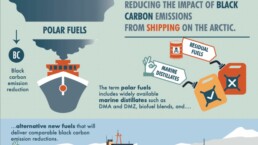
EU Arctic Strategy NGOs welcome EU ambition on on cutting shipping’s Arctic Black Carbon Emissions
Responding to today’s publication of the EU’s Arctic Strategy, which definitively states the EU’s intention to support International Maritime…
The final quarter of 2026 is expected to see softer bauxite flows
Chinese front-loading is expected to have run its course, pointing to softer bauxite flows in 2026 Q4. Global bauxite flows increased by 2.8% y/y…

DP World Foundation and Belewan new container terminal mark groundbreaking of AED 3.7 million school project in Indonesia
Classrooms of Hope initiative expands to Belawan, Medan with a new junior high school designed to provide modern learning facilities and greater…
Subscribe to our newsletter!
if you dont want to swim alone in the ocean of news, sign up for the newsletter, and you will receive daily all the important news of world shipping!
