We have a shared responsibility for bringing our seafarers home


The holiday season is approaching fast for much of the world’s population and will be an opportunity for many to spend time with family and friends. But for thousands of seafarers, the ongoing crew change crisis deprives them even of the hope of being home in time for the holidays.
Many Governments have responded to the Covid-19 pandemic by closing their borders and banning seafarers from coming ashore, even for medical treatment in some cases. These restrictions have led to many of the world’s seafarers becoming trapped working aboard cargo vessels well beyond the expiry of the initial contracts they signed up for. While significant efforts by individual companies, international organizations, industry associations, labor unions, NGOs, and some governments, has improved the situation, the reality of this humanitarian crisis continues.
This is an unacceptable way to treat seafarers, who are the frontline workers of global seaborne trade, as fatigue after extended periods at sea has significant consequences on physical and mental wellbeing. Fatigue also increases the risk of maritime incidents and environmental disasters and poses a wider threat to the integrity of global supply chains dependent on safe and reliable maritime transport.
This is why we – following initial discussions at the Global Maritime Forum’s Virtual High-Level Meeting in October – have established a taskforce of key stakeholders from across the maritime value chain to develop concrete actions to help resolve the crew change crisis as quickly as possible.
In our work, we have identified the following issues that must be addressed:
Recognize seafarers as key workers and treat them accordingly by giving them early access to Covid-19 vaccinations
Maritime trade is essential to the well-being of society. Seafarers are the key workers that allow global supply chains to continue to operate even during a global pandemic. This has been recognized by the UN General Assembly, which on 1 December adopted a resolution calling for all governments to give seafarers key worker status. But the key workers status only helps if it leads to tangible government action, for instance by facilitating international travel and by giving seafarers priority access to Covid-19 vaccinations.
Implement high-quality health protocols
One reason for the current crisis are the restrictions on crew changes that many governments have put in place to prevent the spread of Covid-19. To build trust that the removal of such barriers can be done safely, we need to implement high-quality health protocols to ensure seafarers can move safely and securely to-and-from ships, via airports and other transport hubs.
The good news is that the maritime industry has already developed such protocols, which have been recognized by the International Maritime Organization. Unfortunately, these protocols have not been consistently implemented across all relevant jurisdictions or by all relevant stakeholders.
In our discussions, we have identified the Singapore Shipping Tripartite Alliance Resilience (SG-STAR) Fund initiative as a gold standard that we recommend other jurisdictions to adopt to facilitate safe crew changes. SG-STAR Fund is a collaboration between the government of Singapore, the shipping industry including the International Chamber of Shipping and seafarer unions such as the ITF, that recommend best practices and safe measures in the home country of the seafarer as well as in the country where the crew change will take place.
Increase collaboration between ship operators and charterers to facilitate crew changes
Companies in the maritime logistics chain often specialize in delivering specific core services, which allows them to operate in a highly efficient manner. But under the current unprecedented circumstances, the nature of the industry also creates challenges.
One such challenge is in the interplay between ship operators and charterers. When a normal crew change cannot be carried out due to government restrictions or a lack of airline connectivity, the ship operator needs permission from the charterer before deviating to another port or delaying departure to allow a crew change to take place. In many circumstances the ship owners and the charterers have managed to find workable solutions, but there have also been many instances where this has not been the case, leaving the seafarers to pay the price.
We believe that facilitating crew changes is a shared responsibility. Ship owners and charterers should collaborate to ensure that necessary crew changes can be carried out with the least impact possible in terms of cost and delays. The owner should provide the charterer with all relevant information and as much notice as possible on intended crew changes, while the charterer should make all reasonable efforts to accommodate necessary crew changes, including when the vessel has to make a reasonable deviation.
In particular, no charter contracts should contain clauses preventing necessary crew changes from being carried out, as the aggregate effect of such clauses could be a serious obstacle to the safe operation of maritime trade and the protection of the well-being and rights of seafarers.
Ensure airline connectivity between key maritime hubs
The disruption of international air travel has reduced the number of flights, causing connectivity issues between major crew change hubs and major seafaring nations. This is an issue that cannot be solved by the maritime industry alone. We need to work closely together with the aviation industry to ensure that sufficient airlift capacity is established between major crew changing hubs and seafaring nations.
Additionally, the aviation and maritime industries and governments should work together to establish a universally accepted and harmonized framework of standards for the validation of trusted health data for seafarers to facilitate border crossing. Such standards will not only help address the current pandemic but will also ensure long-term resilience in the event of a future pandemic.
Take action to deliver on our shared responsibility
We have a shared responsibility to ensure that the current crew change crisis is resolved as soon as possible, and that we use the learnings from the crisis as an opportunity to build a more resilient maritime supply chain.
We commit to take action to resolve the crew change crisis, based on our position in the value-chain, thereby ensuring the rights and wellbeing of the seafarers We call on our peers and other stakeholders to join us in our efforts, for instance by signing the declaration on Seafarer Wellbeing and Crew Change that we will be launching in the beginning of the new year.
By joining forces to address the root causes of the crew change crisis, we can ensure that this holiday season will be the last where so many seafarers are stuck on ships beyond their tours of duty rather than celebrating at home with their loved ones.
Signed:
Graham Westgarth, Chairman, V. Group
Jeremy Nixon, Chief Executive Officer, Ocean Networks Express
Alex Hadjipateras, Executive Vice President of Business Development, Dorian LPG
Andrew Barker, Global Operations Director, Cargill Ocean Transportation
Andrew Stephens, Executive Director, Sustainable Shipping Initiative
Capt. Belal Ahmed, Chairman, International Maritime Employers’ Council
Gerardo Borromeo, Chief Executive Officer, Philippine Transmarine Carriers
Guy Platten, Secretary General, International Chamber of Shipping
Kasper Søgaard, Head of Research, Global Maritime Forum
Markos Nomikos, Owner, A.M. Nomikos & Son
Margi Van Gogh, Head of Supply Chain & Transport, World Economic Forum
Paul Wogan, Chief Executive Officer, Gaslog
Rohit Banta, Director, Synergy Group
Steven Cotton, General Secretary, International Transportation Workers’ Federation
Source: Global Maritime Forum
Related News.
October 22, 2026
Beyond Technical Skills: WISTA Cyprus explores the human side of leadership
WISTA Cyprus hosted The Art of Leadership & Emotional Mastery, an interactive workshop held on 15 October at the Alasia Hotel in Limassol,…
October 22, 2026
The human cost of sending merchant mariners into war zones extends far beyond the immediate danger of missiles and drones. It raises a harder question: who is really protecting the seafarer?
Who protects the seafarer? I have spent much of my professional life at sea. I am a Master Mariner. I have stood on the bridge, made decisions…
October 22, 2026
Loss of bridge control: Human failure is normal – context is key
When bridge control is lost in a functioning system, it can be easy to blame human error. But accidents rarely happen because of one mistake…

October 22, 2026
Danish Shipping announces the transport of live animals by sea new rules should improve safety for animals, seafarers and the environment
Revised rules on the transport of live animals by sea are being negotiated in the EU. Danish Shipping wants to ensure good animal welfare,…

October 22, 2026
Japan’s flawed shipping proposal leaves developing countries adrift
A new analysis by Opportunity Green warns governments of the wide-ranging risks posed by Japan’s proposal at the International Maritime Organization…

October 22, 2026
Intermodal Report Week 42 2026
Pls find below the Intermodal Report - Week 42 2026 Intermodal Report Week 42 2026

October 22, 2026
Allied Weekly Market Review Week 42
Pls find below the Allied - Weekly Market Review - Week 42 ALLIED - Weekly Market Report- Week 42
October 22, 2026
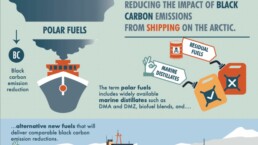
EU Arctic Strategy NGOs welcome EU ambition on on cutting shipping’s Arctic Black Carbon Emissions
Responding to today’s publication of the EU’s Arctic Strategy, which definitively states the EU’s intention to support International Maritime…

October 22, 2026
The final quarter of 2026 is expected to see softer bauxite flows
Chinese front-loading is expected to have run its course, pointing to softer bauxite flows in 2026 Q4. Global bauxite flows increased by 2.8% y/y…

October 22, 2026
DP World Foundation and Belewan new container terminal mark groundbreaking of AED 3.7 million school project in Indonesia
Classrooms of Hope initiative expands to Belawan, Medan with a new junior high school designed to provide modern learning facilities and greater…
Subscribe to our newsletter!
if you dont want to swim alone in the ocean of news, sign up for the newsletter, and you will receive daily all the important news of world shipping!
Design & Development by P.KAN.DESIGNER
© 2026 Cyprus Shipping News. All rights reserved
Design & Development by P.KAN.DESIGNER
© 2026 Cyprus Shipping News. All rights reserved