Trialling Just-In-Time Arrival
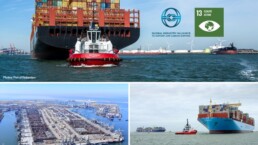

Another desktop trial in “Just-In-Time” (JIT) ship operations has yielded positive results, showing emissions can be cut considerably. JIT operations have the potential to cut the time ships spend idling outside ports and help reduce harmful emissions. This can be achieved by communicating in advance the relevant information to the ship about the requested time of arrival – allowing the ship to adjust to optimum speed.
The trial was conducted online (2 and 9 December) by members of the IMO-led Global Industry Alliance to Support Low Carbon Shipping (Low Carbon GIA) and follows on from previous work undertaken by the Alliance. During the exercise, JIT emission reduction calculations undertaken by the Port of Rotterdam were validated and discussed.
For the calculations, 26 vessels which called at one particular terminal in the Port of Rotterdam were analyzed (one month of data). Firstly, real fuel consumption and emissions figures were calculated for each ship (using a reference vessel fuel model) for the last 24 hours of the voyage prior to arrival at the port.
Then two JIT scenarios were modelled. The 26 ships received an update on when they were requested to arrive at thePilot Boarding Place: in one scenario 24 hours before arrival at the pilot boarding place and in the other 12 hours, and subsequently optimized their speed. The time that the ship is requested to arrive at the pilot boarding place is dependent on a number of variables, including the availability of the berth of the terminal, the fairway as well as pilots, tugs and boatmen. But this information is nowadays often only sent when the ship is already relatively close to port, normally about two hours sailing from the pilot boarding place when the vessel makes contact with the Vessel Traffic Service.
Comparing the real case with the two JIT scenarios, on average, the 26 ships consumed 9% less fuel in the JIT scenario where speed was optimized in the last 12 hours. Optimizing speed in the last 24 hours of the voyage resulted in average fuel savings of 8% over last 24 hrs. These results show the significant fuel and emission savings that canbe achieved through JIT, even when a relatively advanced port is called by relatively efficiently operated ships.
The results also underline the importance of information exchange in the optimization of a port call.
Discussions showed that the timestamps as defined in the IMO Compendium on Facilitation and Electronic Businessdo reflect the current way of conducting port operations and therefore will bring harmonization to timestamps’ names and definitions across ports. However, since process owners vary from port to port, a specific implementation will be needed in each port.
The exercise was conducted by representatives from the Port of Rotterdam, ship companies Maersk and MSC, and IMO. The Low Carbon GIA is a public–private partnership which aims to identify and develop innovative solutions to address common barriers to the uptake and implementation of energy efficiency technologies and operational measures. The Low Carbon GIA operates under the framework of the IMO-Norway GreenVoyage2050 Project.



Related News.

Beyond Technical Skills: WISTA Cyprus explores the human side of leadership
WISTA Cyprus hosted The Art of Leadership & Emotional Mastery, an interactive workshop held on 15 October at the Alasia Hotel in Limassol,…

The human cost of sending merchant mariners into war zones extends far beyond the immediate danger of missiles and drones. It raises a harder question: who is really protecting the seafarer?
Who protects the seafarer? I have spent much of my professional life at sea. I am a Master Mariner. I have stood on the bridge, made decisions…
Loss of bridge control: Human failure is normal – context is key
When bridge control is lost in a functioning system, it can be easy to blame human error. But accidents rarely happen because of one mistake…

Danish Shipping announces the transport of live animals by sea new rules should improve safety for animals, seafarers and the environment
Revised rules on the transport of live animals by sea are being negotiated in the EU. Danish Shipping wants to ensure good animal welfare,…

Japan’s flawed shipping proposal leaves developing countries adrift
A new analysis by Opportunity Green warns governments of the wide-ranging risks posed by Japan’s proposal at the International Maritime Organization…

Intermodal Report Week 42 2026
Pls find below the Intermodal Report - Week 42 2026 Intermodal Report Week 42 2026

Allied Weekly Market Review Week 42
Pls find below the Allied - Weekly Market Review - Week 42 ALLIED - Weekly Market Report- Week 42
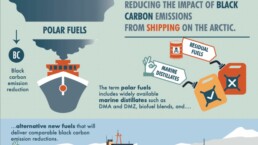
EU Arctic Strategy NGOs welcome EU ambition on on cutting shipping’s Arctic Black Carbon Emissions
Responding to today’s publication of the EU’s Arctic Strategy, which definitively states the EU’s intention to support International Maritime…

The final quarter of 2026 is expected to see softer bauxite flows
Chinese front-loading is expected to have run its course, pointing to softer bauxite flows in 2026 Q4. Global bauxite flows increased by 2.8% y/y…

DP World Foundation and Belewan new container terminal mark groundbreaking of AED 3.7 million school project in Indonesia
Classrooms of Hope initiative expands to Belawan, Medan with a new junior high school designed to provide modern learning facilities and greater…
Subscribe to our newsletter!
if you dont want to swim alone in the ocean of news, sign up for the newsletter, and you will receive daily all the important news of world shipping!
