SAP and Microsoft Partner to run supply chain and industry 4.0 in the cloud
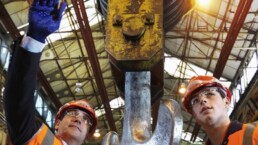

SAP and Microsoft announced today an expanded partnership to enable customers to design and operate intelligent digital supply chain and Industry 4.0 solutions in the cloud and at the edge.
The partnership, which includes a collaborative approach to standards, consortia, and open source, will shape the future of supply chain and manufacturing.
SAP Digital Supply Chain and Industry 4.0 Solutions Run on Microsoft Azure
As a result of this partnership, organizations will be able to use a comprehensive set of SAP Digital Supply Chain solutions on Microsoft Azure, including SAP solutions for digital manufacturing, SAP Intelligent Asset Management solutions, SAP Integrated Business Planning, and SAP Logistics Business Network.
SAP will use Microsoft Azure to run these solutions in a software-as-a-service (SaaS) model that can help reduce the customer’s need to manage the software and underlying infrastructure while accelerating time to value of supply chain applications. Customers will be able to scale globally by leveraging Azure which offers enterprise-grade compute, storage, and network services to support mission-critical performance and business continuity to run SAP Digital Supply Chain solutions.
SAP Manufacturing Suite, SAP Intelligent Asset Management, supply chain networks solutions from SAP, and the SAP Internet of Things (SAP IoT) solution are already available on Microsoft Azure in Europe and the United States today.
SAP and Microsoft Collaborating to Bring Business Processes to the Edge
When managing a global, distributed supply chain and manufacturing environment, companies face challenges with constrained bandwidth, latency, and massive volumes of data that can adversely affect execution and quality scenarios. Here, the solution lies in edge computing.
Think of edge computing as a form of distributed computing where data, applications, and business processes are run near the source of generated data. The ability to extend and run business processes at the edge enables organizations with factories, plants, warehouses or remote operations, to fully automate and run their operations independently – enabling faster processing and support for data residency requirements. Customers have the choice to only send data to the cloud that is relevant for additional analysis or an aggregated view across many edges to save costs.
SAP and Microsoft are also collaborating to make SAP solutions available on Microsoft Azure Stack Edge, starting with SAP Digital Manufacturing Cloud. This helps manufacturers process data locally across machines and control systems to address latency or connectivity restraints.
Customers are empowered to choose what business process to run in the cloud or at the edge based on business need; they can deploy specific business processes and relevant business data to specific edge nodes using SAP Edge Services. According to IDC research, “70% of IoT deployments by 2023 will include edge-based decision-making to support organizations’ operational and strategic agendas.” The report also states that by “2023, 70% of enterprises will run varying levels of data processing at the IoT edge. In tandem, organizations will spend over $16 billion on IoT edge infrastructure in that time.”
Customers have a choice to use either Microsoft Azure IoT or SAP IoT to bring their time series data to the cloud. Time series data collected from machines or devices at the edge and sent to the cloud is of little value on its own. Companies need to put time series data into business context by augmenting it with information stored in business applications for materials, products, customers, inventory, assets, and more. Combining business semantics and time series data using the SAP IoT solution creates business relevance, leading organizations to improved business outcomes and better decision-making.
“The expansion of the partnership between SAP and Microsoft provides our mutual customers with the ability to leverage SAP Digital Supply Chain and manufacturing solutions in the cloud to gain better business insights and accelerate the time-to-value as they roll out their applications on a global scale. By extending SAP Digital Supply Chain solutions and the Azure cloud capabilities to the edge with Azure Stack Edge, businesses will also be able to manage SAP solutions locally across their factories and warehouses to drive immediate decision-making and actions where they are needed,” said Ulrich Homann, corporate vice president of Cloud + AI at Microsoft.
Companies Will Provide Reference Architecture as Guidance to Their Customers
The partnership in supply chain and manufacturing will be further enhanced with reference architectures to provide customers guidance on deploying SAP Digital Supply Chain on Azure and the integration of SAP and Microsoft products and services, building on previously developed architecture blueprints.
For example, customers have a choice to use either Microsoft Azure IoT or SAP IoT to bring their time series data to the cloud. Time series data collected from machines or devices at the edge, and sent to the cloud, may be of little value on its own. Companies need to put time series data into business context by augmenting it with information stored in business applications for materials, products, customers, inventory, assets, and more. Combining business semantics and time series data using the SAP IoT solution creates business relevance, leading organizations to improved business outcomes and better decision-making.
SAP and Microsoft Shape the Future of Industry 4.0 with Open Standards
With software development and standards, the benefits of aligned reference architectures and common semantics are obvious. Adopting industrial standards and creating shared asset models in industrial IT are as significant to digital supply chain as a dictionary is to literacy. Business partners who wish to succeed in this space need to endorse open standards, open consortia, and open source.
As part of this partnership, SAP and Microsoft will work together to drive compatibility and interoperability across industrial machines, software, and services as members of consortia like the Open Manufacturing Platform and the Open Industry 4.0 Alliance – to aid in the accelerated path to value of supply chain and Industry 4.0-related solutions based on open standards.
Companies that want to learn more about this exciting partnership and the benefits it brings should contact their SAP account team for further details.



Related News.

Beyond Technical Skills: WISTA Cyprus explores the human side of leadership
WISTA Cyprus hosted The Art of Leadership & Emotional Mastery, an interactive workshop held on 15 October at the Alasia Hotel in Limassol,…

The human cost of sending merchant mariners into war zones extends far beyond the immediate danger of missiles and drones. It raises a harder question: who is really protecting the seafarer?
Who protects the seafarer? I have spent much of my professional life at sea. I am a Master Mariner. I have stood on the bridge, made decisions…

Loss of bridge control: Human failure is normal – context is key
When bridge control is lost in a functioning system, it can be easy to blame human error. But accidents rarely happen because of one mistake…
Danish Shipping announces the transport of live animals by sea new rules should improve safety for animals, seafarers and the environment
Revised rules on the transport of live animals by sea are being negotiated in the EU. Danish Shipping wants to ensure good animal welfare,…

Japan’s flawed shipping proposal leaves developing countries adrift
A new analysis by Opportunity Green warns governments of the wide-ranging risks posed by Japan’s proposal at the International Maritime Organization…
Intermodal Report Week 42 2026
Pls find below the Intermodal Report - Week 42 2026 Intermodal Report Week 42 2026

Allied Weekly Market Review Week 42
Pls find below the Allied - Weekly Market Review - Week 42 ALLIED - Weekly Market Report- Week 42
EU Arctic Strategy NGOs welcome EU ambition on on cutting shipping’s Arctic Black Carbon Emissions
Responding to today’s publication of the EU’s Arctic Strategy, which definitively states the EU’s intention to support International Maritime…
The final quarter of 2026 is expected to see softer bauxite flows
Chinese front-loading is expected to have run its course, pointing to softer bauxite flows in 2026 Q4. Global bauxite flows increased by 2.8% y/y…

DP World Foundation and Belewan new container terminal mark groundbreaking of AED 3.7 million school project in Indonesia
Classrooms of Hope initiative expands to Belawan, Medan with a new junior high school designed to provide modern learning facilities and greater…
Subscribe to our newsletter!
if you dont want to swim alone in the ocean of news, sign up for the newsletter, and you will receive daily all the important news of world shipping!
