Wider use of carbon markets to boost net-zero future – EBRD paper
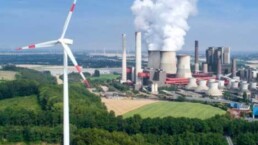

If more countries start recognizing the catalytic potential of carbon markets, the cost of achieving their climate mitigation targets will go down. This will make it easier for countries to step up ambition of their climate efforts and aligning more closely with the 1.5 °C temperature threshold of the Paris Agreement when communicating new or updated national plans.
Now that the global Covid-19 pandemic is straining public finance and fuelling a rise in government debt, it is more important than ever to find the most cost-effective action to abate carbon emissions, and to increase the role of private finance in doing so, an EBRD paper published today points out.
Article 6 of the Paris Agreement establishes two new carbon-trading mechanisms to boost climate mitigation, one for two countries to trade in carbon credits directly and one to trade carbon credits originating from emission reduction projects under international supervision. This has increased the potential for more global carbon markets to play a pivotal role in incentivising the generation of cost-efficient emission reductions and/or removals, as it gives one more policy option to countries drawing up their individual plans – known as Nationally Determined Contributions (NDCs) – to reduce their greenhouse gas emissions. Also companies, when authorised by countries, could use these instruments for their investments and operations to be aligned with the objectives of the Paris Agreement.
Research supported by economic modelling has shown that International carbon markets could reduce the costs for implementing current NDCs by more than half (US$ 250 billion per year in 2030), compared to with a scenario where all countries would implement their NDCs independently.
Carbon markets are starting to build further momentum and there is a groundswell of interest among private sector actors as evidenced by the newly formed Taskforce on Scaling Voluntary Carbon Markets, launched by Mark Carney. Already one-third of the countries that have so far submitted NDCs say they intend to make use of international carbon markets. This can be further leveraged if the rules under Article 6 are clarified and adopted by COP26.
The paper urges a broader uptake of carbon markets, which can help lower the cost of achieving mitigation targets and help countries ratchet up the ambitions set out in their NDCs to implement policies and practices that could limit global warming to 1.5 °C.
Carbon markets offer much-needed flexibility for countries to meet their NDC commitments, to create fiscal space for a Just Transition and can act as a risk management tool in the transition to a net zero economy by ensuring countries can meet their NDC targets. A strong enough carbon price can guide new investment opportunities in emission reductions in the short term and towards a predominantly carbon removals market after 2030.
EBRD is part of the MDB Joint Workgroup on Article 6 and advises its countries and clients on carbon market development activities to facilitate a green economic transition.



Related News.

Beyond Technical Skills: WISTA Cyprus explores the human side of leadership
WISTA Cyprus hosted The Art of Leadership & Emotional Mastery, an interactive workshop held on 15 October at the Alasia Hotel in Limassol,…
The human cost of sending merchant mariners into war zones extends far beyond the immediate danger of missiles and drones. It raises a harder question: who is really protecting the seafarer?
Who protects the seafarer? I have spent much of my professional life at sea. I am a Master Mariner. I have stood on the bridge, made decisions…
Loss of bridge control: Human failure is normal – context is key
When bridge control is lost in a functioning system, it can be easy to blame human error. But accidents rarely happen because of one mistake…
Danish Shipping announces the transport of live animals by sea new rules should improve safety for animals, seafarers and the environment
Revised rules on the transport of live animals by sea are being negotiated in the EU. Danish Shipping wants to ensure good animal welfare,…
Japan’s flawed shipping proposal leaves developing countries adrift
A new analysis by Opportunity Green warns governments of the wide-ranging risks posed by Japan’s proposal at the International Maritime Organization…

Intermodal Report Week 42 2026
Pls find below the Intermodal Report - Week 42 2026 Intermodal Report Week 42 2026
Allied Weekly Market Review Week 42
Pls find below the Allied - Weekly Market Review - Week 42 ALLIED - Weekly Market Report- Week 42
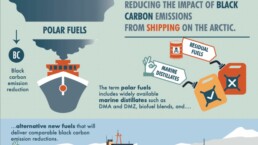
EU Arctic Strategy NGOs welcome EU ambition on on cutting shipping’s Arctic Black Carbon Emissions
Responding to today’s publication of the EU’s Arctic Strategy, which definitively states the EU’s intention to support International Maritime…
The final quarter of 2026 is expected to see softer bauxite flows
Chinese front-loading is expected to have run its course, pointing to softer bauxite flows in 2026 Q4. Global bauxite flows increased by 2.8% y/y…

DP World Foundation and Belewan new container terminal mark groundbreaking of AED 3.7 million school project in Indonesia
Classrooms of Hope initiative expands to Belawan, Medan with a new junior high school designed to provide modern learning facilities and greater…
Subscribe to our newsletter!
if you dont want to swim alone in the ocean of news, sign up for the newsletter, and you will receive daily all the important news of world shipping!
