Innovative Bandwidth Solution Helps Save NGOs From COVID-19 Cash Crunch


Frank Bauner, CEO of IABG Teleport, says cost-cutting has proved critical as African NGO funding declined amid a growing need for aid
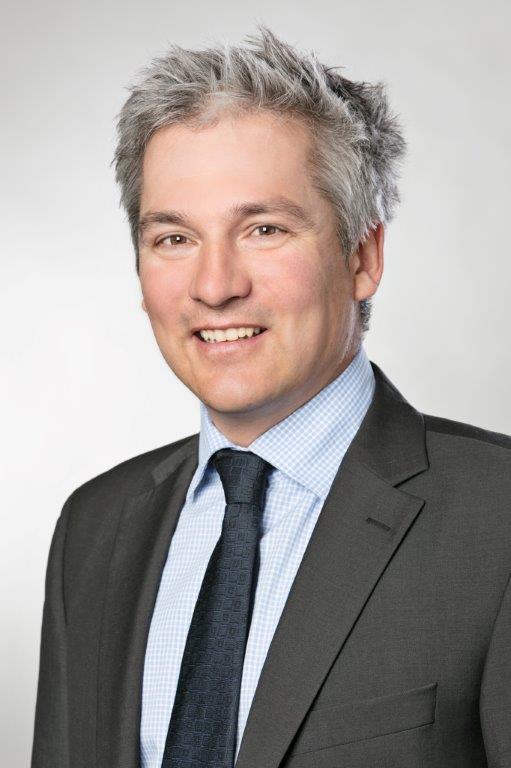
The COVID-19 pandemic has triggered a funding crisis for global Non-Governmental Organisations (NGOs) when they are needed most. As tax revenues from donor countries continue to shrink
, and corporate social responsibility (CSR) budgets dwindle, NGOs must utilise all available measures to achieve potential savings without compromising the quality and quantity of their aid.
One way where potential savings could be achieved is through satellite connectivity. Continuous developments in the satellite industry offer a prime cost-cutting opportunity for cash-strapped NGOs. This is especially true for those operating across the African region, where satellite communication is already an established tool among the NGO community, so there is existing ground infrastructure to receive the satellite signals.
Notably, satellites have unique characteristics; such as their global unrivalled reach, as well as their reliability and resilience that enables them to provide truly ubiquitous coverage, covering 99% of the world’s population. Then there is also their rapid deployment that exceeds any currently available infrastructure.
Considering that limited connectivity infrastructure poses a major challenge to many NGOs, especially those operating in underdeveloped areas, satellite communication across these regions should be easily accessible and affordable.
Historically, an NGO would commission satellite links per location or project. Today, however, it is possible to establish a pool bandwidth for all remote locations across an expansive region like Africa, and save up to 25% of an NGO’s very-small-aperture terminal (VSAT) budget, by using the available bandwidth in an efficient way, without impacting the user experience.
This is because time-division multiple access (TDMA) technology allows private bandwidth pools to be set up with customisation of bandwidth allocation per remote location. And due to the vast coverage of satellite beams, it is possible to add all remote locations across Africa within one single beam – SES’s NSS-12 satellite is ideal in this instance, as it covers the entire African continent.
The specific solution is called Private Supra-regional Pool Bandwidth (PSPB), and the idea behind it is quite simple. Instead of procuring a single link for each location, a private pool bandwidth is established for all remote locations in the region. NGOs can also combine forces and procure the bandwidth together to reduce individual costs. But in order to ensure that unused bandwidth within the network is only used by other remote locations from the NGO, this pool bandwidth has to be private.
This means that the degree of efficiency achieved by the pool bandwidth, increases with the number of remote locations connected to it. This creates the opportunity for NGOs to join forces and maximise the cost-saving benefits. With a growing number of sites, even in one time zone or country, the probability of a simultaneous internet use will decrease. This probability then decreases even further when sites are located across different regions and time zones.
To put this into context, IABG has leveraged SES’s NSS-12 C-band capacity since June 2020, in order to upgrade our broadband satellite network infrastructure and support cost-effective iQ modems for African NGOs. Thanks to the very powerful and economical new modem generation, IABG Teleport is enabling NGOs with connectivity services delivered via satellites with a low one-time investment.
Over and above these cost-saving benefits, the private pool bandwidth also allows backup service for sites that are connected via terrestrial networks. This backup service comes at no additional cost. Terrestrially-connected sites can be connected as a backup link to the pool bandwidth. In case of an outage of the terrestrial link, the connectivity can therefore be continued by the VSAT pool bandwidth.



Related News.
Beyond Technical Skills: WISTA Cyprus explores the human side of leadership
WISTA Cyprus hosted The Art of Leadership & Emotional Mastery, an interactive workshop held on 15 October at the Alasia Hotel in Limassol,…
The human cost of sending merchant mariners into war zones extends far beyond the immediate danger of missiles and drones. It raises a harder question: who is really protecting the seafarer?
Who protects the seafarer? I have spent much of my professional life at sea. I am a Master Mariner. I have stood on the bridge, made decisions…
Loss of bridge control: Human failure is normal – context is key
When bridge control is lost in a functioning system, it can be easy to blame human error. But accidents rarely happen because of one mistake…
Danish Shipping announces the transport of live animals by sea new rules should improve safety for animals, seafarers and the environment
Revised rules on the transport of live animals by sea are being negotiated in the EU. Danish Shipping wants to ensure good animal welfare,…
Japan’s flawed shipping proposal leaves developing countries adrift
A new analysis by Opportunity Green warns governments of the wide-ranging risks posed by Japan’s proposal at the International Maritime Organization…

Intermodal Report Week 42 2026
Pls find below the Intermodal Report - Week 42 2026 Intermodal Report Week 42 2026

Allied Weekly Market Review Week 42
Pls find below the Allied - Weekly Market Review - Week 42 ALLIED - Weekly Market Report- Week 42
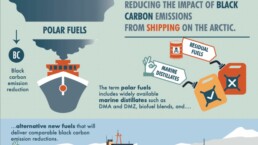
EU Arctic Strategy NGOs welcome EU ambition on on cutting shipping’s Arctic Black Carbon Emissions
Responding to today’s publication of the EU’s Arctic Strategy, which definitively states the EU’s intention to support International Maritime…
The final quarter of 2026 is expected to see softer bauxite flows
Chinese front-loading is expected to have run its course, pointing to softer bauxite flows in 2026 Q4. Global bauxite flows increased by 2.8% y/y…
DP World Foundation and Belewan new container terminal mark groundbreaking of AED 3.7 million school project in Indonesia
Classrooms of Hope initiative expands to Belawan, Medan with a new junior high school designed to provide modern learning facilities and greater…
Subscribe to our newsletter!
if you dont want to swim alone in the ocean of news, sign up for the newsletter, and you will receive daily all the important news of world shipping!
