Systemic failures revealed in implementation of the regulatory regime for seafarers’ hours of work and rest


New research from a team at the World Maritime University (WMU) underlines systemic failures in the implementation of the regulatory regime for seafarers’ hours of work and rest, undermining the credibility of international regulations relating to working hours.
‘A culture of adjustment’ by Dr. Raphael Baumler, Ms. Yvette deKlerk, Dr. Michael Ekow Manuel and Dr. Laura Carballo Piñeiro confirms previous research that suggested recording malpractices are widespread, which seriously questions the capacity of the current regulatory framework to prevent fatigue and mitigate its effects.
This is particularly concerning with the number of seafarers serving well beyond their contractual terms and having to take on additional tasks as a consequence of the COVID-19 pandemic.
The analysis indicates that insufficient manning is the root cause of violations especially during peak workload conditions. Imbalance between workload and manning levels indicate that flag States do not always fulfil responsibilities, nor do they ensure that shipowners carry out theirs with due regard to efficient and sufficient manning levels on board ships.
The fear of the negative consequences of failing inspections and creating problems for shipping companies outweighs the obligation to genuinely comply with international regulations. Employment insecurity accompanied by financial incentives contributes to an environment where adjustment instead of accuracy is the logical outcome. For seafarers, the sole objective of recording hours is to confirm compliance and avoid disruptions to the schedule.
In such an environment, requirements for reporting work/rest hours are seen, by seafarers, as merely a paper exercise. Additionally, software intended to support recordkeeping seems ‘gamed’ for compliance. Instead of improving accuracy, they effectively incentivise crew to adjust their records.
According to the report, ‘they are trapped in cognitive dissonance, where deviance is normalised.’ Many companies appear disinterested in seafarers’ feedback on this issue and flag State surveys are limited to reviewing paperwork with no verification of the reality of work on board. Inevitably the effectiveness of the International Safety Management (ISM) Code must be questioned.
When it comes to the enforcement mechanisms established though port State control, inspectors recognised that they rarely checked the accuracy of the records which are taken on face value. Whilst the system of regulation relies on port State control for enforcement, incentives to accommodate are given priority rather than questioning the veracity of records.
A further concern is the fact that participants in the study, which included representatives from international and regional maritime organizations, the shipping industry and maritime unions as well as seafarers themselves, were convinced that any records are similarly susceptible to the practice of adjustment.
The authors of ‘A culture of adjustment’ propose three significant areas for urgent attention. The first is the need for collaboration on a research-based model for determining safe manning for all operational conditions. The second is a review of the effectiveness of the ISM code and the third is to consider the ‘chronic mistrust between shore and ship personnel combined with the job insecurity characteristic of numerous seafarers’ working contracts’.
The conclusions of the research are shocking in their revelation of a system that looks good on paper but in fact masks an insidious unspoken collusion, which ultimately negatively impact the effectiveness of international Conventions. It seems that all stakeholders are aware of the problems but lack the authority or willingness to address the root causes. This report throws down the gauntlet to the States that have ratified the Conventions in good faith and must now acknowledge that significant change in ensuring effective implementation of the instruments is needed to retain their credibility.
According to Dr. Cleopatra Doumbia-Henry, President of the WMU, “Seafarers have a right to the protections set out in international maritime conventions and in particular in the Maritime Labour Convention, 2006 as amended as well as in the IMO STCW Conventions as amended. It is well known that fatigue leads to adverse impacts on health and wellbeing as well as increasing the risks of maritime accidents. This report is a wake-up call to regulators, industry and seafarers themselves. The system is flawed with respect to implementation and needs serious attention!”
Dave Heindel, Chair of the ITF Seafarers’ Trust commented: “The ITF Seafarers’ Trust was pleased to provide financial support for this independent research by WMU. The findings are devastatingly comprehensive. Now the on us in on flags States, ports States, industry and unions to come together for the benefit of the seafarers to facilitate cultural change and restore the credibility of international maritime regulations.”
Download the full report here.



Related News.
Beyond Technical Skills: WISTA Cyprus explores the human side of leadership
WISTA Cyprus hosted The Art of Leadership & Emotional Mastery, an interactive workshop held on 15 October at the Alasia Hotel in Limassol,…
The human cost of sending merchant mariners into war zones extends far beyond the immediate danger of missiles and drones. It raises a harder question: who is really protecting the seafarer?
Who protects the seafarer? I have spent much of my professional life at sea. I am a Master Mariner. I have stood on the bridge, made decisions…
Loss of bridge control: Human failure is normal – context is key
When bridge control is lost in a functioning system, it can be easy to blame human error. But accidents rarely happen because of one mistake…

Danish Shipping announces the transport of live animals by sea new rules should improve safety for animals, seafarers and the environment
Revised rules on the transport of live animals by sea are being negotiated in the EU. Danish Shipping wants to ensure good animal welfare,…

Japan’s flawed shipping proposal leaves developing countries adrift
A new analysis by Opportunity Green warns governments of the wide-ranging risks posed by Japan’s proposal at the International Maritime Organization…

Intermodal Report Week 42 2026
Pls find below the Intermodal Report - Week 42 2026 Intermodal Report Week 42 2026

Allied Weekly Market Review Week 42
Pls find below the Allied - Weekly Market Review - Week 42 ALLIED - Weekly Market Report- Week 42
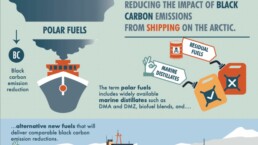
EU Arctic Strategy NGOs welcome EU ambition on on cutting shipping’s Arctic Black Carbon Emissions
Responding to today’s publication of the EU’s Arctic Strategy, which definitively states the EU’s intention to support International Maritime…
The final quarter of 2026 is expected to see softer bauxite flows
Chinese front-loading is expected to have run its course, pointing to softer bauxite flows in 2026 Q4. Global bauxite flows increased by 2.8% y/y…

DP World Foundation and Belewan new container terminal mark groundbreaking of AED 3.7 million school project in Indonesia
Classrooms of Hope initiative expands to Belawan, Medan with a new junior high school designed to provide modern learning facilities and greater…
Subscribe to our newsletter!
if you dont want to swim alone in the ocean of news, sign up for the newsletter, and you will receive daily all the important news of world shipping!
