Marine biofuel testing set to begin at the Alfa Laval Test & Training Centre
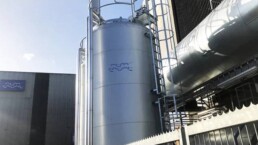

As the marine industry races to slash greenhouse gas emissions by 2050, the Alfa Laval Test & Training Centre is taking a key role. The 2800 m2 testing space – already equipped for today’s oil and gas fuels – has been readied for testing with biofuels. In coming years, the centre will accumulate knowledge that is vital to a carbon-free future.
Partnership with biofuels in focus
Located in Aalborg, Denmark, the Alfa Laval Test & Training Centre is a core component of Alfa Laval’s own research and development. It is also a site for collaboration with industry partners and research institutes, which will be needed to reach IMO’s goal of cutting greenhouse gas emissions by 50% over 2008 levels. Alfa Laval, biofuel producer MASH Energy and shipowner DFDS have entered into one such collaboration, funded in part by Shipping Lab, a Danish non-profit initiative focused on smart shipping.
“Two 25 m3 tanks have been installed at the centre, one of which is stainless steel and dedicated for testing of biofuels and other new fuel types,” says Lars Bo Andersen, Alfa Laval Test & Training Centre Manager. “New fuel alternatives are constantly being introduced to the marine industry, but the knowledge about their behaviour in marine fuel systems is limited. We want to extend that knowledge through testing, beginning with biofuels.”
Finding answers about biofuel operation
Biofuels have high potential and will undoubtedly play a part in meeting IMO climate goals. Many such fuels are on the verge of entering the market, and Alfa Laval is often approached by shipowners regarding their use. Yet while they represent a significant opportunity, biofuels as they are today involve many unknowns.
“Biofuels are produced from many different sources using a wide range of production methods,” says Andersen. “Consequently, the end product varies. Even though producers aim to fulfil the ISO 8217 standard, fuel users may experience undesirable fuel behaviours, such as corrosion of the fuel system.”
Corrosion, Andersen adds, is not the only potential issue. “Fuel injection is steered by viscosity, which is in turn controlled by heating,” he says. “The relationship between heat and viscosity is hard to predict for biofuels, so the existing curves for HFO and LSHFO don’t apply. For biofuels to be used safely and efficiently, we have to gain more knowledge about them in order to optimize their handling and combustion.”
From boiler tests to bunkering on board
The first biofuel tested at the centre will be one produced in India by MASH Energy, which is created through pyrolysis of waste biomass. Sourced from waste in this way, the fuel would be a net positive, removing CO2 from the overall carbon equation.
The dark, viscous fuel will initially be mixed with “normal” oil and be combusted using the Alfa Laval Aalborg dual-fuel boilers at the centre, which will allow both flame characteristics and emissions such as NOx and particulate matter (PM) to be examined. Between the tank and the boilers, the biofuel will be treated with an Alfa Laval high-speed separator to remove any impurities.
“Depending on the results, the next stage will be combusting the fuel in the centre’s four-stroke engine,” says Andersen. “That will involve a complete fuel line, including an Alfa Laval Moatti fuel oil filter and a Fuel Conditioning Module in addition to the separator. If all goes smoothly at the Alfa Laval Test & Training Centre, the aim is that the biofuel can be bunkered on the DFDS Pearl Seaways for hot water production while in Danish ports, and perhaps eventually as a fuel for the auxiliary engines.”
More fuels and partnerships in the pipeline
Samples of the MASH Energy biofuel have already been received and tested at VeriFuel i Athens. In anticipation of the full-scale delivery in Aalborg, additional preparations are being made at the Alfa Laval Test & Training Centre, for example to enable real-time viscosity and emission measurements that will improve boiler combustion control.
Likewise, Alfa Laval is in dialogue with additional biofuel producers, as well as other research partners. The latter include Aalborg University, where fuels derived from hydrothermal liquefaction (HTL) are in focus. HTL is a bioconversion technology that can turn any wet organic material into an energy-dense bio-crude.
“There are many possibilities for producing tomorrow’s fuels, and testing will be needed to overcome the many different challenges in the end results,” says Andersen. “Getting to 2050 successfully will require intense research into lots of different options, which demands partnerships across the industry. We’re proud to contribute with Alfa Laval’s experience and the capabilities of the Alfa Laval Test & Training Centre.”



Related News.
Beyond Technical Skills: WISTA Cyprus explores the human side of leadership
WISTA Cyprus hosted The Art of Leadership & Emotional Mastery, an interactive workshop held on 15 October at the Alasia Hotel in Limassol,…
The human cost of sending merchant mariners into war zones extends far beyond the immediate danger of missiles and drones. It raises a harder question: who is really protecting the seafarer?
Who protects the seafarer? I have spent much of my professional life at sea. I am a Master Mariner. I have stood on the bridge, made decisions…
Loss of bridge control: Human failure is normal – context is key
When bridge control is lost in a functioning system, it can be easy to blame human error. But accidents rarely happen because of one mistake…

Danish Shipping announces the transport of live animals by sea new rules should improve safety for animals, seafarers and the environment
Revised rules on the transport of live animals by sea are being negotiated in the EU. Danish Shipping wants to ensure good animal welfare,…

Japan’s flawed shipping proposal leaves developing countries adrift
A new analysis by Opportunity Green warns governments of the wide-ranging risks posed by Japan’s proposal at the International Maritime Organization…

Intermodal Report Week 42 2026
Pls find below the Intermodal Report - Week 42 2026 Intermodal Report Week 42 2026
Allied Weekly Market Review Week 42
Pls find below the Allied - Weekly Market Review - Week 42 ALLIED - Weekly Market Report- Week 42
EU Arctic Strategy NGOs welcome EU ambition on on cutting shipping’s Arctic Black Carbon Emissions
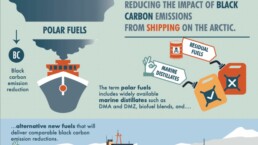
Responding to today’s publication of the EU’s Arctic Strategy, which definitively states the EU’s intention to support International Maritime…

The final quarter of 2026 is expected to see softer bauxite flows
Chinese front-loading is expected to have run its course, pointing to softer bauxite flows in 2026 Q4. Global bauxite flows increased by 2.8% y/y…
DP World Foundation and Belewan new container terminal mark groundbreaking of AED 3.7 million school project in Indonesia
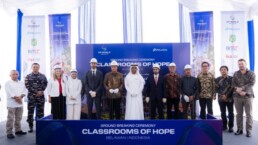
Classrooms of Hope initiative expands to Belawan, Medan with a new junior high school designed to provide modern learning facilities and greater…
Subscribe to our newsletter!
if you dont want to swim alone in the ocean of news, sign up for the newsletter, and you will receive daily all the important news of world shipping!
