Intermodal Report – Week 31 2026


Please find below the Intermodal market report for week 31 2026.
Intermodal Report Week 31 2026
Market Insight
By George Vitsos, Offshore Broker
The Offshore sector has been greatly affected by the current geopolitical situation, as challenges that are substantially greater than those faced by merchant vessels are presented, due to the limited flexibility the floating units have under tow. Floating rigs, accommodation units, crane barges, vessels and FPSOs that are being repositioned, typically move at speeds of only 4-7 knots and are unable to take evasive action, as their slow speed, predictable movements and large radar signature make them particularly vulnerable targets in any environment where missiles, drones, unmanned surface vessels or small craft attacks are possible. The International Maritime Organization has repeatedly highlighted that commercial shipping and seafarers are increasingly exposed to geopolitical conflicts, while maritime security experts continue to warn that vessels operating in both Hormuz and the Red Sea face elevated risks regardless of nationality or flag.
The Strait of Hormuz currently represents the most difficult environment for offshore movements. In practice, a towing operation might not only require just the tug and the tow, but also support crafts, fuel logistics, crew changes, emergency response arrangements and reliable Ports of Refuge. Recent attacks on several tankers in the Middle East and Red Sea, are still exposed to military actions, whereas hundreds of tankers remain anchored or drifting throughout the Gulf awaiting improved security conditions, creating significant navigational congestion. Reports of very low daily transit numbers compared with normal trading patterns indicate a de facto restriction on navigation, even if the waterway remains open.
For offshore contractors, the immediate consequence is that finding suitable ocean-going tugs able to enter or exit the Gulf has become increasingly difficult. From a commercial standpoint, many operators are reluctant to expose crews to a region where vessels have been struck by projectiles, drones or explosive craft. From an insurance perspective, war-risk premiums have risen sharply, and underwriters are scrutinizing every planned voyage. The recent decision by Lloyd’s market participants to terminate coverage for vessels making unauthorized transit payments or tolls in the Strait of Hormuz adds a further layer of uncertainty to voyage.
The Red Sea presents similar concerns. Although some commercial traffic continues to pass through Bab el-Mandeb, Houthi attacks have demonstrated a threat to vessels over a wide geographic area using drones and missiles, while maritime security advisories continue to classify the southern Red Sea, Gulf of Aden and Bab el-Mandeb Strait as high-threat risk areas, with the Houthis recently escalating their campaign through renewed threats against shipping and the announcement of restrictions targeting Saudi-linked maritime trade. Security organizations have reported evidence of vessel diversions and reduced traffic levels in the Bab el-Mandeb area, underlining the ongoing operational challenges for commercial shipping.
For a large tanker, the exposure window in Bab el-Mandeb may be measured in hours. For a tow moving at four knots, the same exposure can extend across several days, significantly increasing operational risk. As a result, offshore operators contemplating the mobilization of commercial vessels, rigs, barges or floating production units into or out of the Gulf should expect restricted tug availability, elevated insurance costs and potential difficulties obtaining charter-party and lender approvals. Industry feedback from sources active in the region already suggest that many tug operators are unwilling to undertake Hormuz transits under present conditions, effectively limiting available towing capacity.
Developments during the past week have further demonstrated how quickly the threat environment can evolve. Reports of reduced transit levels through both Hormuz and Bab el-Mandeb, together with renewed attacks and threats directed against commercial shipping and energy infrastructure, continue to influence operator decision-making and insurance market sentiment. For offshore projects requiring prolonged exposure within these areas, the risk profile remains substantially higher than that faced by conventional merchant shipping.
Looking forward, the outlook remains highly dependent on geopolitical developments. Any renewed escalation would likely trigger further issues against commercial shipping, as under such scenario, offshore movements would be among the first activities postponed, as the risk-reward balance for tug operators, offshore contractors and insurers becomes increasingly unattractive.


Related News.

CSN Summer Holidays: 12 to 21 August 2026
Dear CSN Readers, Please note that the CSN office will be dropping anchor for a short summer break between the 12th and 21st of August 2026. During…

Floating Data Centers emerge as growth engine for shipbuilding industry
Samsung Heavy Industries and HD Hyundai are racing into sea-based AI infrastructure as land and power limits squeeze data center expansion As…

European drought snarls inland commodity flows, cuts power supplies
Rhine, Danube river levels hit record lows in key chokepoints Inland markets face squeeze on fuel, chemicals, metals and grains Power…

Oil producers buy tankers directly to navigate blocked routes
Oil-producing countries that have frequently experienced blockages in major Middle Eastern shipping routes, such as the Strait of Hormuz and the Red…

Diana Shipping announces Time Charter Contract for m/v Florida with NYK
Diana Shipping, a global shipping company specializing in the ownership and bareboat charter-in of dry bulk vessels, today announced that, through a…
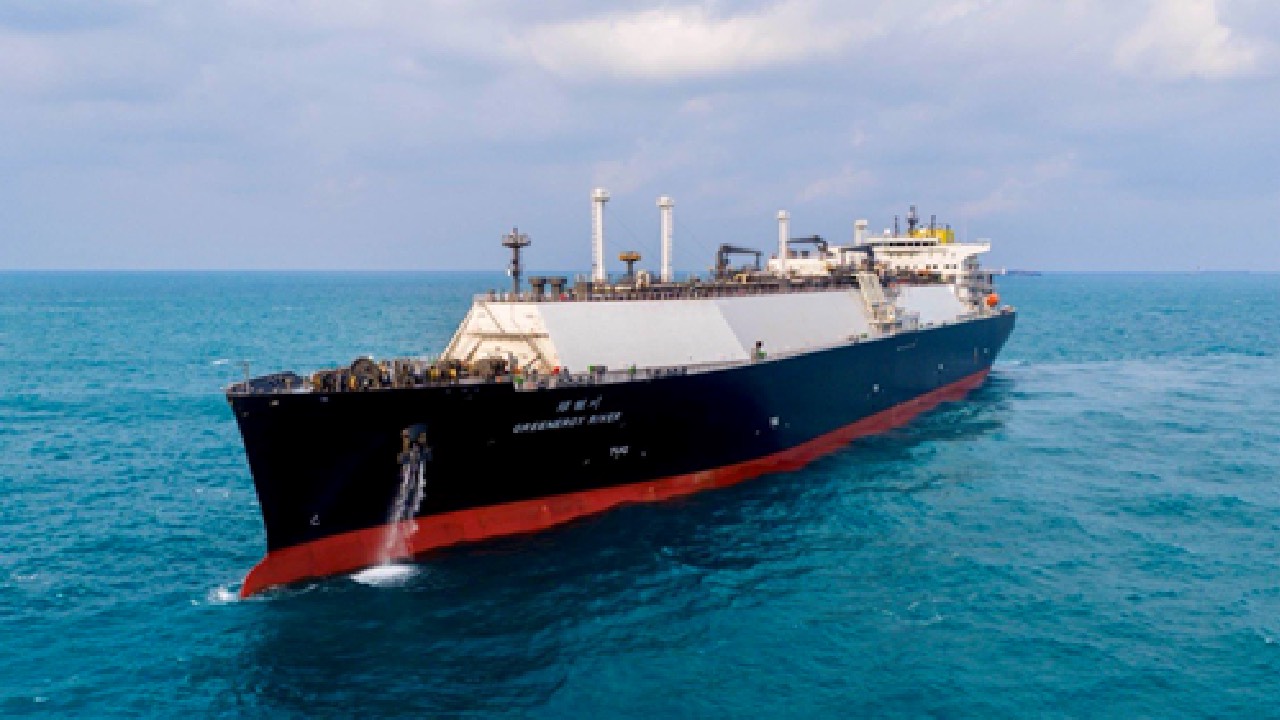
New LNG Carrier for CNOOC Group Named “GREENERGY RIVER”
On August 4, HUAJING LNG TRANSPORT PTE. LTD. (HLT), a joint venture company in which NYK participates, held a naming ceremony for a new…

Diana Shipping and Star Bulk Carriers announce mutual agreement to terminate vessel sale and purchase agreement
Diana's Offer to Acquire All Outstanding Shares of Genco Remains on the Table Termination of Agreement Has No Impact on Diana’s $1.411 Billion in…

Lloyd’s Register launches industry-first framework for digital 3D model approval
New Guidance Notes give shipyards and designers a practical route to use intelligent 3D models during class approval Lloyd’s Register (LR) has…

[xclusiv] S&P Report 10th August 2026
Please find below the [xclusiv] latest Weekly S&P Report, along with following opening market commentary [xclusiv] 2026_08_10 Market Commentary:…

Panama strengthens its global standing as ship registry earns ISO 9001:2015 recertification
In an industry where confidence is built on consistency, transparency, and operational performance, Panama has once again reinforced its position…
Subscribe to our newsletter!
if you dont want to swim alone in the ocean of news, sign up for the newsletter, and you will receive daily all the important news of world shipping!
