ShipIn Systems flags “operational drift” as hidden factor in maritime safety risk


Recurring deviations from routine onboard operations which become the norm, rather than single-point failures, are a major risk factor across shipping fleets, according to ShipIn Systems.
Drawing on continuous vessel data, the company says risk often builds through repeated behaviours such as lapses in watchkeeping discipline, inconsistent use of PPE, gaps in deck supervision, engine-room practices and delayed responses to early technical signals. This process is referred to as ‘operational drift’.
“Major incidents don’t usually begin with major failures”, says Osher Perry, CEO of Shipin Systems. “They are often preceded by small deviations that repeat, accumulate and eventually define how a vessel operates in practice.”
The company says this dynamic remains under-recognised, particularly by shore-based teams, where the existence of procedures can sometimes be mistaken for evidence of what is actually taking place on board a vessel.
While most operators maintain robust safety management systems, audit regimes and reporting processes, ShipIn says these are typically periodic and compliance-focused. As a result, they can provide limited visibility into how consistently procedures are applied during routine work onboard.
“On paper, operations may look compliant,” says Mr Perry. “In practice, there is always variation, mainly between crew, shifts, work patterns and different operating pressures. Without continuous visibility, that variation is very easy to miss.”
According to ShipIn, operational drift is most visible in routine areas of vessel activity, including bridge watchkeeping, deck operations and engine-room work. These are environments where standards can shift gradually during apparently low-risk periods, or come under pressure during more demanding operations.
“By the time something goes wrong, the underlying conditions have often been present for weeks or months,” says Mr Perry. “The risk was not sudden. It was already there, but it had not been clearly identified or addressed.”
ShipIn also highlights that risk is rarely distributed evenly across a fleet. The company says a relatively small number of vessels often account for a disproportionate share of recurring operational issues, making it critical for operators to understand where attention is most needed.
Improving visibility into operational patterns allows operators to identify ‘operational drift’ earlier, address recurring behaviours and support crews before those behaviours become embedded or contribute to incidents. Where specific patterns are identified and discussed with vessels, ShipIn says that measurable reductions in recurring risk conditions can often be seen within one to three months.
“Crew know what is expected,” says Mr Perry. “The challenge is consistency. When you can clearly show where behaviour is drifting, vessels can respond quickly.”
ShipIn Systems is urging the maritime industry to look beyond whether procedures exist and focus more closely on how consistently they are applied in real operating conditions.
“The next step in safety is not simply adding more procedures,” Mr Perry concludes. “It is understanding how work is actually done at sea, where standards are starting to drift, and where support is needed before risk becomes normalised.”


Related News.

CSN Summer Holidays: 12 to 21 August 2026
Dear CSN Readers, Please note that the CSN office will be dropping anchor for a short summer break between the 12th and 21st of August 2026. During…

Floating Data Centers emerge as growth engine for shipbuilding industry
Samsung Heavy Industries and HD Hyundai are racing into sea-based AI infrastructure as land and power limits squeeze data center expansion As…

European drought snarls inland commodity flows, cuts power supplies
Rhine, Danube river levels hit record lows in key chokepoints Inland markets face squeeze on fuel, chemicals, metals and grains Power…

Oil producers buy tankers directly to navigate blocked routes
Oil-producing countries that have frequently experienced blockages in major Middle Eastern shipping routes, such as the Strait of Hormuz and the Red…

Diana Shipping announces Time Charter Contract for m/v Florida with NYK
Diana Shipping, a global shipping company specializing in the ownership and bareboat charter-in of dry bulk vessels, today announced that, through a…
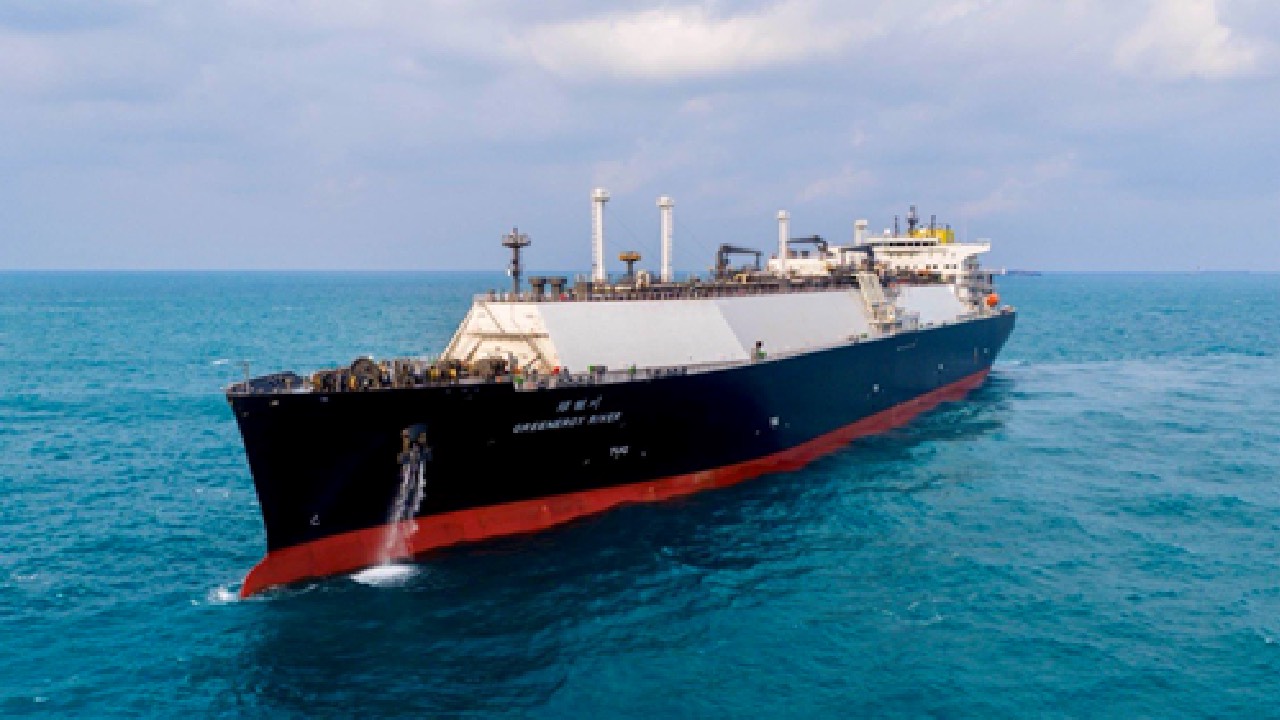
New LNG Carrier for CNOOC Group Named “GREENERGY RIVER”
On August 4, HUAJING LNG TRANSPORT PTE. LTD. (HLT), a joint venture company in which NYK participates, held a naming ceremony for a new…

Diana Shipping and Star Bulk Carriers announce mutual agreement to terminate vessel sale and purchase agreement
Diana's Offer to Acquire All Outstanding Shares of Genco Remains on the Table Termination of Agreement Has No Impact on Diana’s $1.411 Billion in…

Lloyd’s Register launches industry-first framework for digital 3D model approval
New Guidance Notes give shipyards and designers a practical route to use intelligent 3D models during class approval Lloyd’s Register (LR) has…

[xclusiv] S&P Report 10th August 2026
Please find below the [xclusiv] latest Weekly S&P Report, along with following opening market commentary [xclusiv] 2026_08_10 Market Commentary:…

Panama strengthens its global standing as ship registry earns ISO 9001:2015 recertification
In an industry where confidence is built on consistency, transparency, and operational performance, Panama has once again reinforced its position…
Subscribe to our newsletter!
if you dont want to swim alone in the ocean of news, sign up for the newsletter, and you will receive daily all the important news of world shipping!
