Voyage Intelligence at Scale: How StormGeo is powering the future of Smart, Safe, and Sustainable Shipping
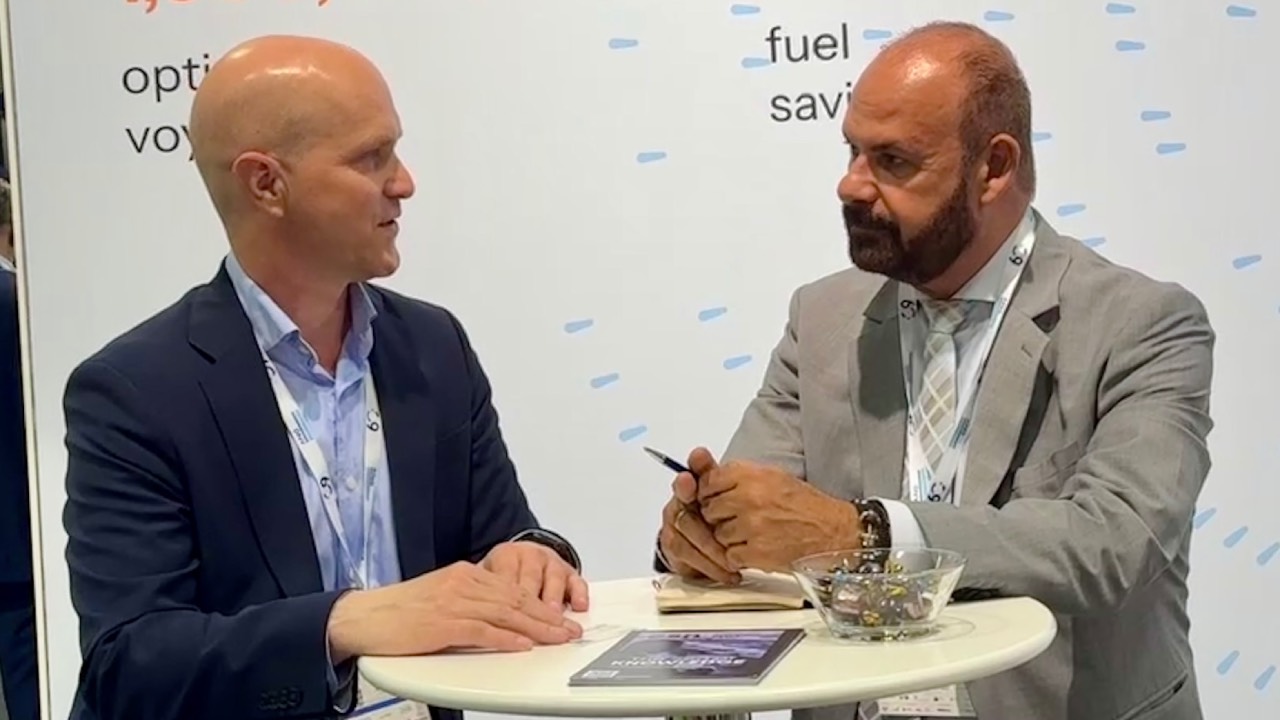

CSN Interview with Petter Andersen Senior Vice President – Shipping at StormGeo
StormGeo has grown into a global leader in weather intelligence and voyage optimization. How do you define the company’s mission today?
StormGeo is a leading technology provider that enables weather-sensitive companies to navigate operational challenges, with a primary focus on the shipping and energy sectors. We serve the global shipping market, with operations and offices worldwide, and we optimized over 75,000 voyages in 2024.
Our mission is to be a comprehensive, total supplier of what we call voyage intelligence to the shipping industry, including weather routing, bunker management, vessel performance optimization, and CO2 emissions reporting – partnering with shipping companies from pre-voyage planning to real-time optimization and post-voyage analysis.
What attracted you personally to join StormGeo, and what excites you most about its future?
I’ve worked in the shipping industry and with vessel performance my entire career, and I wanted to combine that experience with StormGeo’s best-in-class weather intelligence. StormGeo is a global and respected leader in weather intelligence and decision support for the shipping and energy industries, and it’s exciting to be part of a company that has a clear impact on the future of the maritime industry.
How critical is weather intelligence in today’s shipping operations beyond just avoiding storms?
Weather intelligence plays a far more strategic role in shipping operations than simply helping vessels avoid storms. It is a key enabler of safety, efficiency, and sustainability in the shipping industry.
One clear example is fuel efficiency. By optimizing routes based on high-quality weather forecasts, ship operators can significantly reduce their fuel consumption – not only cutting costs but also supporting compliance with the numerous decarbonization regulations affecting the industry, such as FuelEU Maritime and EU ETS.
Another example is port operations. Weather intelligence can help align estimated arrival times with berth availability and port congestion. Recently, StormGeo partnered with the Finnish analytics company Awake.AI to integrate their port call analytics solution into StormGeo’s s-Insight solution. This partnership offers our clients better visibility into port congestion, enabling just-in-time arrivals to help save fuel and reduce emissions.
From a safety perspective, storm avoidance, of course, remains critical, but weather intelligence also helps operators anticipate conditions that may not seem severe but are rough enough to lead to vessel stress or cargo damage.
How do StormGeo’s solutions contribute to real-time decision-making on board and on shore?
For the shipping industry, we have developed a portfolio of software solutions and related services, made available through our s-Suite, that help shipping companies optimize their voyages for safety, efficiency, and environmental compliance.
This technology, combined with our team of industry experts and experienced meteorologists, is what makes up our voyage intelligence offering. Ultimately, StormGeo’s voyage intelligence helps both onboard and shoreside teams plan their voyages for the safest and most efficient route – powered by over 25 years of weather and ocean data, vessel models, and high-resolution weather forecasts and always guided by the deep industry knowledge of our maritime and meteorological experts.
One of StormGeo’s flagship services is voyage optimisation. Can you share how this technology delivers both environmental and commercial benefits?
StormGeo helps teams both onboard and onshore plan and execute optimized and compliant voyages by combining AI-driven insights, advanced technology, and weather intelligence – all guided by the extensive expertise and deep domain knowledge of our many maritime professionals worldwide.
The most important element of voyage optimization is safety. Whenever we optimize voyages for our clients, our primary goal is always to keep the vessel and cargo safe by avoiding adverse weather conditions.
When it comes to environmental and commercial benefits, we help our clients minimize their emissions and costs by optimizing voyages for fuel efficiency based on weather forecasting and commercial goals. For example, when a vessel meets adverse weather conditions, such as high waves, strong winds, or currents, it must use more power and consume more fuel to maintain speed and revolutions per minute (RPM). We offer a solution called Strategic Power Routing that takes weather conditions into account and combines it with speed loss calculations by vessel type to recommend RPMs that stabilize power and fuel consumption. This solution can lead to fuel savings of 3-5%.

Are you seeing a measurable impact in fuel savings and emission reductions among your clients?
StormGeo’s solutions have a measurable impact on fuel savings and emissions reductions. In 2024, for example, we routed around 75,000 voyages, which amounted to 0.6M MT of fuel savings and 1.8M MT of CO2 savings for our clients.
How does StormGeo help shipowners and operators align with IMO and EU regulations like CII and ETS?
Our emissions reporting and compliance solutions provide shipowners and operators with a platform that transforms onboard data into validated emissions reports, ensuring full alignment with FuelEU Maritime, EU ETS, CII, and other regulations.
For example, our latest FuelEU Maritime solution calculates and validates onboard-reported voyage data, shares it with accredited verifiers via APIs, and calculates how different fuel types will impact the vessel’s GHG intensity towards compliance standards.
Can you speak about the integration between StormGeo’s services and performance monitoring platforms like s-Insight?
Seamless integration between our different solutions and platforms is critical for an efficient service delivery to our clients. Our digital onboard tool, s-Planner, is integrated with our performance monitoring platform, s-Insight – connecting onshore teams with onboard crews to provide all stakeholders with the same reality both at sea and on land.
What role does AI and machine learning play in enhancing your forecasting and routing tools?
The maritime industry is rapidly evolving with the integration of AI in voyage optimization, and we see that it has several valuable use cases for our solutions. For example, we’re using machine learning to continuously improve vessel speed-down estimations due to wind and waves. Here, we rely on 15-20 years’ worth of data to precisely understand the behavior of a specific vessel in a particular weather situation, such as different wave heights, wind direction and speeds, and current conditions.
We are also leveraging AI technology to help identify the best routes based on a range of different factors, including the specific needs of each individual vessel, as well as its cargo. However, when the situation requires it, our human experts are available to support. We like to say that we combine human and artificial intelligence to create the perfect synergy in voyage optimization.
How important is integration and interoperability with other maritime digital systems in today’s market?
A lack of equipment and data format standardization within the industry can be a challenge. Different systems and equipment from various suppliers may not necessarily communicate seamlessly with each other, limiting the ability to share data effectively. At StormGeo, we address these challenges by making data sharing a key part of our delivery to clients. We have developed multiple APIs for various purposes already, and we’re continuously innovating to find new ways of sharing data effectively.
For example, charterers can use our voyage calculator to estimate fuel consumption and costs for their upcoming voyages for any vessel type and size – even if they have limited prior experience with that specific vessel.
Another example is that a ship owner using StormGeo’s solutions can share validated CO2 emissions data with their charterer, even if the charterer isn’t a StormGeo client. This reduces the need for the owner and charterer to use different onboard systems.
Are there specific challenges or opportunities you see in the Eastern Mediterranean and Cyprus markets?
The Eastern Mediterranean region is a key transit and bunkering hub, making weather routing, voyage optimization, and port ETA precision important factors. We find that companies in Greece and Cyprus are well acquainted with the EU regulatory landscape and open to having support from external experts and compliance tools of the kind that StormGeo delivers. Furthermore, on the opportunity side, we see that many operators in the region are now actively looking for performance, routing, and compliance solutions, such as our FuelEU Maritime solution.
Although the region shows high regulatory readiness and an increasing interest in fleet digitalization, there is still room for improvement, as many companies still prefer traditional and manual processes to help manage their voyages.
Do regional weather patterns in the Mediterranean require special tools or considerations compared to other areas?
While the ECMWF weather model has a very high accuracy rate on a global scale, it is especially accurate within the Mediterranean Sea, as a large number of member states have interests in this region.
Special consideration is given in the wintertime when strong storms in the eastern Atlantic Ocean can dive into the Mediterranean Sea and create “mistral events,” which in extreme cases can generate storm-force winds (50kt+) and 7m+ waves in the western Mediterranean. These heavier events are also known to carry into the eastern Mediterranean, at times as far as the island of Crete.
While rare, Mediterranean hurricanes, or medicanes, can form in the central/eastern Mediterranean and are also well forecasted by the ECMWF. Our route analysts ensure that vessels avoid the heaviest portions of both mistral events and medicanes. We usually have high confidence that one of these events will occur around 3-5 days before event onset.
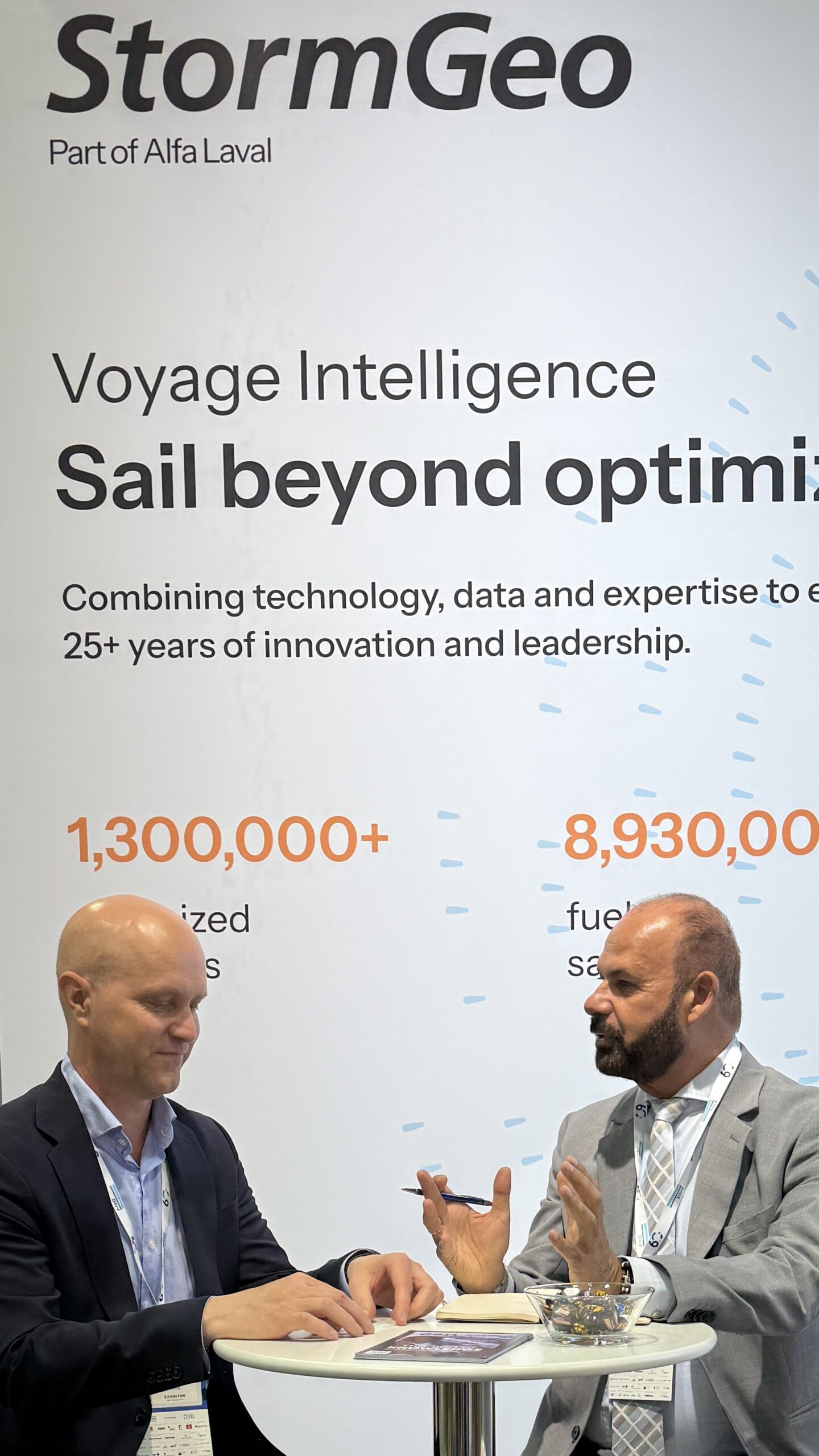
StormGeo has strong ties with shipping companies, class societies, and tech providers. How important are these collaborations for your innovation pipeline?
Strong partnerships and collaborations are critical not only to StormGeo’s innovations but to the entire shipping industry. Meeting environmental regulations, such as FuelEU Maritime and CII, and decarbonizing the industry requires collective effort. No single actor can decarbonize shipping in isolation. And we believe that long-term partnerships can be an enabler for innovation, improvements, and growth.
More specifically, we collaborate with industry stakeholders to further develop the field of voyage optimization. For example, we work on projects with clients and partners to utilize the benefits of ‘Just in Time Arrivals,’ improve bunker planning and procurement processes, take advantage of new sail technologies, and manage vessels’ seakeeping – all essential elements of a fully optimized voyage.
Are there any new partnerships or developments you’d like to share with our readers?
StormGeo recently partnered with the Finnish AI analytics company Awake.AI to deliver AI-powered port analytics to its clients. By leveraging Awake.AI’s solution, which is configured to support over 3,000 ports and performs over 1.5 million voyage predictions daily, StormGeo clients now receive improved ETA predictions for competing vessels and enhanced visibility into port congestion. This helps our clients plan their port calls more accurately, ultimately enabling the industry to save fuel and reduce emissions.
We have also partnered with another innovative AI company, Bearing AI, to integrate their pioneering vessel performance models for more precise fuel consumption predictions, efficient route planning, and reduced emissions. Bearing AI’s solution combines data from many different sources with advanced machine learning to build models that predict vessel performance in a wide range of operating conditions. Integrated with StormGeo’s weather intelligence and voyage optimization, Bearing AI’s adaptive machine learning can help shipping companies take their operations to the next level.
As climate change increases the frequency of extreme weather events, how is StormGeo adapting to keep ships and crews safe?
Our operations team uses an automated system to provide forecasts to vessels operating in moderate weather conditions and following our optimized route advice. This enables our route analysts to focus solely on vessels that need human intervention in these more frequent extreme weather events. When a major decision is needed, this filtering enables route analysts to spend time to ensure a vessel is on a safe and optimal route.
Can you give an example of a situation where StormGeo’s support prevented a major incident?
A tug was sailing from Shanghai to Singapore. At the same time, a typhoon was gaining strength off the northeastern Philippines and was forecast to move across Luzon Island/into the South China Sea directly along the tug’s path. The vessel was making good speed overground, where it appeared the vessel may be able to safely “cross the T” of the typhoon – something our operations team does not take lightly. We discussed this option with the master and operator and advised the only other option would be to find shelter off Kaohsiung (SW’rn Taiwan) and wait for up to 10 days as a second typhoon was following directly behind. The risk with sheltering was our model data indicated a chance of the typhoon shifting northward and making a direct impact on Taiwan. In the end, the master and operator decided to proceed ahead of the typhoon. StormGeo checked on the vessel’s position and provided updated weather forecasts every 6 hours (for approximately 72 hours) until the vessel was clear to the south of the typhoon. In the end, the second typhoon did indeed make a direct landfall in Taiwan, and a sheltering option would have been the worse option.
Beyond software, how does StormGeo support training and change management for maritime professionals using your tools?
We have local support teams available where our customers operate, speaking to our users every single day. Additionally, we have performance centers in Europe and Asia, where our experts continuously work with clients on data quality and performance management and provide both online and onsite training for onshore and onboard crews. We have also strengthened our self-service training with online courses and digital user guides.
Do you see the bridge of the future becoming more automated, or more empowered by real-time human-AI collaboration?
We believe in the value of combining human and artificial intelligence, staying at the cutting edge of technological innovation while continuing to rely on the deep domain knowledge of our global team of experts. In other words, we see the future becoming more empowered by human-AI collaboration.
We clearly see that AI can enhance our service delivery going forward, for example by developing automated vessel routes, and we will release a new AI routing service later in 2025. At the same time, we continue to keep humans in the loop for our route advisory and voyage optimization services to ensure that safety will never be compromised.
What are StormGeo’s key priorities over the next 2–3 years?
Our goal is to become a total supplier of voyage intelligence services and solutions, making our delivery fit for the future needs of our customers and the industry at large. This requires continuous development, and we will continue to future-proof our core services by developing top-notch algorithms, ensuring ship-to-shore connectivity, and staying on top of new CO2 emissions regulations – all in one solution.
If you could summarize StormGeo’s long-term goal for the shipping industry in one sentence, what would it be?
StormGeo aims to enable the successful digitalization and decarbonization of the shipping industry by combining voyage optimization, vessel performance, bunker management, and emissions compliance in one single solution – what we call voyage intelligence. This requires high-quality data, data sharing, and versatile solutions that can serve commercial, technical, and environmental needs. This is what we offer through our voyage intelligence solution, s-Suite.


Related News.
CSN Summer Holidays: 12 to 21 August 2026
Dear CSN Readers, Please note that the CSN office will be dropping anchor for a short summer break between the 12th and 21st of August 2026. During…
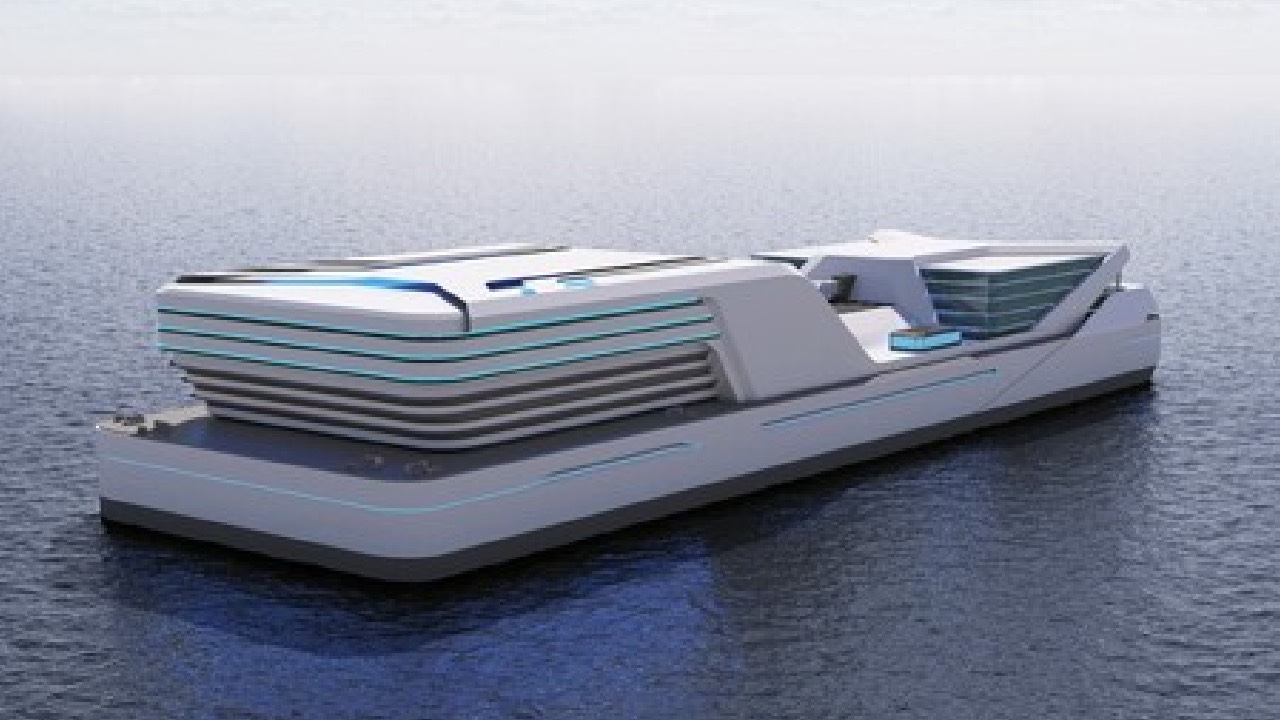
Floating Data Centers emerge as growth engine for shipbuilding industry
Samsung Heavy Industries and HD Hyundai are racing into sea-based AI infrastructure as land and power limits squeeze data center expansion As…
European drought snarls inland commodity flows, cuts power supplies
Rhine, Danube river levels hit record lows in key chokepoints Inland markets face squeeze on fuel, chemicals, metals and grains Power…

Oil producers buy tankers directly to navigate blocked routes
Oil-producing countries that have frequently experienced blockages in major Middle Eastern shipping routes, such as the Strait of Hormuz and the Red…

Diana Shipping announces Time Charter Contract for m/v Florida with NYK
Diana Shipping, a global shipping company specializing in the ownership and bareboat charter-in of dry bulk vessels, today announced that, through a…
New LNG Carrier for CNOOC Group Named “GREENERGY RIVER”
On August 4, HUAJING LNG TRANSPORT PTE. LTD. (HLT), a joint venture company in which NYK participates, held a naming ceremony for a new…

Diana Shipping and Star Bulk Carriers announce mutual agreement to terminate vessel sale and purchase agreement
Diana's Offer to Acquire All Outstanding Shares of Genco Remains on the Table Termination of Agreement Has No Impact on Diana’s $1.411 Billion in…
Lloyd’s Register launches industry-first framework for digital 3D model approval
New Guidance Notes give shipyards and designers a practical route to use intelligent 3D models during class approval Lloyd’s Register (LR) has…

[xclusiv] S&P Report 10th August 2026
Please find below the [xclusiv] latest Weekly S&P Report, along with following opening market commentary [xclusiv] 2026_08_10 Market Commentary:…

Panama strengthens its global standing as ship registry earns ISO 9001:2015 recertification
In an industry where confidence is built on consistency, transparency, and operational performance, Panama has once again reinforced its position…
Subscribe to our newsletter!
if you dont want to swim alone in the ocean of news, sign up for the newsletter, and you will receive daily all the important news of world shipping!
