Navigating the Digital Seas: How NAPA is driving maritime efficiency and decarbonisation from shipyard to sea


Interview with Ossi Mettälä (Product Manager, Shipping Solutions) and Mikko Vartiainen (Lead, Wind-Assisted Vessel Optimization), NAPA
Corporate Vision and Strategy
Ossi, as Product Manager, Shipping Solutions, NAPA, how would you describe NAPA’s vision and mission today in the evolving maritime industry?
NAPA is advancing efficiency, optimization, and safety throughout the vessel’s lifecycle, from shipyard to sea, with data-driven digital tools.
To deliver shipping’s sustainable energy transition – with the backdrop of an increasingly complex market landscape and operating environment – we must embrace the digital transition. This is highlighted in modern ship operations, where voyage optimization is not just ‘nice to have’ but rather a necessity for efficient, safe and commercial operations.
With environmental regulations, such as the IMO Net-Zero Framework, and market forces showing a clear direction of travel for the maritime decarbonisation transition, the case for adopting operational efficiency enhancements to improve sustainability and competitiveness is only getting stronger.
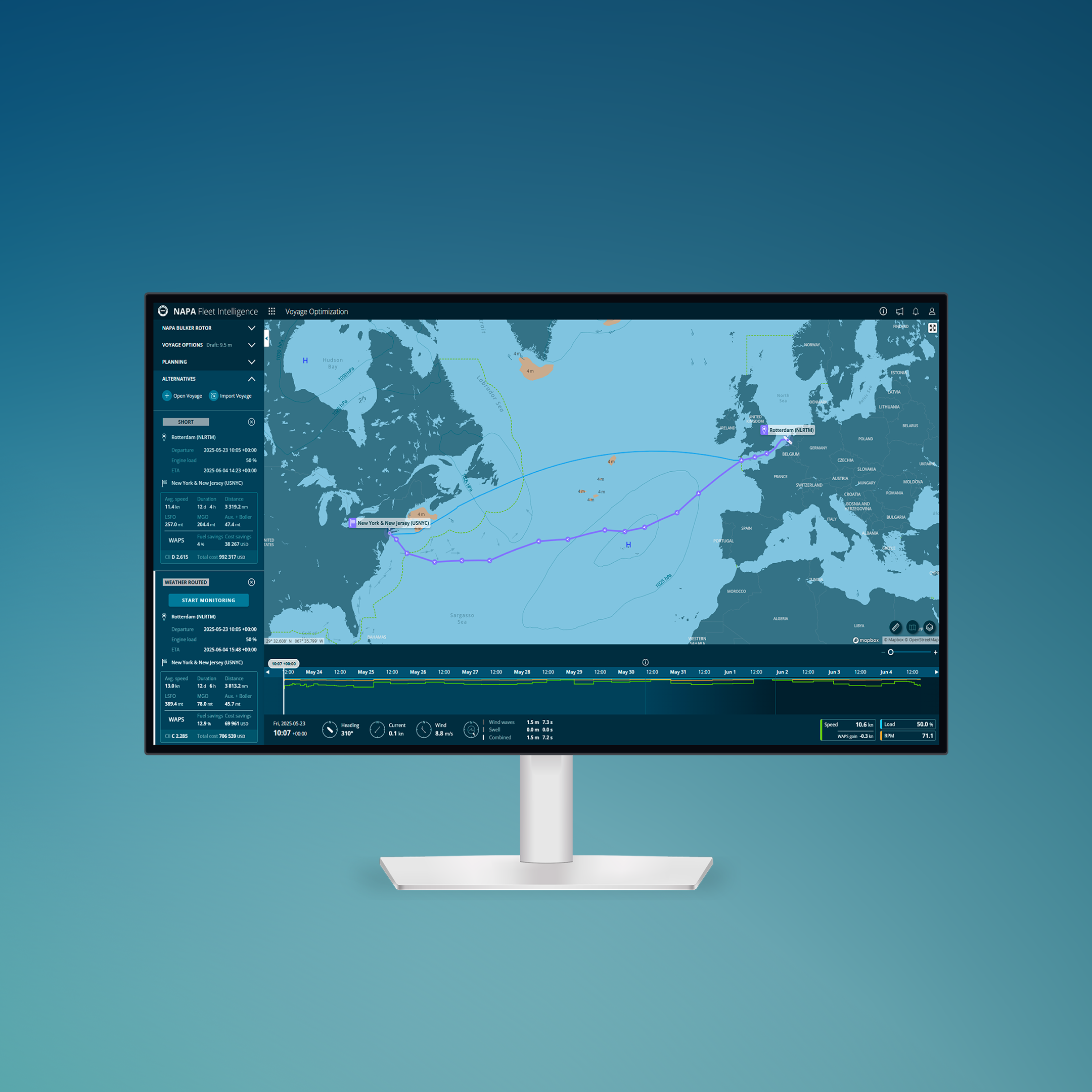
Our recent analysis has focused on how voyage optimization goes hand in hand with Wind-Assisted Propulsion Systems(WAPS) to provide greater greenhouse gas emissions reductions. This combination enables crews to simulate different routes and speed profiles, and to adapt the ship’s course to make the most of wind patterns and maximize fuel and emissions savings.
What have been the most transformative milestones for NAPA in the past few years?
A joint simulation project between NAPA, Norsepower, and Sumitomo Heavy Industries Marine & Engineering has validated the emissions reduction potential of combining wind propulsion with voyage optimization. The study has confirmed that the combination can deliver up to 28% emissions reductions on average.
From a commercial perspective, NAPA has agreed with IINO Lines, a leading ship owner and operator based in Tokyo, to provide NAPA Voyage Optimization onboard two vessels equipped with Norsepower Rotor SailsTM. This will help to maximize the fuel savings delivered by wind propulsion systems and minimize greenhouse gas emissions.
Mikko, from a commercial perspective, how is NAPA addressing the growing demand for digitalisation in ship design and operations?
NAPA is focused on developing digital tools that maximise value for all stakeholders – such as shipowners, managers, shipyards, naval architects, engineers and class societies – through the digital transformation. Our experts offer this support right from the initial design stage, throughout engineering and construction phases, to operations and maintenance, and even beyond.
NAPA provides advanced capabilities for data-driven ship design, enabling maritime stakeholders to harness insights from extensive datasets, including global weather patterns, nautical charts, vessel operational data, and AIS data from the global fleet. This data-centric approach supports both business model validation and technical verification, serving as a critical foundation for informed decision-making and optimized vessel performance.
Collaboration is also key to NAPA’s approach. To deliver the significant transformation needed, we must develop our collective knowledge, reform the current incentives system, and find the right business models for this new era. To achieve this, we need to collaborate more and create partnerships both within and outside shipping.
Decarbonisation and Sustainability
NAPA has positioned itself as a leader in supporting maritime decarbonisation. What are your main tools and strategies helping shipowners meet environmental targets?
NAPA offers shipowners a comprehensive digital toolbox. NAPA Voyage Optimization, that we have already discussed, remains a key easy-to-use tool driving operational efficiency by optimizing route and speed profiles for any sea passage. But environmental compliance extends beyond the bridge and even beyond the ship – to the shoreside.
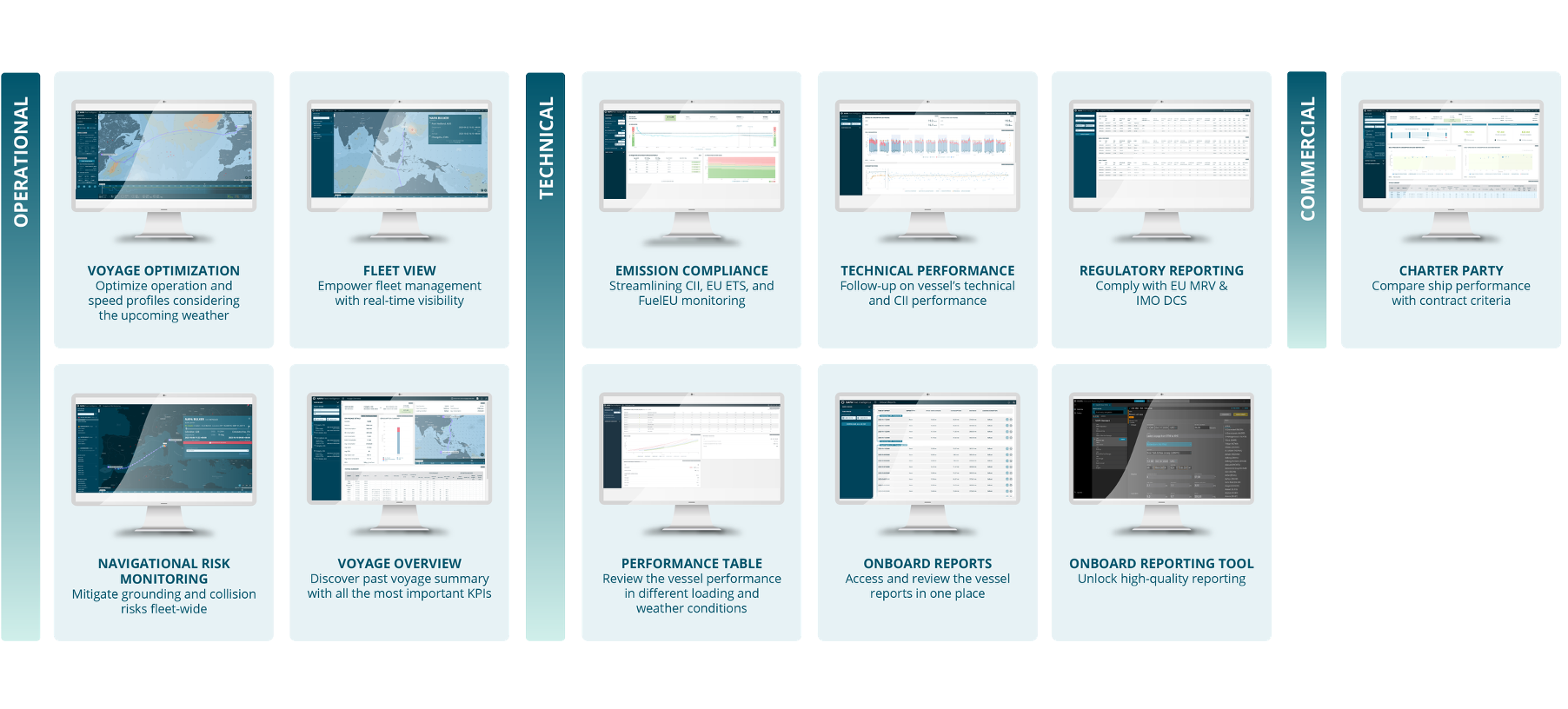
One digital tool at a shoreside team’s disposal is NAPA Fleet Intelligence, a web-based platform with lots of modules designed primarily for shoreside teams. Fleet Intelligence has various efficiency-related modules, each designed to perform a specific task and solve a specific operational challenge, bringing value to the fleet’s operations by leveraging data.
The NAPA Fleet Intelligence Technical Performance module, for example, helps to answer pressing questions on operational optimization such as: How much extra fuel is consumed due to the decreased hull condition? What is the fuel consumption and current speed baseline in different conditions? What was the impact of maintenance on ship performance?
One of our newer endeavors is NAPA Studios solutions, which provides advanced analytical services, including evaluations of the potential fuel and emissions savings that a Wind-Assisted Propulsion System (WAPS) can deliver for a specific vessel or shipowner. These insights support informed business decision-making by quantifying the expected return on investment. Additionally, NAPA Studios conducts post-installation verification studies to assess the actual savings achieved by the WAPS system, ensuring transparency and performance validation.
How does NAPA’s software contribute to achieving compliance with regulations like CII and EEXI?
The IMO’s Energy Efficiency Existing Ship Index (EEXI) and Carbon Intensity Indicator (CII) vessel efficiency rating systems are not perfect, but they do showcase the environmental performance of ships, which can have commercial implications, and they remain under review for iterative improvements.
Joint research by NAPA, ClassNK and Japanese shipowner Marubeni using NAPA’s ship performance model and voyage simulation tools has found that NAPA Voyage Optimization can reduce greenhouse gas emissions by 7.3% and can improve a vessel’s IMO Carbon Intensity Indicator (CII) rating by an average of 5-6%, extending CII compliance by up to three years.
If CII is to be more impactful, we need collaboration, especially between shipowners and charterers. CII brings a major change in paradigm: shipowners are more interested in how their vessels are operated and may want to be more involved in – or have greater visibility on – these decisions.
To make this collaboration a reality, owners and charterers need a common platform where they can develop a shared understanding of the vessel’s past, current, and future performance and compliance. With voyage optimization, performance monitoring and simulation tools, the groundwork for strong CII and EEXI performance has been built already.
Shoreside teams using the NAPA Fleet Intelligence Chater Party module can benchmark voyage performance against charter party performance clauses and weather criteria. In a similar vein, using the Emissions Compliance module, they can simulate performance and monitor compliance with environmental regulations such as CII.

Could you share a recent success story or case study where NAPA helped a shipping company reduce emissions or optimise operations?
NAPA Voyage Optimization combined with weather routing advice from experts at Interoutes was successfully used in collaboration with Fortius Ship Management. The partners optimized the voyage of M/V Radius from Ashdod to Vlissingen.
Despite unexpected challenges, including a search and rescue operation and severe weather near Gibraltar, the vessel successfully achieved its ETA target while complying with speed and consumption requirements. The Master emphasized the accuracy and frequency of updates, noting that having the suggested route pre-inserted in the NAPA system made a significant difference in operational ease and confidence.
Digital Innovation and Ship Performance
NAPA’s solutions are widely adopted in both ship design and operational efficiency. How do these two areas integrate in practice?
The joint simulation project between NAPA, Norsepower, and Sumitomo Heavy Industries Marine & Engineering is a good example of how design and operations overlap. Phase two of the project will enhance performance modeling and strengthen the role of operational data in the ship design process to build smarter and greener vessels.
Looking at the bigger picture, consistent and high-quality data is key to driving efficiency throughout the ship’s lifecycle, including design and operational phases. NAPA is uniquely placed as it offers a comprehensive digital ecosystem with a high level of integration. Data from each part of that ecosystem enables the feedback loops, continuity and collaboration that drive efficiency at every stage.
This wealth of operational data channelled through NAPA Fleet Intelligence can create an invaluable feedback loop to the design phase, for example, where insights can be fed into the design of the shipowner’s next vessels. This data creates opportunities for highly accurate and realistic operational simulations in the early ship design phase. This feeds a constant cycle of efficiency, optimization, and safety enhancements through the vessel’s entire lifecycle – allowing shipowners to make better informed decisions.
What role does data play in ship performance monitoring, and how does NAPA ensure accuracy and real-time value?
Today, environmental, safety and commercial performance are all intertwined and rely on the proper use of data and effective digitalization. Performance monitoring, based on a wealth of data, is a pillar of the aforementioned NAPA Fleet Intelligence platform.
With the Voyage Overview module, shoreside teams can analyze a breakdown of fuel consumption, weather conditions, schedule execution, engine performance and more at any time and for every voyage. The ability to evaluate voyages in detail from the shoreside is a significant advantage and should not be underestimated.
 How is AI or machine learning being used in your current or upcoming product offerings?
Machine learning, AI, and data science are increasingly shaping the future of maritime operations. In analytics services we use state-of-the-art methods, which naturally includes AI. There are lots of possibilities for the use of AI, including voyage optimization, hull performance monitoring, and digital twin technology.
At NAPA, we’re already applying data-driven methods across various use cases — from analyzing hull fouling to forecasting the CII rating of individual vessels for specific sea passages and charter periods. In the realm of AI, we also harness machine learning to process AIS data, enabling accurate identification of berths and anchorage zones, among other applications.
Market Focus and Partnerships
How important is the Cyprus and Eastern Mediterranean market to NAPA, and what presence do you currently have in the region?
These regions are hugely significant to NAPA and the entire shipping industry. Greece is home to the largest number of shipowners globally, Cyprus holds a strategic geographical position, and both are respected maritime leaders. We have an active presence in Greece and Cyprus, and we also collaborate with local partners in Turkey.
Are there any new partnerships, pilot projects, or initiatives with Cypriot shipping companies that you can share with us?
We have numerous customers including shipowners, operators and managers operating various types of vessels, all utilizing NAPA tools to monitor fleet performance and enhance voyage planning. Bulk carriers and tankers are the main types of ships in the region, but we also have our digital solutions onboard some Ro-Ro ships in the area.
One of NAPA’s valued customers in Cyprus is a key Cypriot shipping company with more than 50 vessels, and they are using NAPA Voyage Optimisation via ChartWorld.
Based on feedback from our customer meetings in the region, there is strong interest in the technical performance of the vessel, as well as in emissions monitoring and reporting for each vessel.
The Voyage Overview (hull fouling), Technical Performance (consumption trend line), and the Performance Table (comparison with charter party) NAPA Fleet Intelligence modules are valuable to customers, as they provide a quick and clear overview of key technical details. Regarding high-frequency sensor data collection, there is clear interest in dashboards, graphs, and particularly the Analyzer tool which provides real-time data monitoring. In addition, the CII Simulator and Regulatory Reporting are two modules that customers consistently look for.
Looking Ahead
What new developments can we expect from NAPA in 2025 and beyond?
In 2025 and beyond, NAPA is focused on deepening the integration between Voyage Optimization and the new wind-assisted propulsion technologies, enabling shipowners and operators to better optimize their operations, both in terms of fuel consumption and payback time.
The IMO Net-Zero Framework will also be implemented to the NAPA Fleet Intelligence platform as soon as the regulation is confirmed to be adopted in October. The Net-Zero Framework is also expected to improve the case for fuel efficiency for every ship type, regardless of fuel choice, so we will monitor its impact closely.
Finally, data, data, data is incredibly important, and so NAPA will also focus on further improving data transparency and quality assurance to ensure that users have full trust in the analysed data and the results provided.
How is NAPA preparing to support shipowners in the long-term transition to alternative fuels and autonomous shipping?
The IMO Net-Zero Framework, alongside other maritime environmental regulations such as FuelEU Maritime, are expected to increase the availability of different fuel types and further widen the bunker fuel mix. NAPA will continue to work hard to ensure that its modules and analysis results are accommodating new fuels, as well as fully compliant with regulatory requirements.
Finally, what message would you like to share with the Cyprus shipping community?
NAPA can help you navigate shipping’s parallel digital and decarbonisation transitions with data-driven digital tools that advance efficiency, safety, and commerciality throughout the vessel’s lifecycle, from shipyard to sea.


Related News.

CSN Summer Holidays: 12 to 21 August 2026
Dear CSN Readers, Please note that the CSN office will be dropping anchor for a short summer break between the 12th and 21st of August 2026. During…
Floating Data Centers emerge as growth engine for shipbuilding industry
Samsung Heavy Industries and HD Hyundai are racing into sea-based AI infrastructure as land and power limits squeeze data center expansion As…
European drought snarls inland commodity flows, cuts power supplies
Rhine, Danube river levels hit record lows in key chokepoints Inland markets face squeeze on fuel, chemicals, metals and grains Power…

Oil producers buy tankers directly to navigate blocked routes
Oil-producing countries that have frequently experienced blockages in major Middle Eastern shipping routes, such as the Strait of Hormuz and the Red…

Diana Shipping announces Time Charter Contract for m/v Florida with NYK
Diana Shipping, a global shipping company specializing in the ownership and bareboat charter-in of dry bulk vessels, today announced that, through a…
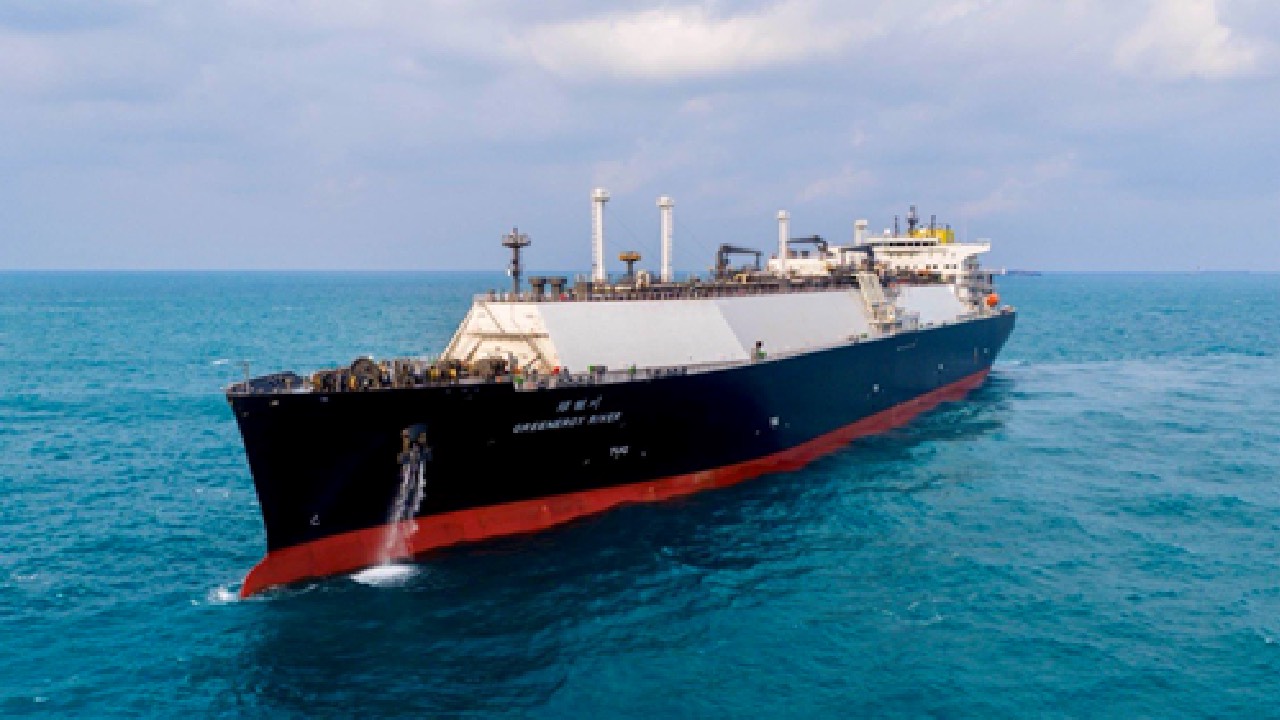
New LNG Carrier for CNOOC Group Named “GREENERGY RIVER”
On August 4, HUAJING LNG TRANSPORT PTE. LTD. (HLT), a joint venture company in which NYK participates, held a naming ceremony for a new…

Diana Shipping and Star Bulk Carriers announce mutual agreement to terminate vessel sale and purchase agreement
Diana's Offer to Acquire All Outstanding Shares of Genco Remains on the Table Termination of Agreement Has No Impact on Diana’s $1.411 Billion in…

Lloyd’s Register launches industry-first framework for digital 3D model approval
New Guidance Notes give shipyards and designers a practical route to use intelligent 3D models during class approval Lloyd’s Register (LR) has…

[xclusiv] S&P Report 10th August 2026
Please find below the [xclusiv] latest Weekly S&P Report, along with following opening market commentary [xclusiv] 2026_08_10 Market Commentary:…

Panama strengthens its global standing as ship registry earns ISO 9001:2015 recertification
In an industry where confidence is built on consistency, transparency, and operational performance, Panama has once again reinforced its position…
Subscribe to our newsletter!
if you dont want to swim alone in the ocean of news, sign up for the newsletter, and you will receive daily all the important news of world shipping!
