Inmarsat Maritime whitepaper recommends holistic approach to Cyber Security ahead of new IACS requirements


The paper discusses compliance with forthcoming IACS requirements and explains the importance of a holistic approach to cyber security.
Inmarsat Maritime, a Viasat company, has launched a white paper urging maritime organisations to strengthen their cyber defences – as the industry continues to adopt connected technologies for digitalisation, decarbonisation, and crew welfare.
The whitepaper explores the International Association of Classification Societies (IACS)’ new unified requirements (URs) for cyber security. Compiled in collaboration with leading classification society and IACS member ClassNK, IACS Unified Requirements E26 And E27 – Beyond Compliance outlines the process of demonstrating compliance with the forthcoming URs.
When it comes into force on 1 July 2024, E26 and E27 will establish minimum requirements for the cyber-resilience capabilities of newbuild vessels and their connected systems, respectively. While the paper reports that their implementation will provide “full visibility of a vessel’s computer assets and network infrastructure”, it also acknowledges the URs’ limitations, which include opportunity for a more in-depth risk-assessment process and for organizations to apply additional attention to cyber-security policy and associated procedures.
Makiko Tani, Deputy Manager, Cyber Security for maritime classification body ClassNK, said: Best practice in addressing cyber-security requirements is to take a risk-based approach, where cyber-risk controls are implemented following a thorough risk assessment, and consist of people, process, and technology in a balanced manner. Among these, the human aspect is an important link, fostering cyber hygiene through training, while defining clear roles and responsibilities within an organization. Furthermore, cyber-risk controls should be governed by the organization’s established cybersecurity policy. ClassNK continues to collaborate with industry leaders, so it contributes to helping our stakeholders streamline their cyber-risk controls and further integrate their cybersecurity policy with the organization’s governance strategy, ultimately building a cyber-resilient organization.”
Laurie Eve, Chief of Staff, Inmarsat Maritime, said: “Inmarsat Fleet Secure helps ship owners, operators, and managers to comply with cyber-security regulations including the new IACS URs while supporting meaningful enhancements across the three key areas: people and culture, network-connected systems and services, and an incident-response plan. Deployed as part of a holistic, risk-based approach, it enables organisations to embed cyber security within their connectivity strategy to keep their assets – and people – safe from online threats.”
Inmarsat’s Fleet Secure portfolio helps maritime organisations to comply with cyber security regulations including the new IACS URs. The portfolio combines three powerful components – Fleet Secure Endpoint, Fleet Secure Unified Threat Management, and Cyber Awareness Training, all aimed at proactively responding to a potential cyber threat and available to Fleet Xpress customers.


Related News.

CSN Summer Holidays: 12 to 21 August 2026
Dear CSN Readers, Please note that the CSN office will be dropping anchor for a short summer break between the 12th and 21st of August 2026. During…

Floating Data Centers emerge as growth engine for shipbuilding industry
Samsung Heavy Industries and HD Hyundai are racing into sea-based AI infrastructure as land and power limits squeeze data center expansion As…

European drought snarls inland commodity flows, cuts power supplies
Rhine, Danube river levels hit record lows in key chokepoints Inland markets face squeeze on fuel, chemicals, metals and grains Power…

Oil producers buy tankers directly to navigate blocked routes
Oil-producing countries that have frequently experienced blockages in major Middle Eastern shipping routes, such as the Strait of Hormuz and the Red…

Diana Shipping announces Time Charter Contract for m/v Florida with NYK
Diana Shipping, a global shipping company specializing in the ownership and bareboat charter-in of dry bulk vessels, today announced that, through a…
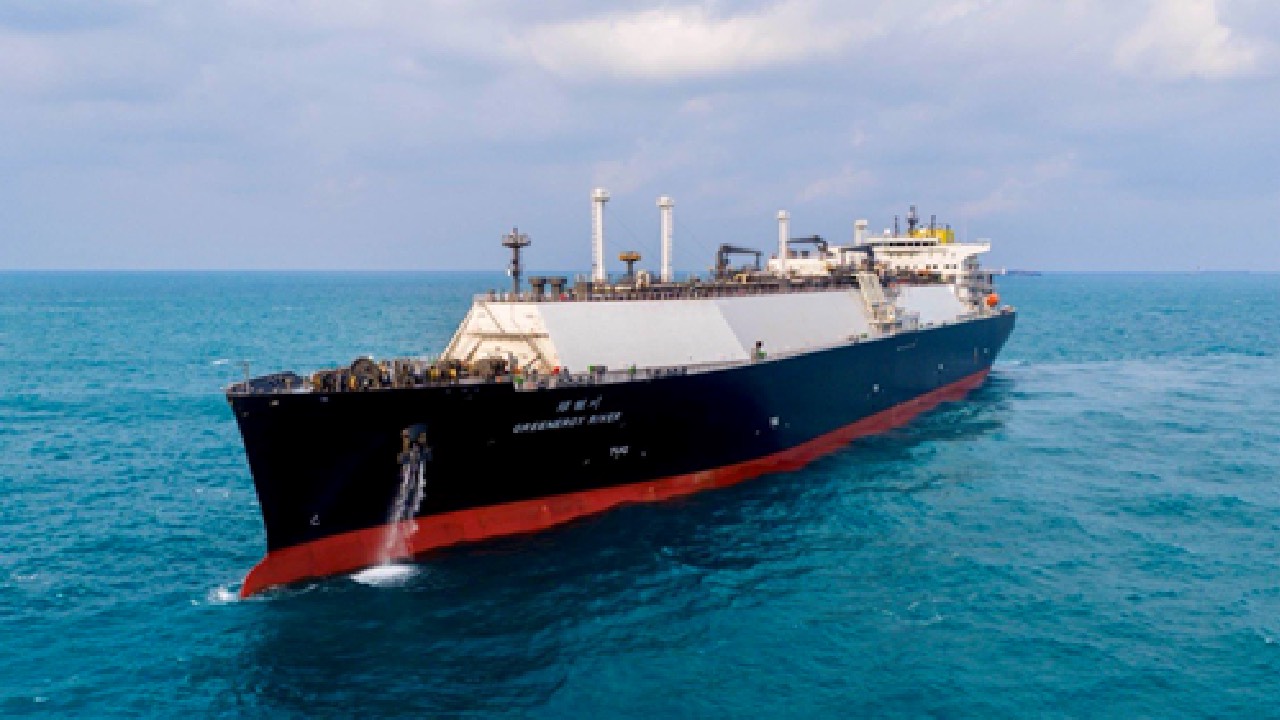
New LNG Carrier for CNOOC Group Named “GREENERGY RIVER”
On August 4, HUAJING LNG TRANSPORT PTE. LTD. (HLT), a joint venture company in which NYK participates, held a naming ceremony for a new…

Diana Shipping and Star Bulk Carriers announce mutual agreement to terminate vessel sale and purchase agreement
Diana's Offer to Acquire All Outstanding Shares of Genco Remains on the Table Termination of Agreement Has No Impact on Diana’s $1.411 Billion in…

Lloyd’s Register launches industry-first framework for digital 3D model approval
New Guidance Notes give shipyards and designers a practical route to use intelligent 3D models during class approval Lloyd’s Register (LR) has…

[xclusiv] S&P Report 10th August 2026
Please find below the [xclusiv] latest Weekly S&P Report, along with following opening market commentary [xclusiv] 2026_08_10 Market Commentary:…

Panama strengthens its global standing as ship registry earns ISO 9001:2015 recertification
In an industry where confidence is built on consistency, transparency, and operational performance, Panama has once again reinforced its position…
Subscribe to our newsletter!
if you dont want to swim alone in the ocean of news, sign up for the newsletter, and you will receive daily all the important news of world shipping!
