Navigating the S-100 Transition: Real-World Trials and the Future of Digital Navigation


As the maritime industry prepares for the implementation of the S-100 data standard, the shift from traditional Electronic Navigational Charts (S-57) to a dynamic, multi-layered digital environment represents one of the most significant upgrades to bridge operations in decades. Following a highly successful demonstration at the SMM exhibition in Hamburg, Adonis Violaris of Cyprus Shipping News sat down with Tom Mellor, Head of Technical Partnerships at the UK Hydrographic Office (UKHO). In this exclusive Q&A, they discuss the real-world operational insights gained from live sea trials aboard the Stena Vinga, the challenges of managing new data sets without overwhelming the bridge team, and how cross-industry collaboration is shaping the next generation of ECDIS equipment.
Tom Mellor is the Head of Technical Partnerships at the UK Hydrographic Office (UKHO). In his role, he leads the UKHO’s engagement with international hydrographic offices, equipment manufacturers, and the wider maritime sector to advance the development and implementation of the S-100 data standard. With extensive experience in digital navigation and marine geospatial data, Tom plays a critical part in ensuring that the transition to next-generation ECDIS systems is safe, efficient, and operationally sound for seafarers worldwide.
Tom, it was great catching up at SMM. To start, how was the overall reception from the industry regarding the S-100 transition during your Future of Navigation forum at the event?
It was great to catch up too. The reception from the industry at SMM was really positive. We ran several S-100-focused sessions as part of our Future of Navigation Forum, which were well attended by stakeholders from across the maritime sector. During the panel sessions, we had some great conversations around S-100, with plenty of interesting audience questions.
One of the highlights of the event was being able to demonstrate S-100 data live in ECDIS at our stand. Having something attendees could see and interact with provided a genuine hands-on experience of the new data standards. This kind of practical demonstration goes a long way in terms of building familiarity and confidence ahead of the wider S-100 transition.
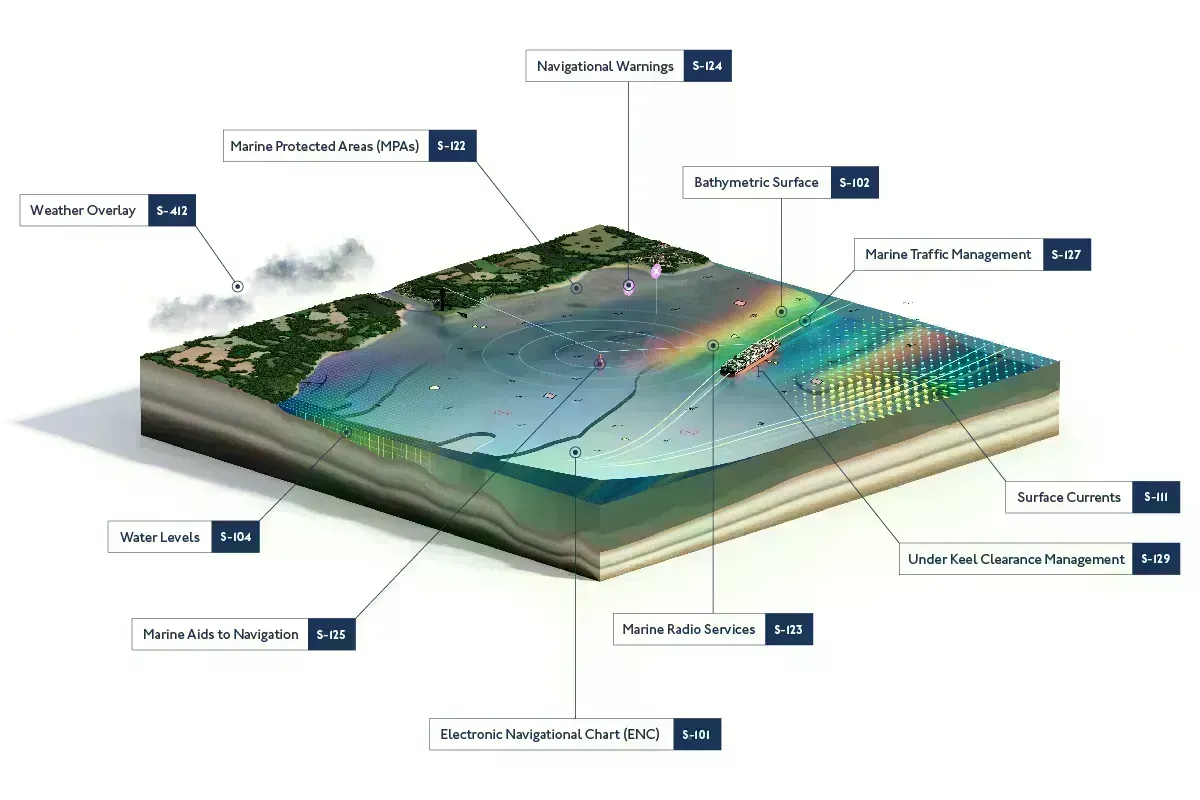
The recent live sea trials aboard the Stena Vinga brought together all four Phase 1 S-100 datasets for the first time. What were the most significant operational insights your team gathered from navigating the complex route between Portsmouth and Jersey?
The recent Stena Vinga trial was really valuable. The Portsmouth to Jersey route takes you through the Solent – a very busy and complex waterway – so it was the ideal real-world test for bringing all four Phase 1 S-100 datasets together for the first time. What came through most clearly was the improved situational awareness for the bridge team, vital when navigating in constrained, high-traffic waters.
Dynamic water level adjustments and high-resolution bathymetric data played a key role in supporting the bridge team to be confident in the available tidal window, as St Helier is tidally restricted for a vessel the size of the Stena Vinga. In practical terms, this meant extra time to complete loading before departure.
Surface currents also proved especially useful. The route had strong tidal streams, and currents are often the most changeable environmental condition the Stena Vinga bridge team has to account for. Being able to see that data integrated within a single display made it much easier to factor into navigational decisions in real time.
Combining Electronic Navigational Charts, bathymetry, water levels, and surface currents into a single ECDIS display is a major shift. How did the bridge team respond to this multi layered visualisation, and did it genuinely improve their situational awareness without causing data overload?
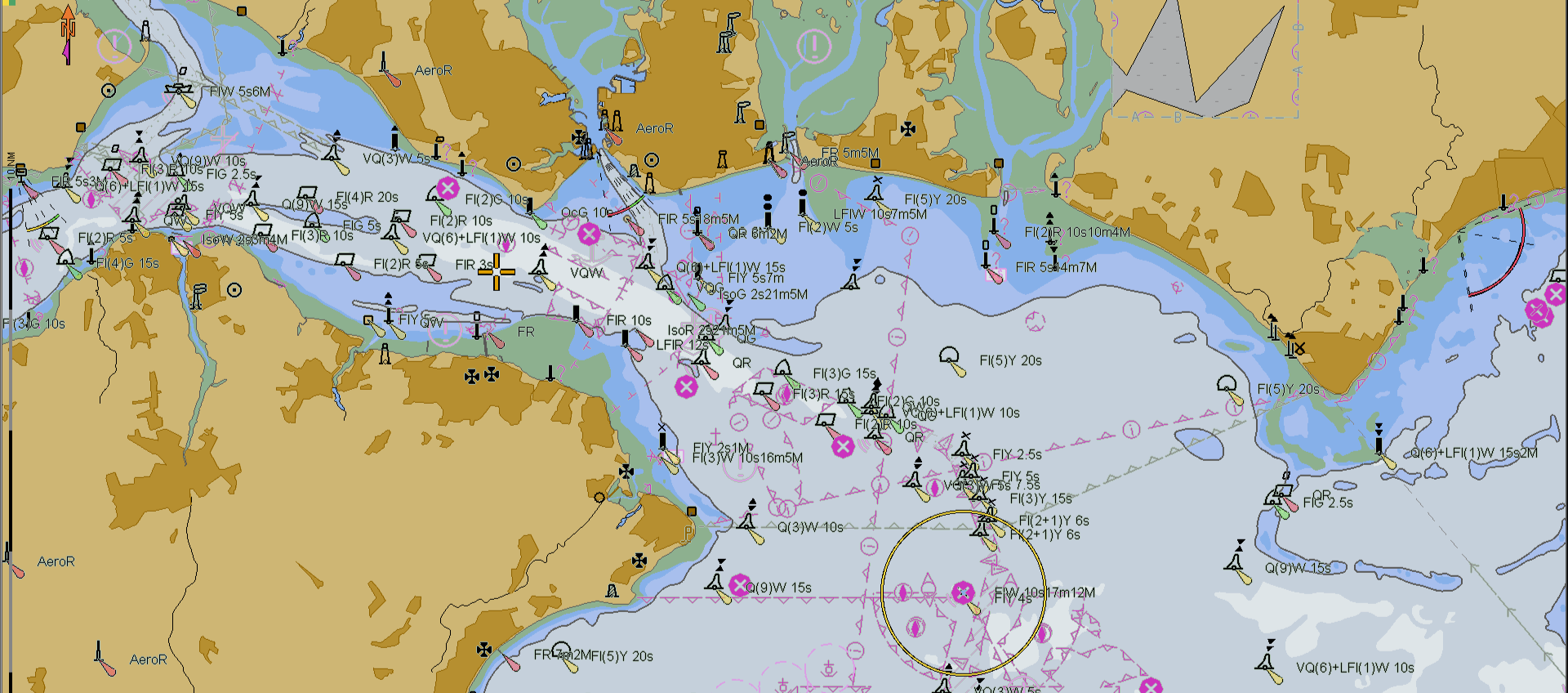
We are definitely conscious of the level of change and that the availability of more data doesn’t necessarily make navigation easier. One of the key objectives of all our trials is understanding how S-100 ECDIS can be designed to help mariners to maintain a clear view of critical navigational information. For example, enabling data layers to be easily managed by toggling them on and off depending on what’s needed at the time. Rather than seeing all available data at once, bridge teams can then tailor the display to what is needed for the situation at hand.
Across our trials, bridge teams have been positive about the benefits of being able to combine multiple data sources into a single view and see the transition from S-57 to S-100 as manageable. To help further ease the transition, S-101 ENCs have been specifically designed to retain the core symbology as S-57, while adding improvements such as dynamic text placement. This means that base charts will still be familiar to mariners and help S-100 ECDIS feel like an evolution of existing systems rather than a complete shift.
Alongside the live trials, the UKHO has conducted extensive simulator exercises with mariners from leading LNG and tanker fleets. How do the findings from these controlled simulator environments compare to the real world feedback gathered from the Stena Vinga?
The findings have been consistent across both simulator and real-world environments: S-100 helps to improve situational awareness and increases navigational confidence. The consistency across both types of trial is encouraging because it shows that these benefits are experienced across different vessels and contexts, not just in one specific situation.
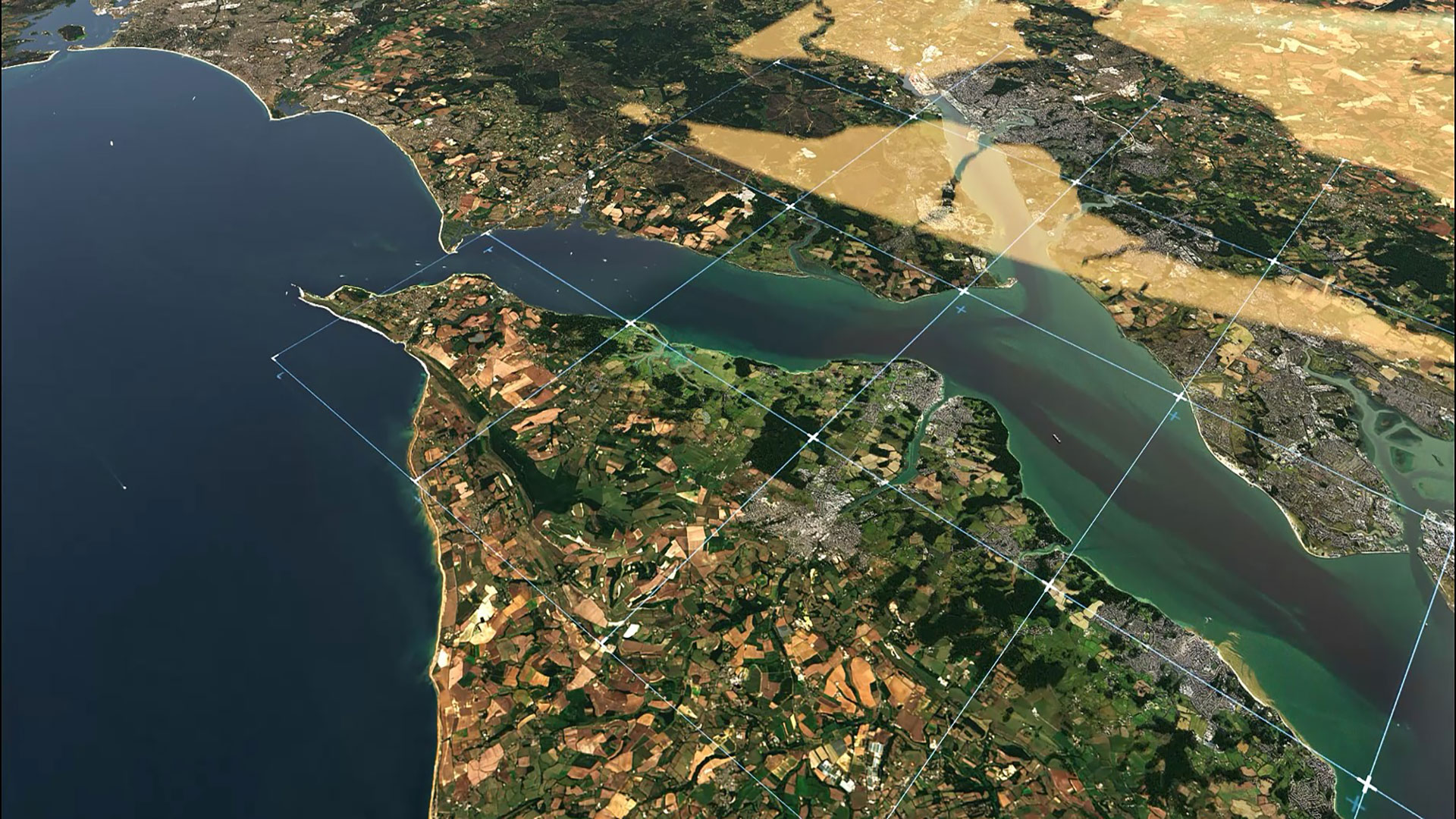
Simulator trials can add value because they allow for direct comparisons of S-57 and S-100 data in identical scenarios and safe exploration of complex situations that would be too dangerous to test at sea. In one previous simulator trial, we evaluated a scenario where a vessel broke down ahead of the test ship in the Southampton Channel, and the crew had to plan and execute a manoeuvre around it using S-100 data.
Live trials, like the Stena Vinga trial, validate S-100 in real operating conditions, but simulators let us go further. Both are essential to building a comprehensive evidence base for S-100.
Beyond regulatory compliance, what are the tangible commercial and safety benefits that shipowners and operators can expect once S-100 is fully implemented across their fleets?
There are clear commercial and safety benefits associated with S-100. In terms of passage planning efficiency, having ENCs, bathymetry, water levels and currents in a single display means bridge teams spend less time cross-referencing separate sources.
More granular bathymetry and dynamic water level information can also support identifying new route options that wouldn’t previously have been visible. Having a richer and more dynamic picture of the navigable environment means that operators can plan more efficient routes, which also ties into supporting just-in-time arrivals and reducing emissions – both commercial and environmental priorities.
S-100 can also allow for more informed manoeuvring. In high-risk scenarios like pilotage and berthing, more granular information on complex tidal flows, ebbs and directional shifts can help bridge teams to make safer decisions in areas where margins are smallest.
The transition to S-100 is a massive undertaking for the maritime sector. From your conversations at SMM and during this year long testing programme, what do you see as the biggest hurdles for shipping companies in adopting this next generation of navigation?
Right now, one of the most important things we’re trying to raise awareness of amongst shipowners and operators is the S-100 implementation timeline itself.
Type-approved S-100 ECDIS are expected to become commercially available in 2028. From January 2029, all new or retrofitted ECDIS must be S-100 compatible. Importantly, existing ECDIS won’t need replacing, and new systems will run both S-57 and S-100 formats side by side in a “dual-fuel” period.
While no immediate action is needed, owners and operators should consider beginning conversations with suppliers and manufacturers to understand their options and assess when a move to S-100 would be most beneficial for their organisations.
You have been working closely with equipment manufacturers, ports, and training providers. How crucial is this cross industry collaboration in ensuring the new ECDIS equipment is truly fit for purpose?
Cross-industry collaboration will be essential to ensure S-100 standards and systems truly meet real-world operational requirements.
Our trials programme has brought together hydrographic offices, ECDIS manufacturers, ports and training providers. We’ve tested S-100 in confined waters with OSI Maritime Systems and ECDIS Ltd, evaluated display and interoperability at CSMART in the Netherlands with ports and pilots, trialled S-102 bathymetry in the tidal Thames with the Port of London Authority, and worked with Minerva Marine and the Angelicoussis Group to bring in fleet-level shipowner perspective.
Perhaps most importantly, we have tested S-100 with active seafarers. They’re the end users, and our job is to ensure S-100 products support safe, efficient and compliant navigation for the people working on the bridge.
With the introduction of more dynamic and complex data on the bridge, how will training need to evolve to ensure seafarers can confidently interpret this information?
Training will need to evolve alongside the technology. S-100 ECDIS brings new features and functionalities, so training needs to reflect this rather than treating it as a minor update to existing ECDIS courses.
What’s been really valuable is that feedback from mariners and training providers involved in our trials is directly shaping how those programmes are designed. This feedback is helping us pinpoint the specific areas where dedicated training and clear guidance is needed, whether that’s managing display settings or just understanding how different S-100 products interact.
This will be especially important during the dual-fuel period, when S-100 and S-57 data will be used in parallel. Bridge teams will need to be confident navigating with both types of data, so training must prepare them for that transition.
Now that this comprehensive testing phase has provided such valuable feedback, what are the immediate next steps for the UKHO in refining the S-100 products ahead of their wider rollout?
This first year of trials has given us a huge amount of valuable feedback, and the immediate priority is using this to keep refining our S-100 products so that they meet mariners’ needs. This will be an ongoing process, and we’ll continue building on it as further trials take place through 2027.
We’re also working closely with other national hydrographic offices to align our approaches to creating S-100 data sets, which is essential for supporting international voyages. A good example of this is our collaboration with Shom, the French Hydrographic Office, on a cross-border route from St Helier in Jersey to Saint-Malo in France. This will test how S-100 performs when a vessel moves across national boundaries, ensuring mariners can seamlessly transition between S-100 products developed by different hydrographic offices.



Related News.
OL Shipping Group in Tokyo: Capt. Eberhard Koch calls for realistic solutions to Maritime Decarbonisation
An intensive and engaging couple of days in Tokyo brought together leading figures from the international maritime community, providing a valuable…
Regatta for Peace one of the largest ever in Cyprus
Cyprus will host the first European stop on a global sailing journey leading up to the 2027 America’s Cup in Naples. More than 120 sailors…
The propulsion technology powering the marine energy transition
The marine industry is under increasing pressure to future-proof fleets, balancing the need to reduce emissions and improve efficiency. Propulsion…
Signal Ocean acquires Lgmar
Signal Ocean announced the acquisition of Lgmar, the Athens-based company behind Telix, a maritime email and communication platform in daily use…

Canada clean power push challenged by interprovincial grid limits, says GlobalData
Canada is entering a pivotal phase of power-sector expansion as federal tax credits, the phase-out of coal-fired generation, and accelerating…

Maritime safety depends on human factors and leadership, not procedures alone
Interim survey findings point to a gap between seafarers’ perceptions of risk and injury data Seafarers may misjudge when and where they are most at…

New BIMCO contracts tackle ship recycling and energy-saving retrofits
BIMCO adopted two new contractual solutions designed to help you manage important operational and regulatory challenges: the revised…
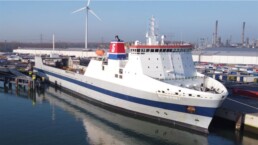
Stena Line to acquire vessel and make changes to its network
Stena Line has reached an agreement to acquire the RoRo vessel Somerset from CLdN. Subject to closure and transfer, the vessel would begin operating…
DORIC WEEKLY INSIGHT 16 OCTOBER 2026
Please find below the DORIC Market Insight for the week ending 16th October 2026. Weekly Report 16.10.2026
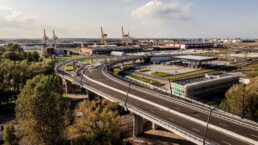
Important information for port clients and freight carriers effective November 1, a new traffic overpass and port checkpoint will open for traffic to the Port of Riga on Kundziņsala
Starting November 1 of this year, a new traffic overpass connecting Tvaika Street to Kundziņsala will open to facilitate traffic to and from the Port…
Subscribe to our newsletter!
if you dont want to swim alone in the ocean of news, sign up for the newsletter, and you will receive daily all the important news of world shipping!
