
An intensive and engaging couple of days in Tokyo brought together leading figures from the international maritime community, providing a valuable platform for discussions on the future of shipping, decarbonisation, technological innovation and global maritime cooperation.
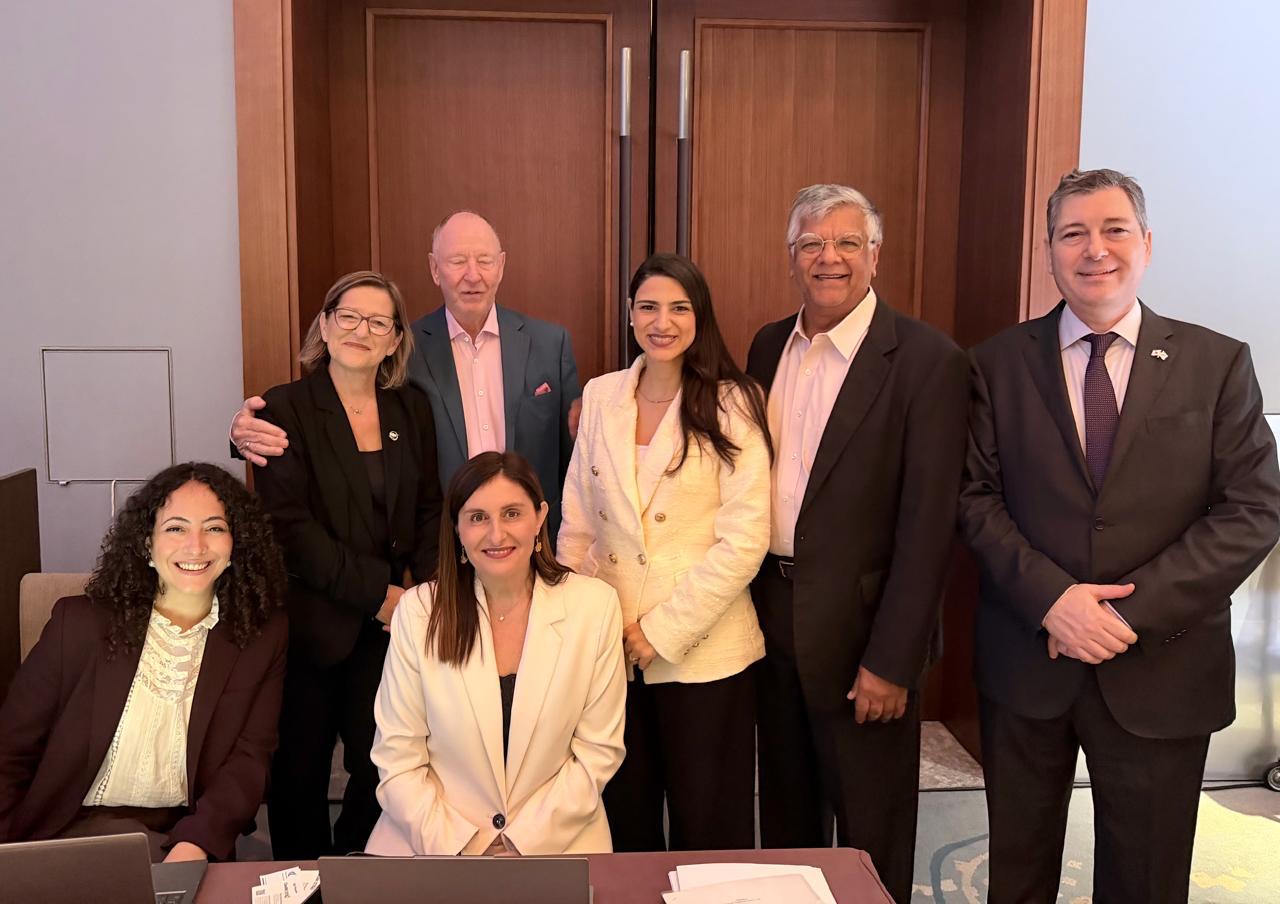
At the 5th Capital Link Forum, OL Shipping Group was represented by Capt. Eberhard Koch, Chairman, CEO and Partner, and Sunil Kapoor, COO and Partner, whose engagements began a couple of days ahead of the Forum, on 14 October with the Columbia Group Reception, followed on 15 October by the Cyprus Ship Registry Reception, hosted by H.E. Marina Hadjimanolis, Shipping Deputy Minister of the Republic of Cyprus.
The receptions offered an excellent opportunity to strengthen relationships between the Cypriot and Japanese maritime communities, including banking and leasing companies, promote the Cyprus flag and exchange views with key industry stakeholders.
The discussions continued at the Capital Link Japan Maritime Forum, where Capt. Koch joined the panel “Optimizing Fleet Performance: Decarbonization, Technology & Asset Lifecycle”, moderated by Matthew Mueller of ABS, alongside Demetris Chrysostomou, Deputy CEO of Columbia Group; Torben Kölln, Managing Director of Leonhardt & Blumberg; and Hitesh Vyas, VP Middle East & Green Recycling Coordinator at Wirana Shipping.
The panel addressed some of the most pressing challenges facing shipowners today, including the balance between environmental ambitions and commercial realities, the adoption of new technologies, fleet efficiency, vessel lifecycle management and the growing complexity of international regulatory requirements.
A central theme was the need to ensure that decarbonisation strategies are not only environmentally ambitious but also technically achievable and economically sustainable.
Drawing on his extensive experience as a shipowner and maritime executive, Capt. Koch delivered a particularly direct intervention concerning the International Maritime Organization’s proposed Net-Zero Framework (NZF), questioning the effectiveness of introducing a carbon-tax-based mechanism before the shipping industry has access to sufficient supplies of viable alternative fuels.
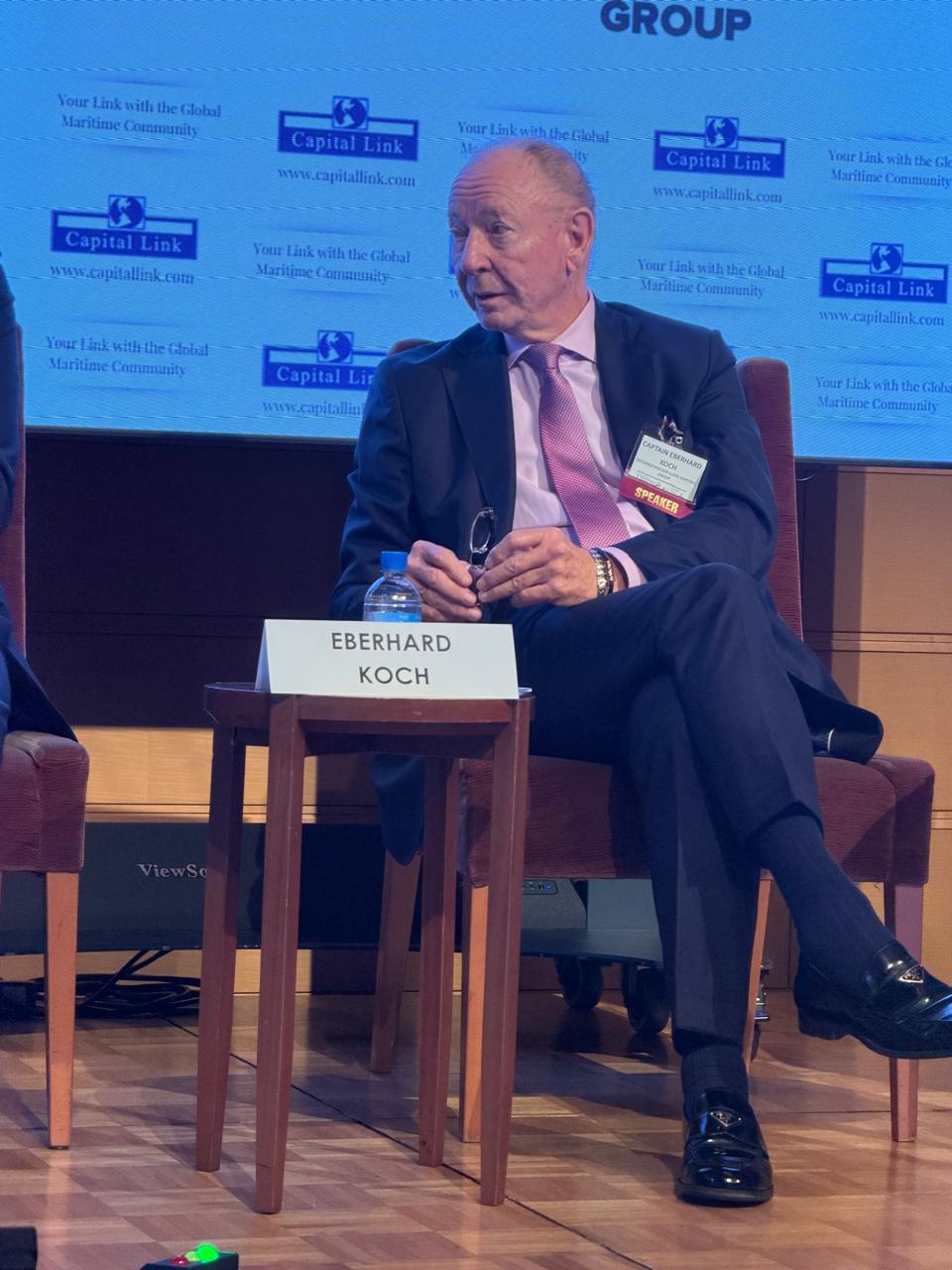
While emphasising that he fully supports the objective of decarbonising international shipping, Capt. Koch expressed serious reservations about the proposed framework in its present form.
“A global framework must give shipowners a realistic route to reducing emissions,” he emphasised.
He challenged the assumption that imposing additional financial burdens on shipowners would, in itself, accelerate the energy transition, pointing out that operators cannot adopt fuels that are not yet available in sufficient quantities or supported by adequate global bunkering infrastructure.
Capt. Koch also drew attention to the potential consequences for smaller and medium-sized shipowners, “the backbone of our industry,” who could face disproportionate financial pressure under a system that does not adequately reflect the commercial and operational realities of shipping.
He stressed that any successful transition must be driven by the availability of safe, genuinely zero-emission fuels, technological readiness and practical solutions rather than taxation alone.
The discussion also highlighted the importance of adopting a balanced approach to fleet performance. Decisions concerning vessel efficiency, new technologies, fleet renewal and the extension of vessel lifecycles must be assessed against both their environmental benefits and their economic implications.
In this context, Capt. Koch questioned whether some existing environmental performance measures sufficiently reflect the realities of vessel operations, arguing that regulations must encourage genuine efficiency improvements rather than produce unintended commercial or operational consequences.
Addressing the Japanese maritime community, he encouraged Japanese shipowners and industry representatives to take an active role in shaping a more practical and equitable international regulatory framework. He also called for a reconsideration of mandatory carbon-tax mechanisms in favour of an approach that prioritises technological solutions, fuel availability and measurable emissions reductions.
His position was summarised in a clear and uncompromising statement:
“Give us truly zero-emission alternative fuels, and we will burn them.”
The message was straightforward: shipowners are ready to contribute to the decarbonisation of shipping, but environmental ambition must be matched by the practical means to deliver it.
The Forum provided an important opportunity for the exchange of perspectives among shipowners, managers, classification societies and other maritime stakeholders, reinforcing the need for international cooperation in navigating the industry’s environmental and technological transition.
For OL Shipping Group, the Tokyo gathering represented another valuable opportunity to engage with the international shipping community, strengthen maritime relationships and contribute to discussions that will shape the future of the industry.
OL Shipping Group remains committed to responsible and sustainable shipping, firmly believing that meaningful progress must be built on realistic regulation, technological innovation and commercially viable solutions.



Related News.
Intelligent Skies, Secure Seas: Navigating Connectivity, Cyber Resilience, and AI Liability at the 5th CSN Greece ICT Conference
The 5th CSN Greece ICT Conference, held on 19th November 2026 at the Ploes Floating Venue in Paleo Faliro, Athens, successfully convened maritime…

EU moves to ban tankers insured in Russia, repair services at Russian refineries
EU targets Russian-insured tankers, refineries Von der Leyen announces 22nd sanctions package All 27 member states must approve new…
IMO tackling fraudulent registries together
Strong national systems and international information sharing are crucial to tackling fraudulent registries and fraudulent ship registration…
Open letter on freedom of navigation and the protection of seafarers
Dear High Representative Kallas, Dear Foreign Affairs Ministers, European Shipowners | ECSA, BIMCO, the Cruise Lines International Association…
Davies Turner warns of Rising Asia-UK Container Disruption and European Port Congestion
Davies Turner, one of the UK’s largest independent freight forwarding and logistics companies, says that disruption to container shipments from Asia…
Disruptions still dominate tanker market outlook
"This year, tanker markets have been affected by disruption to transits through the Strait of Hormuz, the Houthi blockade of Saudi Arabian Red Sea…
Panama’s President called on to match COP31 Heroism with action at shipping climate talks
As a series of crucial meetings tasked with cutting greenhouse gas emissions from global shipping takes place this week and next, environmental NGOs…
Trafigura appoints Helio Cumbi as Executive Director, Mozambique
Trafigura has appointed Helio Cumbi as Executive Director, Mozambique, and Business Development Lead for East and Southern Africa Oil. Helio is a…
“K” LINE holds FY2026 Global Dry Bulk Meeting
Kawasaki Kisen Kaisha, announces that it held a global meeting for its dry bulk business at the company’s head office on November 9 and 10. The…
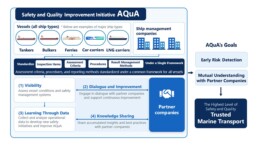
MOL launches ‘AQuA’ safety and quality improvement initiative
Standardizing Group-wide Safety and Quality Assessment Criteria to Enhance Vessel Safety and Quality Mitsui O.S.K. Lines, announced the launch of…
Subscribe to our newsletter!
if you dont want to swim alone in the ocean of news, sign up for the newsletter, and you will receive daily all the important news of world shipping!
