Syria’s tanker trade: what the data shows

AXSMarine TradeFlows, load and discharge sides · Wet cargo only · January–July 2025 against January–July 2026 · Extract dated 17 August 2026.Barrels, converted record by record at 7.3 bbl a tonne for crude, 7.9 for clean products, 6.353 for fuel oil and 11.6 for LPG
The short answer
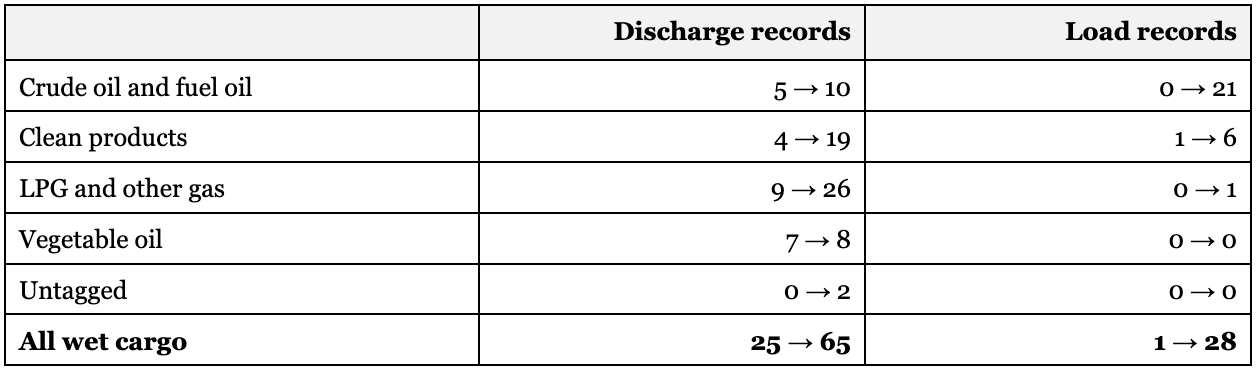
Both are up, for quite different reasons. Seaborne imports of oil, products and gas into the three ports went from 3.75m bbl in the first seven months of 2025 to 17.03m bbl this year, +354%, on 25 discharge records rising to 65. Exports are a different case. They barely existed in 2025: one cargo, 0.23m bbl. This year they are 15.42m bbl on 28 records. Syria has gone from importing something like 17 barrels for every one it shipped out to roughly 1.1:1.
Imports rose in every segment. On the export side, crude and fuel oil recorded nothing whatever in 2025 and now account for four fifths of everything that leaves. So one trade multiplied and the other started from scratch.
Where the movement is
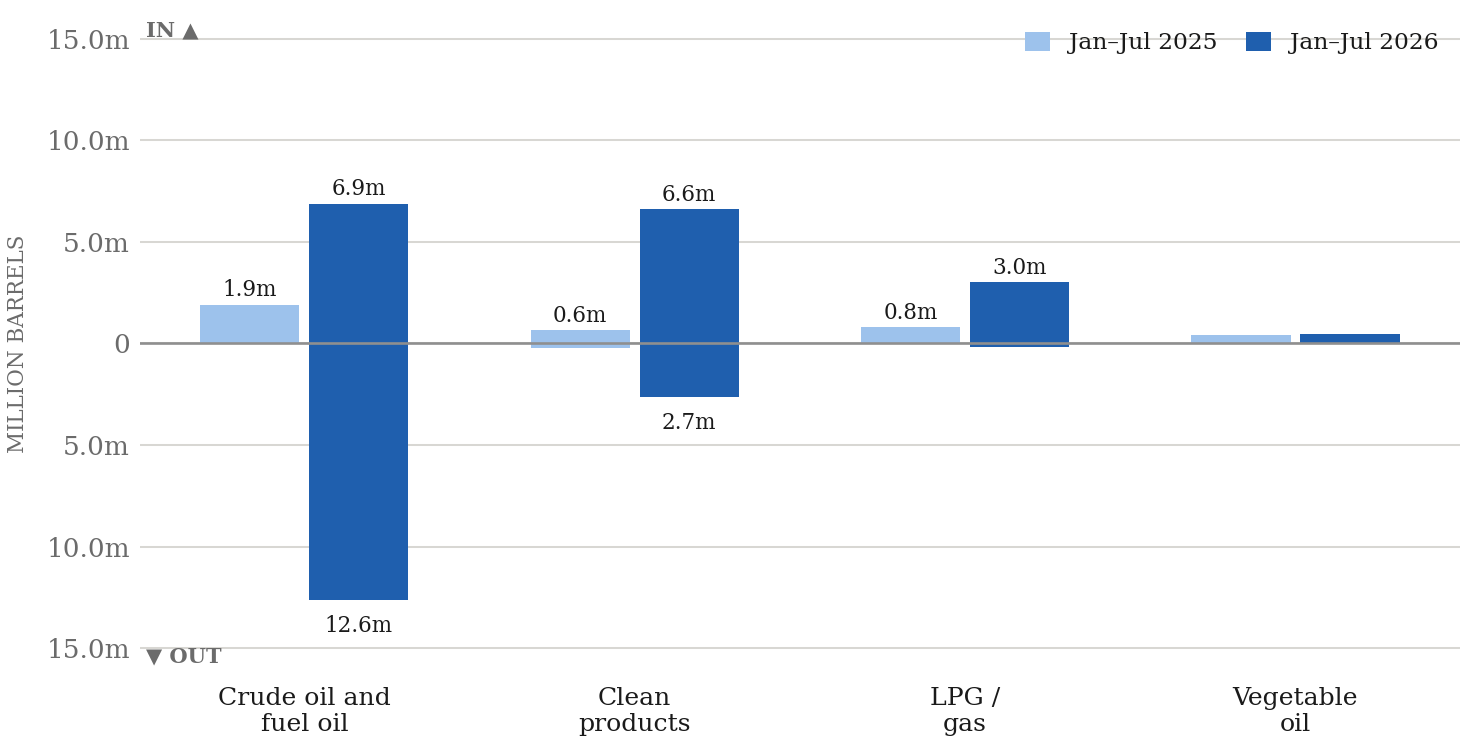
Seaborne wet cargo at Banias, Tartous and Latakia, millions of barrels, January to July. Bars above the line are imports, below the line exports. Crude and fuel oil are shown as one line for the reason set out below. Untagged records are excluded from the chart and appear in the table.
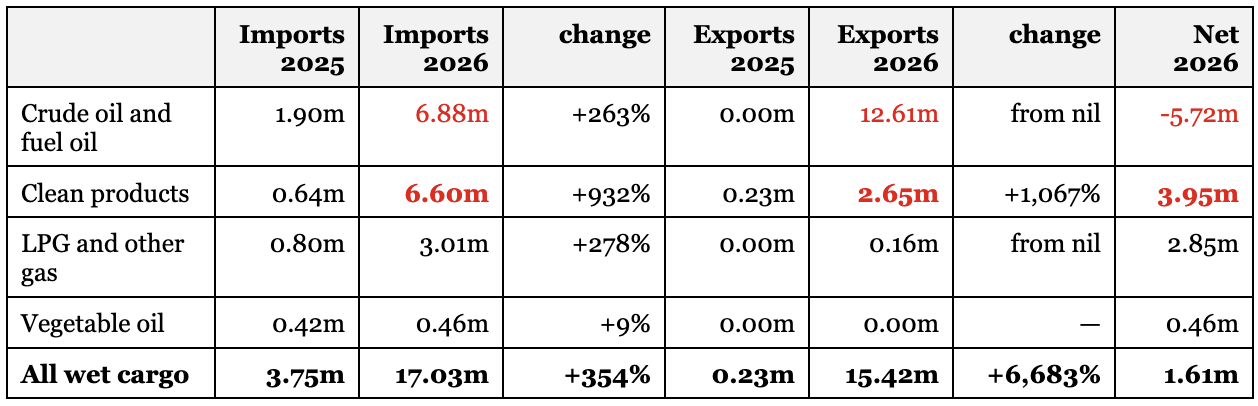
Most of the movement sits in two lines. Clean products are the largest inbound stream at 6.60m bbl. After the 2.65m bbl that left again, Syria was 3.95m barrels short over the seven months. Crude and fuel oil go the other way: 6.88m bbl in against 12.61m bbl out, a net outflow of 5.72m barrels. That single line is the whole of the export story.
Some context for the clean deficit. Syria’s energy minister has put domestic demand at 120,000 to 150,000 barrels a day. The same official gave production as 100,000 b/d in one statement and 40,000 in another, and the Syrian Petroleum Company put combined refinery capacity at about 130,000 b/d, with Banias running at 95,000: Enab Baladi, 7 March 2026. Against those numbers a heavy clean import bill is roughly what you would expect.
The three ports do different jobs
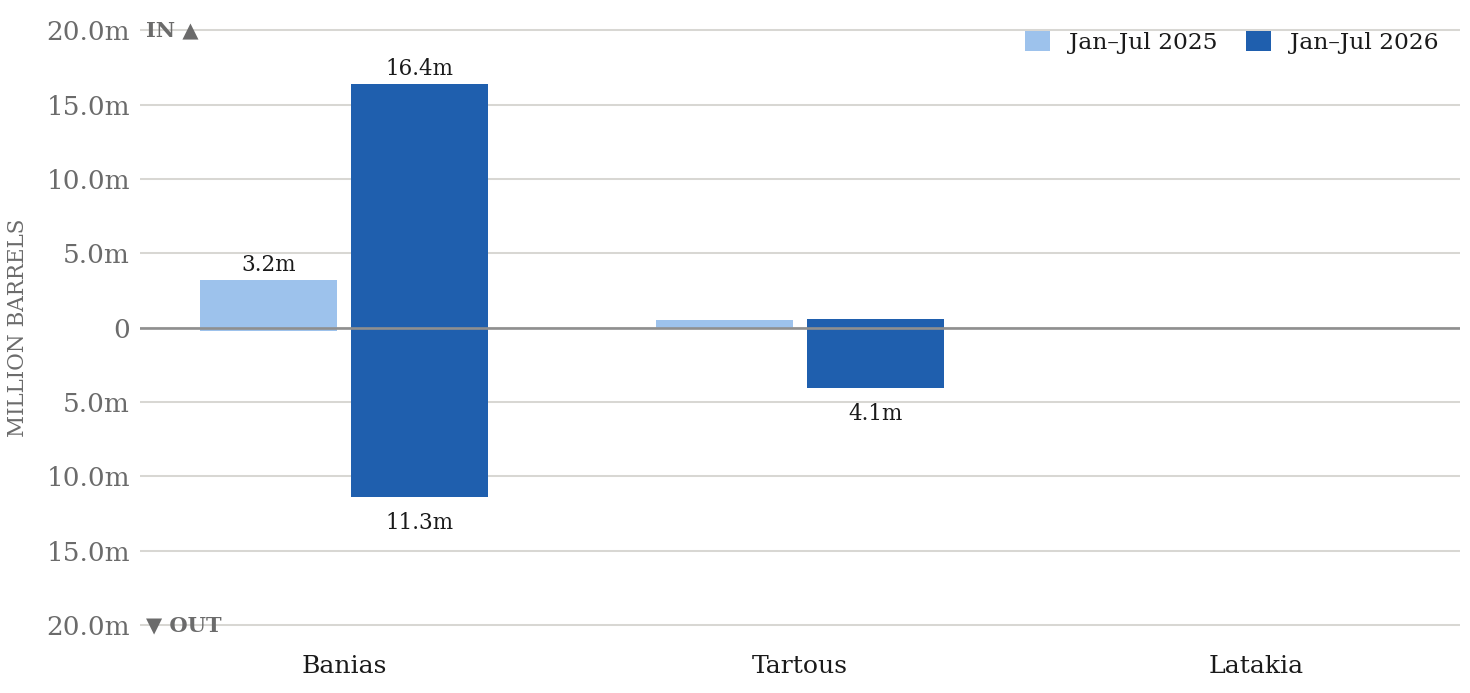

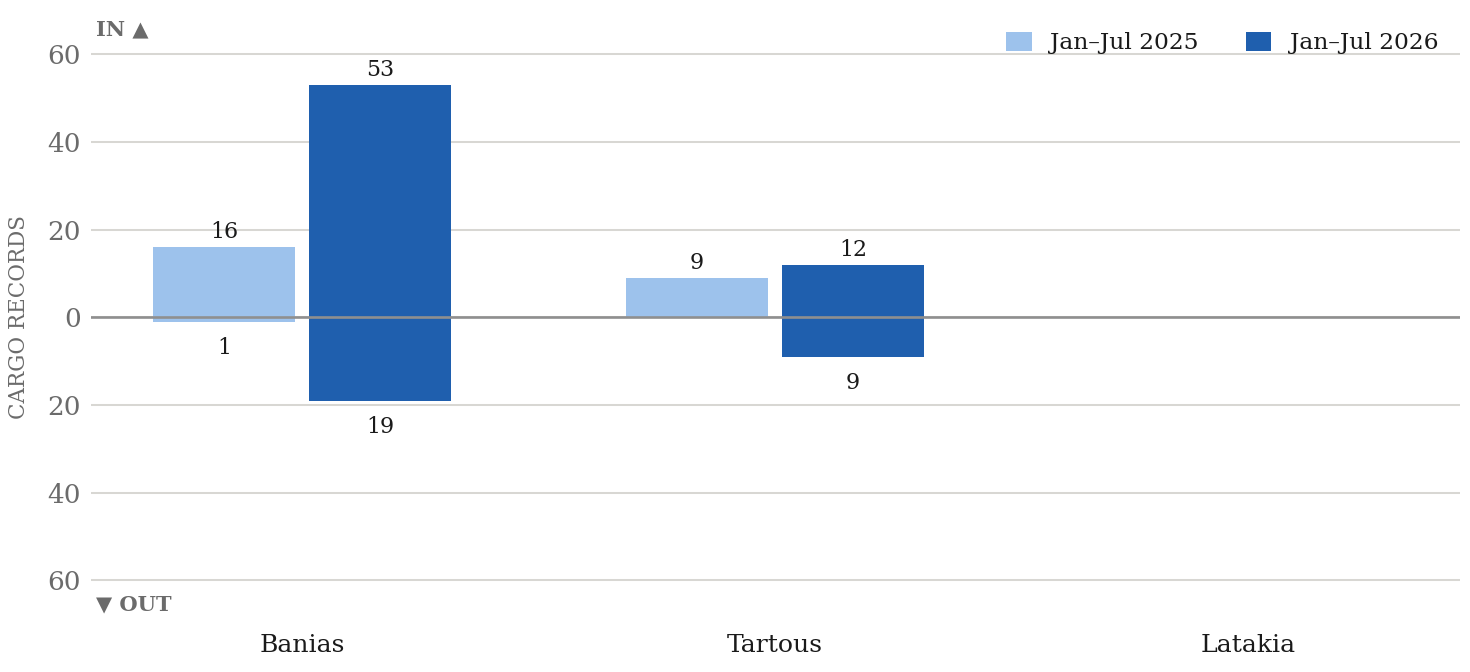
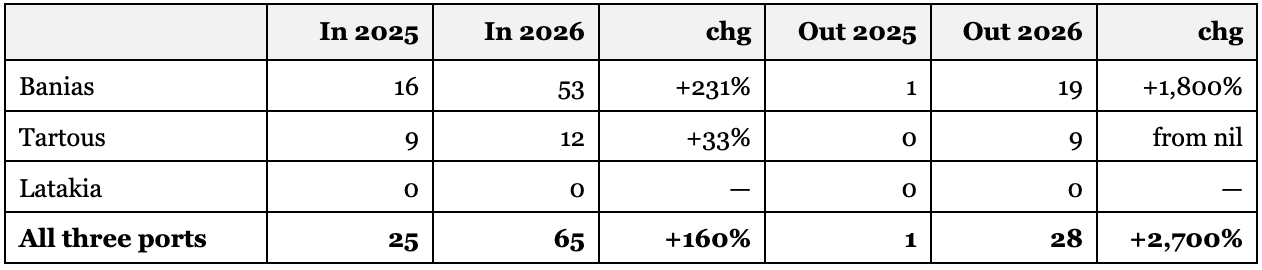
Banias is the oil port, and very nearly the whole of it: 16.41m bbl in and 11.35m bbl out, or 96% of wet imports and 74% of wet exports. Tartous runs a smaller crude and products business alongside its dry trade, 0.62m bbl in and 4.07m bbl out. Latakia records no tanker cargo at all, in either year or either direction.
Voyages and port calls
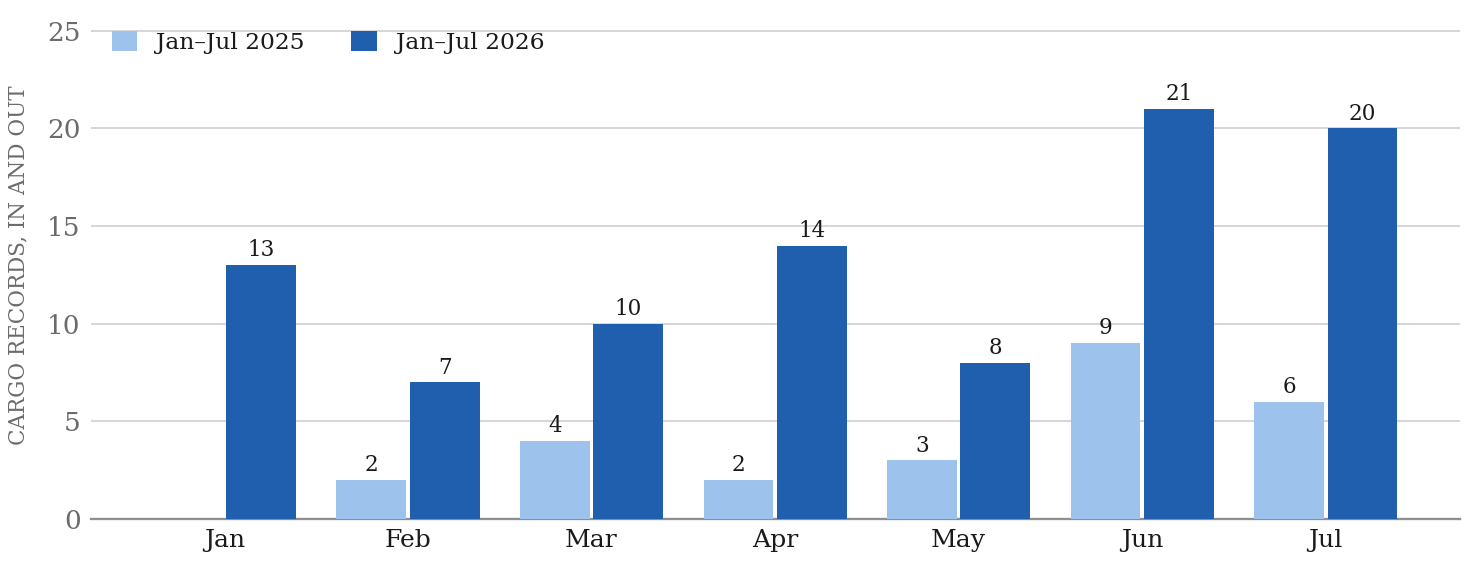
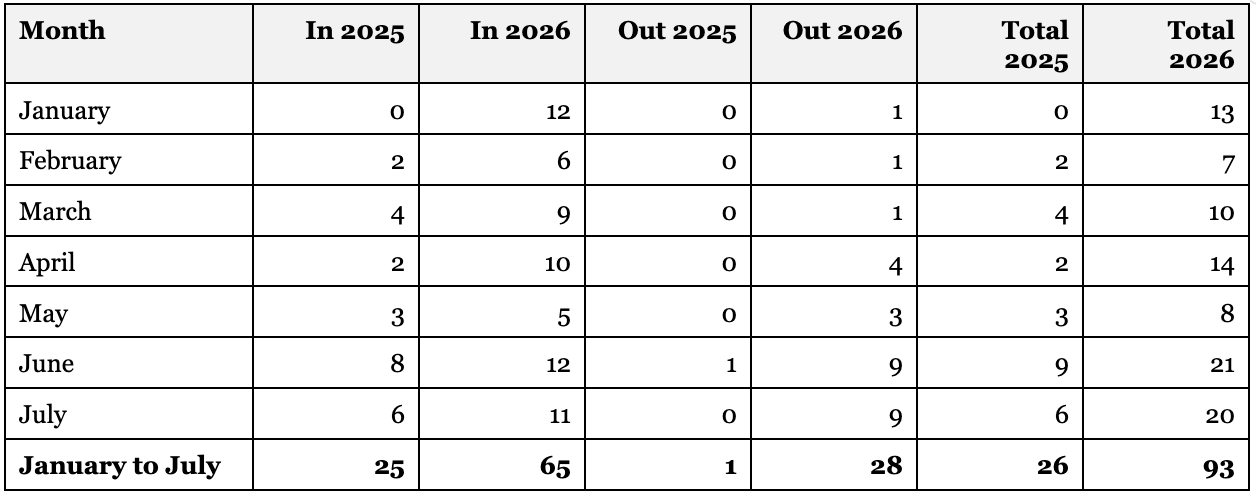
Tonnage is only half of it, and the vessel count moves differently. Wet cargo records across the three ports went from 25 inbound and 1 outbound in January–July 2025 to 65 and 28 in 2026, so total 26 became 93, or +258%. That is a smaller multiple than the tonnage rise, which means average cargo size went up as well. Some of the extra volume came from more ships and some from bigger ones.
Banias month by month
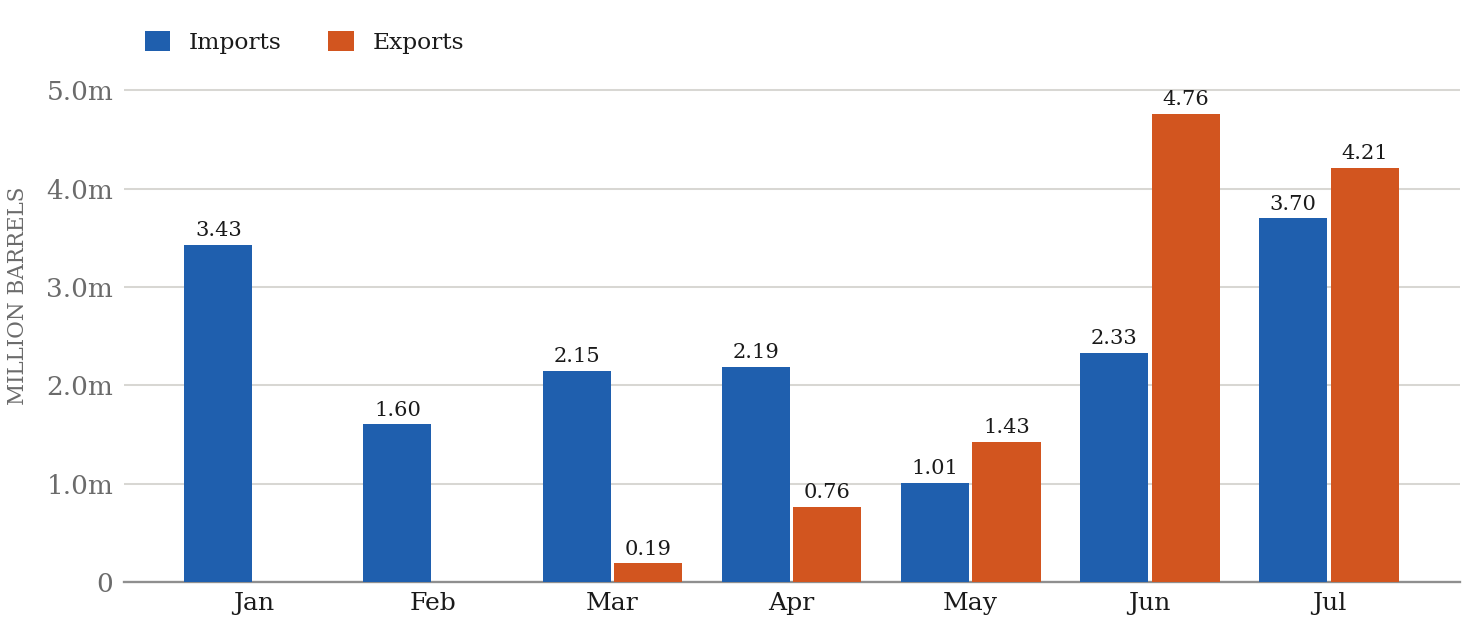
Banias imports in every month of the year. It ships nothing out in January or February, sends a first 0.19m barrels in March, then climbs sharply from May to a June peak of 4.76m barrels. The change is abrupt rather than gradual.
The timing is worth noting, carefully. The Al-Tanf–Al-Waleed crossing between Iraq and Syria reopened on 2 April 2026 after more than a decade shut, and Iraqi fuel tanker convoys “had begun crossing through the Tanf border towards the Banias refinery”: Qatar News Agency, 2 April 2026. The export ramp in the extract sits either side of that date. It is a coincidence of timing, not a causal link this data can prove, and in any case the first cargo leaves in March, before the crossing opened.
Where the imported oil loads
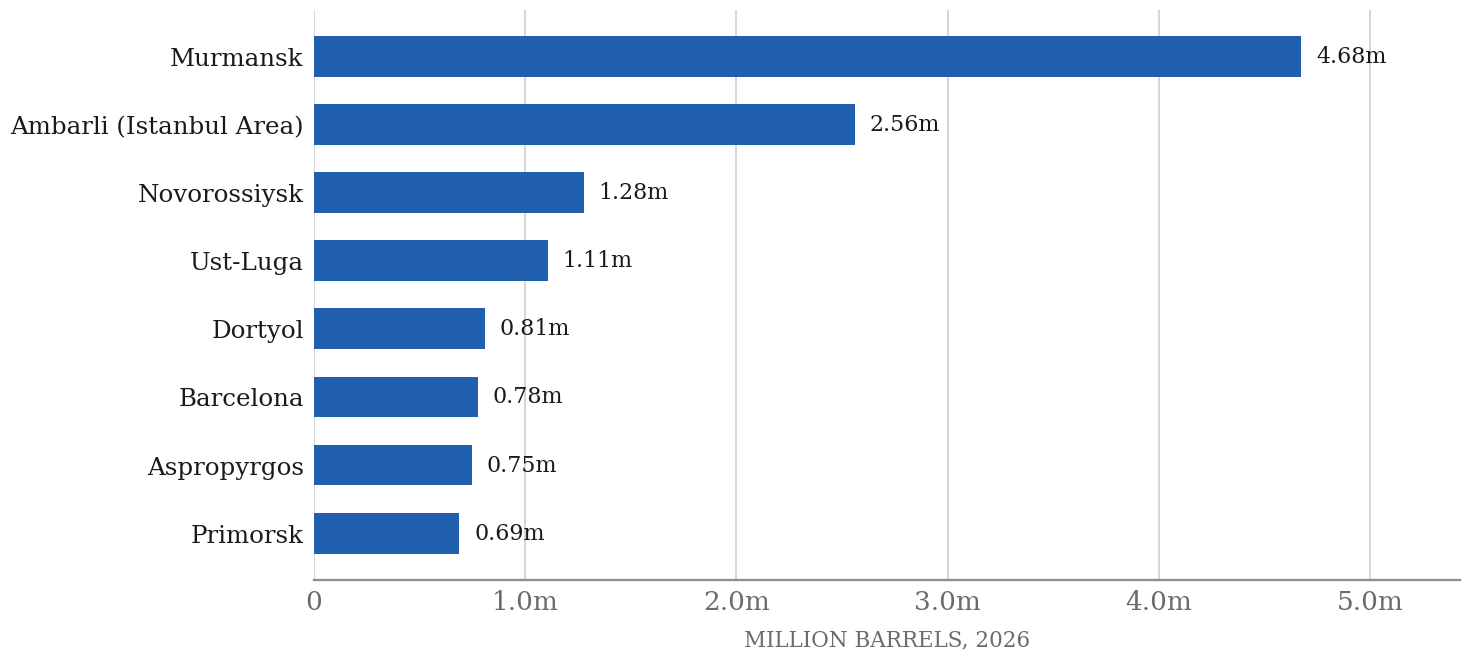
Murmansk on its own accounts for 4.68m bbl. Add Ust-Luga, Novorossiysk, Primorsk and Tuapse and the Russian load ports come to 8.00m barrels, 47% of 2026 wet arrivals.
How much of the flow we actually see
Worth knowing what all of the above is a share of. Where there is a published benchmark, this is how our numbers compare.

The reported figures come from the Syrian General Authority for Land and Sea Border Crossings, which describes Banias since the start of 2026 as “receiving 108 tankers carrying about 3.23 million tons of various petroleum products” and handling the outbound flow on “30 tankers carrying fuel oil and petroleum distillates” (SANA, 7 August 2026, Shafaq News, 7 August 2026), plus 551 vessels and about 5m tonnes at Tartous in the first half (SANA, 6 August 2026).
Source: Signal Ocean



Related News.
Italy and Cyprus chart a shared course for the blue economy: Italy-Cyprus Maritime Business Forum in Limassol on 9 October
Institutions and businesses from both countries will meet at the DP World Terminal for three sessions on sustainable ports, shipping and maritime…
Satellite monitoring reveals recurring vessel activity across three of Cyprus’s marine protected areas
More than two thousand detections at Lady’s Mile, Latsi-Akamas and Cavo Greco within the months of June-August highlight distinct activity patterns…

Shipbuilding Labor talks hit fresh snags after tentative deal rejected
This year’s wage and collective bargaining negotiations in the shipbuilding industry are drifting back into uncertainty just as they appeared to be…

SEA.AI brings Machine Vision to multiple USV platforms at NATO’s REPMUS 2026
Maritime AI specialist demonstrated a shared perception layer across crewed and uncrewed vessels during the Portuguese Navy-led exercise, held in…

Clean tanker markets size up impact of potential US diesel export curbs
HIGHLIGHTS Trump floats diesel export ban amid soaring prices MR tanker demand could fall by 1.35 million b/d Russian diesel exports…

RINA and PTT sign strategic agreements to advance innovation and decarbonization across the energy and maritime sectors
RINA, the inspection, certification and engineering consulting multinational, announces the signing of two Memoranda of Understanding with PTT…

IMEC and The Hood launch Sisterhood Box to support the next generation of female seafarers
The International Maritime Employers’ Council and The Hood Platform have joined forces to launch the Sisterhood Box, a new initiative providing…

The Port Authority and Valencia City Council launch the countdown to the River Mouth Park
The Port Authority of Valencia (APV) and Valencia City Council have reached an agreement on the River Mouth Park setting out the commitments of both…

Newbuild order for two very large ammonia acriers in combination with long term time charters
SFL Corporation announced that it has agreed to build two 93,000 cbm Very Large Ammonia Carriers. The vessels will be able to carry a wide range of…

xclusiv S&P Report 05th October 2026
Pls find below the [xclusiv] S&P Report 05th October 2026 [xclusiv] 2026_10_05
Subscribe to our newsletter!
if you dont want to swim alone in the ocean of news, sign up for the newsletter, and you will receive daily all the important news of world shipping!
