SEA.AI brings Machine Vision to multiple USV platforms at NATO’s REPMUS 2026

Maritime AI specialist demonstrated a shared perception layer across crewed and uncrewed vessels during the Portuguese Navy-led exercise, held in its 16th edition.
SEA.AI integrated and field-tested its machine-vision technology across several crewed and uncrewed vessel platforms at REPMUS 2026, the Portuguese Navy’s 16th annual exercise for maritime uncrewed systems, held from 31 August to 25 September in Tróia and Sesimbra and bringing together 36 nations. The deployment was SEA.AI’s broadest multi-platform integration in a defence context to date and evaluated how camera-based detection could strengthen situational awareness for both crews and autonomous systems.
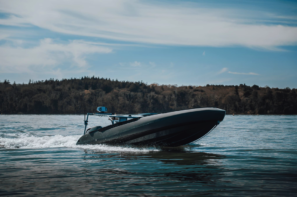
Rather than treating machine vision as an accessory for a single autonomy system, SEA.AI is demonstrated it as a common perception layer that can support different vessels, missions and operators.
“Maritime is ready to adopt machine vision as a key sensor, just as other industries have. Eight years of development and more than 1,300 vessels in civilian use back that up. In naval operations, and especially on unmanned platforms, machine vision has a real role to play, closing the perception gap that radar and AIS leave open. REPMUS, across numerous platforms, is where we show that shift taking place in defence too.”
Marcus Warrelmann, CEO, SEA.AI
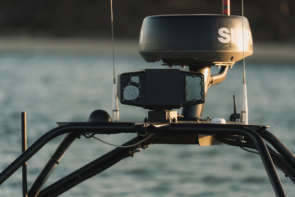
Adding sight to maritime situational awareness
Radar can alert an operator that something is nearby, but active radar also emits a signal. In contested waters, that emission can be detected, tracked, disrupted or jammed. Satellite navigation carries a different vulnerability: GNSS spoofing, a documented and growing problem in regions including the Baltic and Black Seas, can feed an uncrewed vessel false position or timing data without the platform necessarily recognising the deception. AIS inherits part of that vulnerability because it relies on GNSS-derived position and timing information.
None of this makes radar, AIS or satellite navigation less essential. It does, however, show why no single sensor should be expected to provide the complete picture. A passive machine vision system adds an independent source of information by analysing what its cameras can actually see, including small or unlit craft, floating objects and people in the water.
SEA.AI developed its technology in offshore sailing, where vessels travel at speed through remote waters and crews cannot assume that every hazard will transmit a signal or produce a reliable radar return. Since 2018, the company has trained its detection system on real-world maritime imagery gathered across ocean racing, recreational boating and commercial shipping.
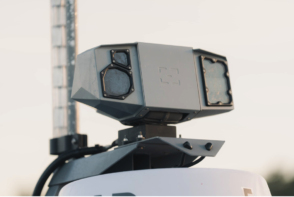
At REPMUS, the same detection core turned live camera feeds into information that participating platforms and operators could use. The system is designed to identify and classify relevant objects on and above the water, adding context to the data available from other sensors.
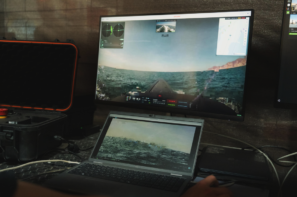
“Years of training with real-world maritime data are what give our detection system its strength. Radar and AIS remain important, but they do not provide the complete picture on their own. Machine vision adds another layer, helping vessels detect objects that other sensors, and sometimes even the human eye, can miss.”
Miguel Pedro, Portugal Country Manager and Product Owner
at SEA.AI
One perception layer, different platforms
SEA.AI worked with several partners and USV manufacturers during the exercise, including Maritime Robotics, a manufacturer of uncrewed surface vessels and autonomous navigation systems for coastal and open-ocean operations.
“Good autonomy starts with good situational awareness. A USV needs to detect and understand its surroundings just as reliably as it controls its course. Integrating SEA.AI’s machine vision gives us an additional optical layer to evaluate alongside our existing systems, and REPMUS provides the ideal setting to demonstrate how sensors and platforms from different partners can work together.”
Vegard Evjen Hovstein, CEO of Maritime Robotics
SYOS Aerospace, a UK–New Zealand manufacturer of multi-domain uncrewed vehicles, equipped its SM300 uncrewed surface vessels with SEA.AI’s machine vision as part of this year’s exercise, continuing a partnership dating back to 2024. The integration gave the SM300 an independent way to read its surroundings, supporting its autonomy as SYOS pushes the platform into more demanding and less predictable environments.
The Portuguese Navy also fielded SEA.AI’s technology on USV Shiver, its own unmanned surface vessel, designed and assembled in-house by Navy engineers.
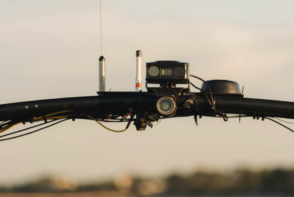
“We got this partnership going with SEA.AI to test the product during the exercise, and the main reason we chose it specifically is that it has AI embedded in the camera system, giving us an extra layer of detection for vessels and objects at sea that helps unload the operator from the overflow of information they have to process today — it’s like getting the warning before the warning is real. We’re getting positive detections that are very useful for our panoramic view and vessel identification, and it’s another layer that confirms radar detection. We’re happy with the performance and are considering integrating it into our future projects.”
Pedro Pereira, Project Lead, USV Shiver, Portuguese Navy
Polar Mist Technologies, a developer of payload-agnostic USV platforms designed for GPS-independent and communications-resilient maritime operations, will also integrate SEA.AI into its sensor stack.
“From the start, we have designed our systems for an affordable mass. At the same time, the military should have configuration options: equip the unmanned fleet according to what threats they see and what they need to accomplish, while still maintaining control of cost. With this SEA.AI Sentry integration we have demonstrated exactly that freedom in live trials here at REPMUS and added a world class day-and-night ISR capability on the fly. Our militaries can today configure a fleet, make it maximally capable per tax dollar, and deploy.”Gustaf von Grothusen, CEO of Polar Mist Technologies
The integrations tested whether a common vision layer could be applied across platforms with different hulls, autonomy systems and mission profiles, without asking each manufacturer to solve the same perception problem independently.
Testing interoperability in real conditions
REPMUS brings together navies, technology companies and research organisations to test maritime autonomous systems in a live operational environment. A central objective is interoperability: ensuring that systems developed by different manufacturers and nations can exchange information and work together under realistic conditions.
SEA.AI’s participation applied that principle to perception. Because the same machine-vision layer supported several vessel types and autonomy architectures, it could reduce duplicated development while giving operators a more consistent view of the environment around each platform.
“REPMUS is designed to test capabilities in realistic conditions and to explore how technologies from different partners can operate together. Integrating a common perception system across several platforms provided useful evidence of its maturity and interoperability,”Captain Caldeira de Carvalho, CEOM Director



Related News.
Satellite monitoring reveals recurring vessel activity across three of Cyprus’s marine protected areas
More than two thousand detections at Lady’s Mile, Latsi-Akamas and Cavo Greco within the months of June-August highlight distinct activity patterns…

Shipbuilding Labor talks hit fresh snags after tentative deal rejected
This year’s wage and collective bargaining negotiations in the shipbuilding industry are drifting back into uncertainty just as they appeared to be…
Clean tanker markets size up impact of potential US diesel export curbs
HIGHLIGHTS Trump floats diesel export ban amid soaring prices MR tanker demand could fall by 1.35 million b/d Russian diesel exports…
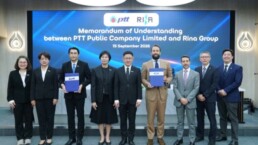
RINA and PTT sign strategic agreements to advance innovation and decarbonization across the energy and maritime sectors
RINA, the inspection, certification and engineering consulting multinational, announces the signing of two Memoranda of Understanding with PTT…

IMEC and The Hood launch Sisterhood Box to support the next generation of female seafarers
The International Maritime Employers’ Council and The Hood Platform have joined forces to launch the Sisterhood Box, a new initiative providing…

The Port Authority and Valencia City Council launch the countdown to the River Mouth Park
The Port Authority of Valencia (APV) and Valencia City Council have reached an agreement on the River Mouth Park setting out the commitments of both…

Newbuild order for two very large ammonia acriers in combination with long term time charters
SFL Corporation announced that it has agreed to build two 93,000 cbm Very Large Ammonia Carriers. The vessels will be able to carry a wide range of…

xclusiv S&P Report 05th October 2026
Pls find below the [xclusiv] S&P Report 05th October 2026 [xclusiv] 2026_10_05

Volare Shipping completes listing on Euronext Growth Oslo
Volare Shipping, the Trafigura Group company established to own, operate and scale a modern fleet of oil tankers, commenced trading on Euronext…

Maritime must move beyond wellbeing awareness to change crew behaviour, says WellAtSea
The maritime industry risks mistaking wellbeing activity for wellbeing progress unless it places greater emphasis on whether programmes are changing…
Subscribe to our newsletter!
if you dont want to swim alone in the ocean of news, sign up for the newsletter, and you will receive daily all the important news of world shipping!
