Changing geopolitical environment reshapes science, technology and innovation policy, says OECD

Rising geopolitical tensions and security concerns about emerging critical technologies are reshaping international co-operation in science, technology and innovation , according to a new OECD report.
The OECD Science, Technology and Innovation Outlook 2025 finds that governments are increasingly aligning their STI policies with economic and national security objectives – from promoting critical research and emerging technologies, to protecting against unauthorised knowledge leakage, and projecting national interests through science diplomacy. This growing securitisation of STI reflects how the changing geopolitical environment is reshaping global research and innovation linkages.
As part of this broader shift, the report shows a sharp rise in research security measures – policies designed to protect sensitive research and prevent foreign interference. In 2025, countries reported 250 such policies — almost ten times more than in 2018. Over the same period, the number of countries with research security policies has increased from 12 to 41.
More countries are implementing more research security policies
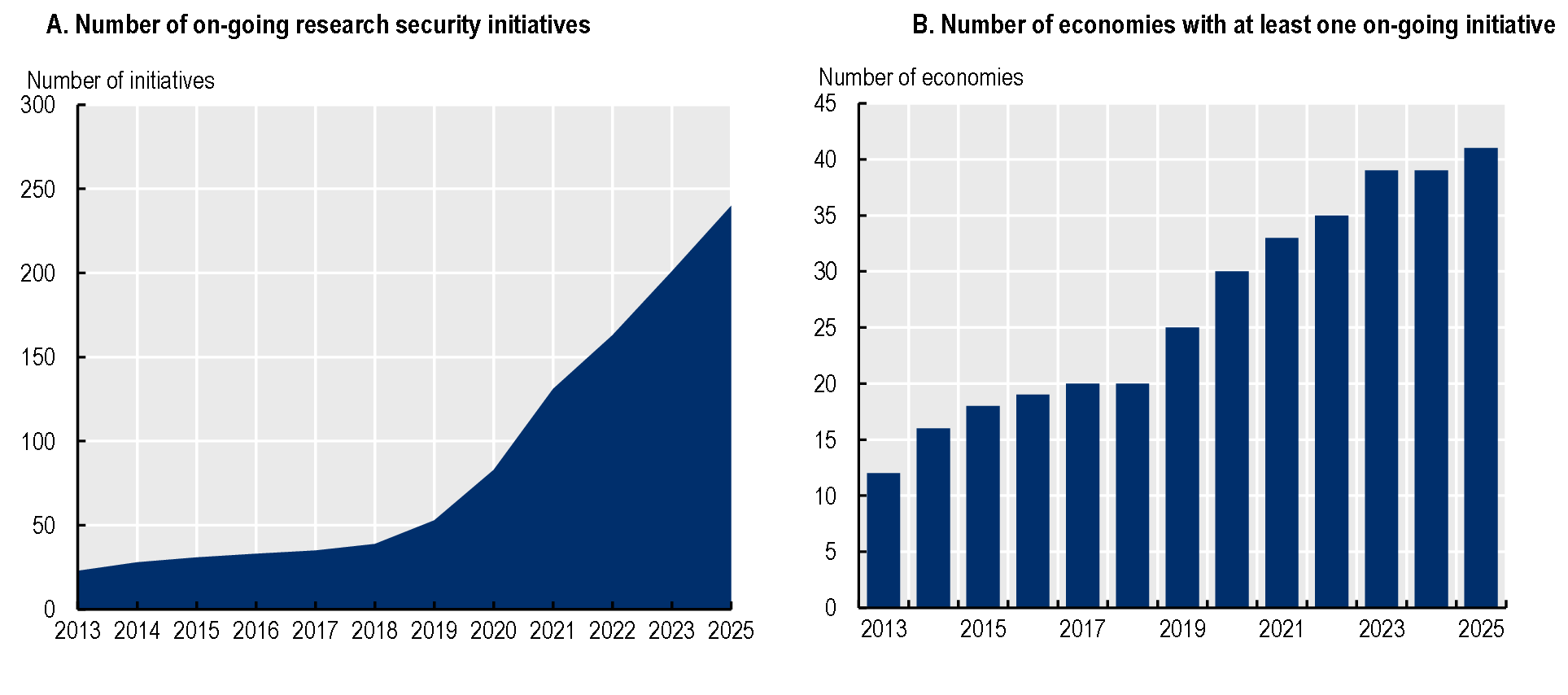
Source: EC-OECD (2025), STIP Compass: International Database on Science, Technology and Innovation Policy (STIP), edition 8 August 2025, https://stip.oecd.org.
“The challenge is to strike the right balance between security, openness and innovation,” OECD Secretary-General Mathias Cormann said. “Too little security can expose sensitive research, while too much can stifle innovation and positive collaboration. Governments need to design measures that are proportional to the risks, well-targeted, and which enable mutually-beneficial collaboration if they are to protect national interests without undermining research quality and slowing progress on shared challenges, from boosting productivity, to achieving net zero objectives, to advancing health innovation and enabling the digital transformation.”
The effects of securitisation and geopolitical realignments can already be seen in scientific collaboration. While the share of internationally co-authored scientific publications in OECD countries rose from just 2% in 1970 to 27% in 2023, the latest data indicate that this upward trend is losing momentum.
Governments are also stepping up investments in strategic research areas. Public research and development (R&D) spending on energy has increased by 76% over the last decade, and defence R&D budgets have grown by 75% over the same period – nearly twice as fast as overall R&D spending. Efforts to protect high-technology fields such as artificial intelligence and quantum computing are also intensifying, leading to closer scrutiny of international scientific collaborations at a time of growing competition.



Related News.

ISLAND OIL: Unveiling of the Sculpture “Cyprus’s Journey Through the Ages” in Protaras – A Tribute and Landmark to Cyprus’s Historical Memory and Cultural Heritage
In a modest ceremony marked by a moving atmosphere, the sculpture “Cyprus’s Journey Through the Ages”, created by acclaimed Cypriot sculptor…
World Maritime Day 2026 from Policy to Practice – powering Maritime Excellence
Global regulations will deliver safer, more resilient shipping when they are implemented worldwide. The international maritime community marks…

Diana Shipping announces Time Charter Contract for m/v DSI Polaris with Dai An Ocean Shipping
Diana Shipping , a global shipping company specializing in the ownership and bareboat charter-in of dry bulk vessels, announced that, through a…
Chief Economists Expect Global Economy to Stabilize, but Fiscal Constraints, Rising Living Costs and AI Investment Uncertainty Threaten Growth
The global economy is stabilizing, but the fiscal support that cushioned successive shocks since 2020 is unlikely to play the same role in the year…
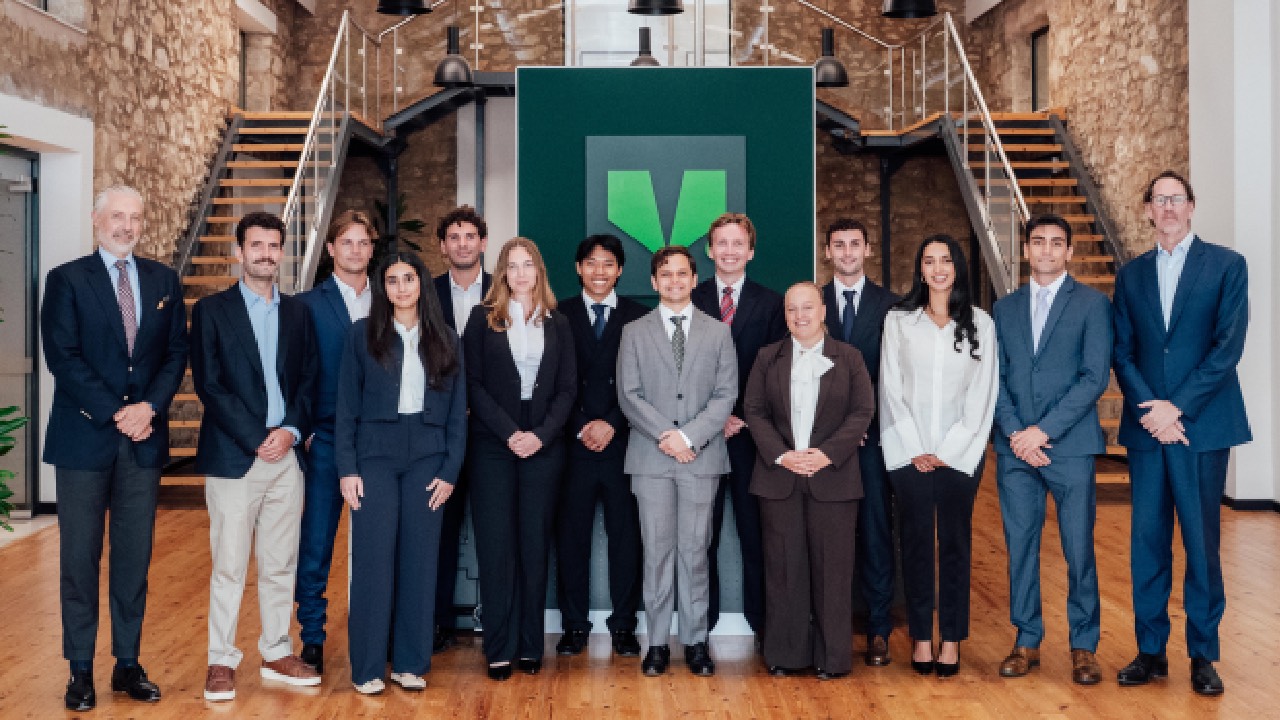
V. welcomes its new graduate cohort as programme expands across the group
Twelve graduates from nine nationalities join 11th year of V.’s expanded international management programme. V., the global ship manager and marine…

From Policy to Practice: Why Seafarers Are the Key to Maritime Excellence
The shipping industry is no stranger to regulation. Seafarers and ship operators work within a vast framework of international conventions, national…

Intermodal Report – Week 38 2026
Please find below the Intermodal market report for week 38 2026. Intermodal Report Week 38 2026 Market Insight By Nikos Tagoulis, Head of…

Allied – Weekly Market Review – Week 38
Please find below the Allied Weekly Report for Week 38 | 2026 ALLIED - Weekly Market Report- Week 38
Record year on the Northeast Passage but Arctic shipping remains very limited
In 2025, a record 103 transit voyages were made via the Northeast Passage. However, this is still equivalent to only around a day and a half of…

[xclusiv] S&P Report 21th September 2026
Please find below the [xclusiv] latest Weekly S&P Report [xclusiv] 2026_09_21 Market Commentary: VLCCs: Freight Boom Reprices the Fleet The VLCC…
Subscribe to our newsletter!
if you dont want to swim alone in the ocean of news, sign up for the newsletter, and you will receive daily all the important news of world shipping!
