S-100 Data Standards: Charting the Course for Autonomous Shipping

Tom Mellor, Head of Technical Partnerships at the UKHO
Autonomous vessels are moving steadily from concept to reality, with trials and early commercial deployments already reshaping expectations for the future of shipping.
As interest in autonomous shipping continues to grow, the UK Hydrographic Office (UKHO) has been working closely with industry partners to help build the data infrastructure that will underpin and facilitate its adoption.
Central to supporting this transition will be the implementation of the International Hydrographic Organization’s (IHO) S-100 data standard.
Building on Proven Foundations
Since 1992, S-57 has been the standard format for the transfer of digital hydrographic data, including Electronic Navigational Charts (ENCs) relied on by mariners across the globe.
Now, in 2025, navigational standards are evolving, and the IHO’s S-100 data framework is being introduced to offer a more complete picture of the maritime environment. Datasets such as bathymetric surface (S-102), tidal heights (S-104) and surface currents (S-111) will be visible within a single Electronic Chart Information Display System (ECDIS). Underneath these, the foundational S-101 ENCs will remain central within an S-100-capable ECDIS.
Through these changes, mariners could benefit from several improvements including more accurate safety contours, dynamic under-keel clearance, and easier methods of updating ENCs. Crucially, S-100 data sets will be fully machine-readable, enabling them to support the safe operation of partially and fully autonomous vessels.
Supporting Marine Autonomy
Maritime Autonomous Surface Ships (MASS) range from ships with a certain level of automation onboard allowing for unsupervised periods, to ships that are remotely controlled with and without seafarers onboard, to fully autonomous ships that use data to determine their own actions. Regardless of a ship’s autonomy level, MASS safety depends on the enhanced situational awareness that high-fidelity, machine-readable data standards are designed to deliver.
The new data sets enabled by S-100 have the potential to allow AI and machine learning algorithms to directly interpret navigational information with greater accuracy. It also introduces modernised data standards and exchange protocols, with cybersecurity considerations increasingly important for systems that rely on connectivity and remote operation.
Real-Time Data for Autonomous Decision-Making
In addition to providing machine-readable data, the key advancement of S-100 lies in its capacity for real-time data streaming. Currently with S-57, mariners interpret the static ENC data alongside what can be physically seen.
S-100 enables dynamic updates that allow mariners and autonomous vessels to respond to changing conditions. This could include environmental factors, such as present and forecasted weather, water current speed and direction, and water depths, along with traffic situations and other hazards. This ability to support route optimisation could be particularly important for uncrewed operations where human input varies from being limited to entirely absent.
S-100 data sets can also help refine navigation. For example, high-resolution gridded bathymetry data provides a more detailed picture of the seabed, which could enhance navigational precision. Additionally, when combined with other datasets, this information may contribute to more accurate vessel positioning and safer passage planning.
Connectivity remains a critical factor in enabling real-time S-100 data streaming for autonomous or semi-autonomous operations. While this was once a significant obstacle, new technologies are now shifting the picture. For example, at London International Shipping Week 2025, we heard how Starlink, a low-Earth orbit (LEO) internet system, was recently installed on the Stena Vinga ferry, improving the receipt and processing of S-100 files mid-Channel. The costs of these technologies are falling, removing barriers for always-on connectivity at sea.
Where challenges persist, particularly with vessels with poor connectivity, interim approaches are being explored. An example of this is pre-loading S-100 data while in port and applying incremental updates at sea. This means that even with interrupted streaming, operators and autonomous systems can still benefit from the enhanced situational awareness provided by S-100’s dynamic data.
Industry Collaboration and Proven Experience
The potential of S-100 to support autonomous shipping has already been demonstrated. In 2022, the Mayflower Autonomous Ship (MAS) completed its transatlantic voyage, supported by the UKHO and marine research partners ProMare. This project was a vital step in proving their operational value. marking the first time S-100 datasets were tested onboard an autonomous vessel.
As part of this project, the UKHO supplied S-101 ENCs; high-resolution gridded bathymetry; tidal heights and surface currents data for the Plymouth Sound area, providing enhanced situational awareness during departure – a critical and complex phase of the voyage.
The vessel’s AI ‘captain,’ supported by AI-powered cameras, was able to assess its route, status and mission in ways comparable to a human operator, drawing on this geospatial data alongside other inputs. By combining S-100 datasets with advanced onboard systems, MAS demonstrated how modern hydrographic data standards can support safe manoeuvring and decision-making in autonomous operations.
Through ongoing partnerships with navigation technology providers, the UKHO is continuing to help ensure that S‑100 standards are practical, interoperable and aligned with commercial needs across diverse platforms and applications.
Timing and Regulatory Alignment
The development of S-100 standards is running parallel to the International Maritime Organization’s (IMO) work on the MASS Code regulatory framework. This commenced in 2024 with mandatory adoption targeted for 2030 and entry into force from 2032.
The planned timeline is intended to allow the industry to develop technical standards and regulatory frameworks simultaneously. This will balance the benefits derived from new and advancing technologies against safety and security concerns, environmental impact and potential costs to the industry.
Alongside this regulatory programme, the IHO’s MASS Project Team is advancing technical initiatives, including consideration of standards for uncrewed survey vessels. These complementary efforts aim to ensure that navigational data standards evolve in step with the wider regulatory landscape.
Charting the Path Forward
As the maritime industry moves toward autonomous operations, the foundations being established through S-100 collaboration could prove central to operational success. By building on proven foundations while addressing future requirements, the maritime industry is preparing for a transition that aims to enhance, rather than disrupt, established operational practices.
The UKHO’s continued facilitation of industry collaboration aims to ensure that S-100 adoption addresses the practical needs of shipowners, operators and technology providers. This coordinated approach is designed to support potential autonomous vessel deployment while maintaining the safety standards that have defined modern maritime operations.



Related News.

ISLAND OIL: Unveiling of the Sculpture “Cyprus’s Journey Through the Ages” in Protaras – A Tribute and Landmark to Cyprus’s Historical Memory and Cultural Heritage
In a modest ceremony marked by a moving atmosphere, the sculpture “Cyprus’s Journey Through the Ages”, created by acclaimed Cypriot sculptor…
World Maritime Day 2026 from Policy to Practice – powering Maritime Excellence
Global regulations will deliver safer, more resilient shipping when they are implemented worldwide. The international maritime community marks…

Diana Shipping announces Time Charter Contract for m/v DSI Polaris with Dai An Ocean Shipping
Diana Shipping , a global shipping company specializing in the ownership and bareboat charter-in of dry bulk vessels, announced that, through a…

Chief Economists Expect Global Economy to Stabilize, but Fiscal Constraints, Rising Living Costs and AI Investment Uncertainty Threaten Growth
The global economy is stabilizing, but the fiscal support that cushioned successive shocks since 2020 is unlikely to play the same role in the year…
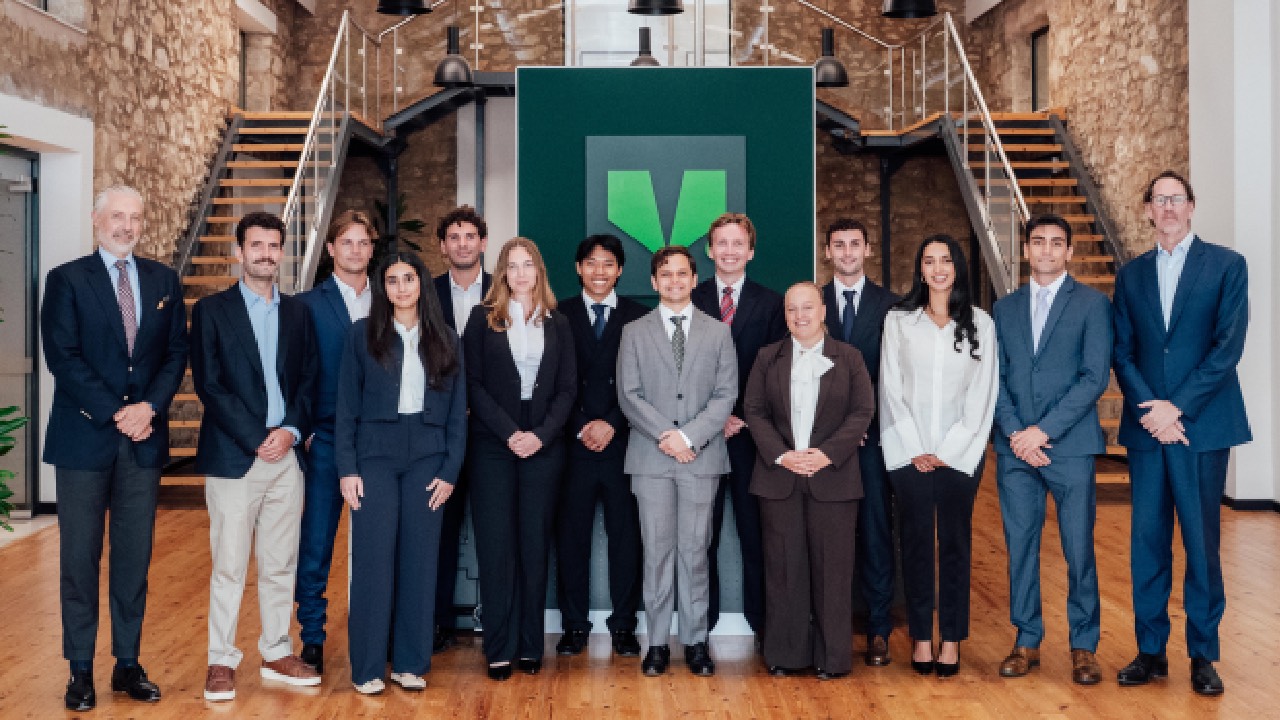
V. welcomes its new graduate cohort as programme expands across the group
Twelve graduates from nine nationalities join 11th year of V.’s expanded international management programme. V., the global ship manager and marine…
From Policy to Practice: Why Seafarers Are the Key to Maritime Excellence
The shipping industry is no stranger to regulation. Seafarers and ship operators work within a vast framework of international conventions, national…

Intermodal Report – Week 38 2026
Please find below the Intermodal market report for week 38 2026. Intermodal Report Week 38 2026 Market Insight By Nikos Tagoulis, Head of…

Allied – Weekly Market Review – Week 38
Please find below the Allied Weekly Report for Week 38 | 2026 ALLIED - Weekly Market Report- Week 38
Record year on the Northeast Passage but Arctic shipping remains very limited
In 2025, a record 103 transit voyages were made via the Northeast Passage. However, this is still equivalent to only around a day and a half of…

[xclusiv] S&P Report 21th September 2026
Please find below the [xclusiv] latest Weekly S&P Report [xclusiv] 2026_09_21 Market Commentary: VLCCs: Freight Boom Reprices the Fleet The VLCC…
Subscribe to our newsletter!
if you dont want to swim alone in the ocean of news, sign up for the newsletter, and you will receive daily all the important news of world shipping!
