International Maritime Organization takes big step to support Global Net-Zero Goals
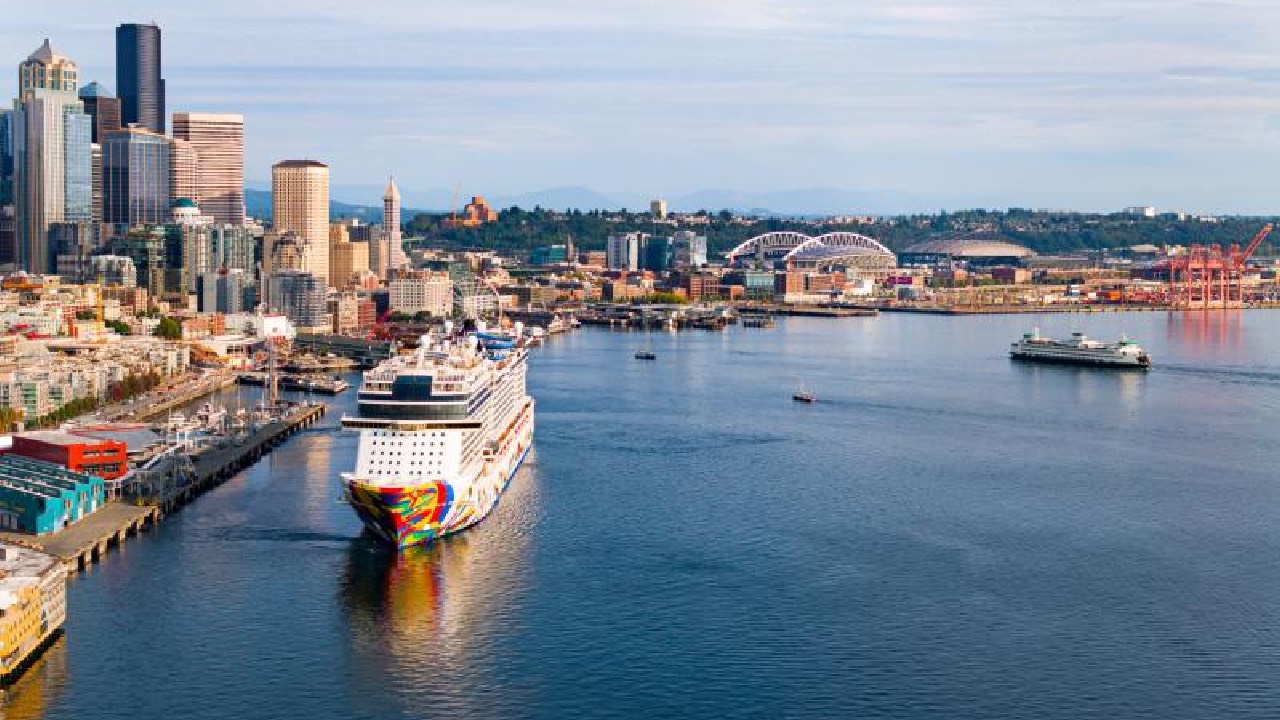

The climate crisis demands action across all sectors. It’s the shipping industry’s turn given it is estimated to contribute 3% climate warming gases. A new landmark agreement makes significant progress towards reducing the environmental footprint of moving goods and people across our oceans. As an active member of the International Association of Ports and Harbors, the Port is proud to have contributed to the accomplishment.
After years of negotiation, the International Maritime Organization (IMO), the United Nation’s specialized agency that creates global safety, security, and environmental standards for shipping, and the prevention of marine and atmospheric pollution by ships, recommended a binding framework with a goal to achieve net-zero emissions by or around 2050.
This is a historic moment for the maritime and shipping industries as the IMO states the “…net-zero framework is the first in the world to combine mandatory emissions limits and [greenhouse gas] pricing across an entire industry sector.”
Emission Reductions: Each year a ship will be required to utilize fuel that is less carbon intensive than the current fossil fuel, therefore reducing greenhouse gas emissions. The framework provides two carbon reduction targets, a base target and a stretch target to provide flexibility as the availability of alternative fuels continues to grow.
Pricing and Rewards: Ships that exceed the stretch target will be rewarded to help subsidize the price of new, less-polluting fuels. Ships that do not meet the targets will be subject to a fee. Revenue collected and managed by the IMO will be used to help support the industry’s transition to more sustainable fuels. After formal adoption in October 2025, the framework will enter into force in 2027 and will be mandatory for “large ocean-going ships over 5,000 gross tonnage, which emit 85% of the total CO2 emissions from international shipping.”
Locally, the Port of Seattle has set ambitious goals for phasing out emissions from maritime operations by 2050 and has been actively working on actions to achieve these goals.
For our maritime operations, this includes installing shore power at all three of our cruise berths, making Seattle one of the only cruise homeports that has shore power available at all our berths and the ability to have vessels plugged in simultaneously. It’s expected that 71% of cruise calls in 2025 will be shore power–capable. Starting in the 2027 season, all homeported cruise vessels will be required to plug in while at berth. Additionally, all future long-term agreements with cruise companies must take their efforts to reduce greenhouse gas emissions into account before approval.
In partnership with The Northwest Seaport Alliance, which jointly operates the cargo operations for the Ports of Seattle and Tacoma, we have shore power at two of our four largest Seattle cargo terminals in the Gateway.
Additionally, we are partnering with others to research and support the development of alternative maritime fuels for ships after they unplug. Our Pacific Northwest to Alaska Green Corridor is exploring the use of green methanol and we are a founding member of the Sustainable Maritime Fuels Collaborative. There’s also work underway to use green methanol for cargo ships sailing between Korea and Tacoma.
A global regulation for reducing the carbon intensity of fuels is one of the strongest and most efficient ways to transition the industry and we hope it will send clear signals for the development of clean energy supplies that are alternatives to fossil fuels. By offering shore power from clean hydropower and creating the conditions for alternative fuels to succeed, the Port aims to remain a primary port of choice and competitive gateway as the IMO’s regulations come into force. Clear and consistent regulations at the highest level are important to make sure that businesses operate in a sustainable way. These regulations ensure that there is no competitive advantage for failure to adopt cleaner fuels.
The Port of Seattle strongly supports IMO international emission reduction and policy mechanisms to achieve net zero by 2050. Although we would have liked to see more ambitious targets, we recognize and applaud this historic and significant step in the right direction. This framework also sets important details such as counting emissions on a full “well to wake” lifecycle and creating a fuel certification process, which will be critical for maritime organizations and ports as we look for capital investments in the future.
Despite the absence of a U.S. delegation at this recent IMO meeting, we applaud the progress made at the international level and hope a spirit of cooperation, compromise, and commitment continues to reach zero by 2050 for global shipping. We look forward to the IMO’s formal adoption in October of 2025.
By Fred Felleman, Port of Seattle Commissioner, and Sandra Kilroy, Senior Director of Environment and Sustainability



Related News.

ISLAND OIL: Unveiling of the Sculpture “Cyprus’s Journey Through the Ages” in Protaras – A Tribute and Landmark to Cyprus’s Historical Memory and Cultural Heritage
In a modest ceremony marked by a moving atmosphere, the sculpture “Cyprus’s Journey Through the Ages”, created by acclaimed Cypriot sculptor…
World Maritime Day 2026 from Policy to Practice – powering Maritime Excellence
Global regulations will deliver safer, more resilient shipping when they are implemented worldwide. The international maritime community marks…

Diana Shipping announces Time Charter Contract for m/v DSI Polaris with Dai An Ocean Shipping
Diana Shipping , a global shipping company specializing in the ownership and bareboat charter-in of dry bulk vessels, announced that, through a…

Chief Economists Expect Global Economy to Stabilize, but Fiscal Constraints, Rising Living Costs and AI Investment Uncertainty Threaten Growth
The global economy is stabilizing, but the fiscal support that cushioned successive shocks since 2020 is unlikely to play the same role in the year…
V. welcomes its new graduate cohort as programme expands across the group
Twelve graduates from nine nationalities join 11th year of V.’s expanded international management programme. V., the global ship manager and marine…

From Policy to Practice: Why Seafarers Are the Key to Maritime Excellence
The shipping industry is no stranger to regulation. Seafarers and ship operators work within a vast framework of international conventions, national…

Intermodal Report – Week 38 2026
Please find below the Intermodal market report for week 38 2026. Intermodal Report Week 38 2026 Market Insight By Nikos Tagoulis, Head of…

Allied – Weekly Market Review – Week 38
Please find below the Allied Weekly Report for Week 38 | 2026 ALLIED - Weekly Market Report- Week 38

Record year on the Northeast Passage but Arctic shipping remains very limited
In 2025, a record 103 transit voyages were made via the Northeast Passage. However, this is still equivalent to only around a day and a half of…

[xclusiv] S&P Report 21th September 2026
Please find below the [xclusiv] latest Weekly S&P Report [xclusiv] 2026_09_21 Market Commentary: VLCCs: Freight Boom Reprices the Fleet The VLCC…
Subscribe to our newsletter!
if you dont want to swim alone in the ocean of news, sign up for the newsletter, and you will receive daily all the important news of world shipping!
