European Commission approves €998 million Dutch State aid scheme to support renewable hydrogen production

The European Commission has approved, under EU State aid rules, a €998 million Dutch scheme to support the production of renewable hydrogen. The measure aims to contribute to the development of renewable hydrogen in line with the objectives of the EU Hydrogen Strategy and the European Green Deal. The scheme will also contribute to the objectives of the REPowerEU Plan to reduce dependence on Russian fossil fuels and accelerate the green transition.
The Dutch scheme
The Netherlands notified the Commission of its intention to introduce a €998 million scheme to increase the country’s electrolysis capacity and support the production of renewable hydrogen.
The scheme will support the construction of at least 200 MW of electrolysis capacity. The aid will be awarded through a competitive bidding process planned to be concluded in 2024. The tender will be open to projects with a capacity of at least 0.5 MW.
The aid will take the form of a direct grant combining an upfront investment grant up to 80% of the investment costs and a variable premium over a period of 5 to 10 years. Beneficiaries will have to prove compliance with EU criteria for the production of renewable fuels of non-biological origin (RFNBOs), as set out in the delegated acts on renewable hydrogen.
The scheme will contribute to the Netherlands’s efforts to achieve 500 MW of electrolyser capacity in 2025 and 3-4 GW by 2030. It will also support the EU’s ambitions to install at least 6 GW of renewable hydrogen electrolysers by 2024, and at least 40 GW by 2030. The Netherlands expects that the scheme will lead to the equivalent of around 55 kilotons of CO2 being avoided every year until 2030, which will contribute to the Netherlands’ and EU’s climate targets.
The Commission’s assessment
The Commission assessed the measure under EU State aid rules, in particular Article 107(3)(c) the Treaty on the Functioning of the EU, which enables Member States to support the development of certain economic activities under certain conditions, and the 2022 Guidelines on State aid for climate, environmental protection and energy (‘CEEAG’).
In particular, the Commission found that:
- The scheme is necessary and appropriate to facilitate the production of renewable hydrogen. At the same time, it supports the objectives of key EU policy initiatives such as the European Green Deal, the EU Hydrogen Strategy, and the REPowerEU Plan.
- The measure has an ‘incentive effect’, as the beneficiaries would not carry out the relevant investments without the public support.
- The Netherlands put in place sufficient safeguards to ensure that the scheme has a limited impact on competition and trade within the EU. In particular, the beneficiaries will be selected following an open, transparent and non-discriminatory bidding process and the aid will be kept to the minimum necessary to undertake the projects.
- The aid will bring about positive effects that outweigh any possible negative effects in terms of distortions to competition.
On this basis, the Commission approved the Dutch scheme under EU State aid rules.
Background
This scheme follows a previous Dutch scheme approved by the Commission in July 2023, which aimed to support specifically small-scale electrolysers (with a capacity of up to 50 MW).
The 2022 CEEAG provide guidance on how the Commission will assess the compatibility of environmental protection, including climate protection, and energy aid measures which are subject to the notification requirement under Article 107(3)(c) TFEU. The Guidelines create a flexible, fit-for-purpose enabling framework to help Member States provide the necessary support to reach the Green Deal objectives in a targeted and cost-effective manner. The rules involve an alignment with the important EU’s objectives and targets set out in the European Green Deal and with other recent regulatory changes in the energy and environmental areas and will cater for the increased importance of climate protection.
The Renewable Energy Directive of 2018 set out stringent criteria for RFNBOs, such as renewable hydrogen, to ensure that their environmental impact is minimal and that they contribute to the deployment of renewable energy. Amongst others, emission savings of the end product must be at least 70% across the entire value chain. Under the revised Renewable Energy Directive of 2023, the target for the share of renewable energy in the EU’s gross energy consumption is increased to 42.5% by 2030, and a new target is introduced to reach 42% of renewable hydrogen in total hydrogen used in industry by 2030 and 60% by 2035.
In July 2020, the Commission published its EU Hydrogen Strategy, setting ambitious goals for clean hydrogen production and use, and launched the European Clean Hydrogen Alliance, bringing together the European hydrogen community (industry, civil society, public authorities).
With the European Green Deal Communication in 2019, the Commission set an objective of net zero emissions of greenhouse gases in 2050 that is enshrined in the European Climate Law. In force since July 2021, the law also introduced the intermediate target of reducing net greenhouse gas emissions by at least 55% by 2030. Through the adoption of the ‘Fit for 55′ legislative proposals, the EU has in place legally binding climate targets covering all key sectors in the economy. Specifically, following the reform of the gas market, the EU now has in place a framework for the development of a hydrogen market.
The non-confidential version of the decision will be made available under the case number SA.110068 in the State aid register on the Commission’s Competition website once any confidentiality issues have been resolved. New publications of State aid decisions on the internet and in the Official Journal are listed in the Competition Weekly e-News.
Quote(s)

Developing renewable hydrogen production is a key aspect of EU’s climate neutrality goal. This €998 million Dutch scheme will help scaling up the production of renewable hydrogen in the Netherlands by providing support to electrolysers projects of all size, while ensuring that any potential competition distortions are kept to the minimum.
Related News.
November 9, 2026
Global study finds Cyprus ranks SEVENTH and set for $1.1 billion AI GDP boost
Cyprus beats India and New Zealand to come SEVENTH in major AI study – with potential €1.1 billion GDP boost and youth jobs opportunity Some 86% of…
November 9, 2026
Global shipping’s trillion dollar climate bill according to Zero Carbon Analytics
A new study by Zero Carbon Analytics finds that emissions from international shipping cost the global economy around USD 963 billion between 1990…

November 9, 2026
Keeping Children Safe Online at Sea Seafy® earns friendly WiFi Certification across 26 vessels
Seafy becomes Friendly WiFi’s first partner in the maritime sector, helping protect kids from harmful content online. Friendly WiFi is delighted…
November 9, 2026
MarinePALS keeps seafarers’ mental wellbeing results private from employers
MarinePALS has launched ‘MyMood’, a mental wellbeing self-check that enables seafarers to consider whether they need support without their individual…
November 9, 2026
ShipManager joins Star Information Systems to accelerate the maritime industry’s transition to cloud
CFARER, a DNV Company selects Star Information Systems as the longterm home for ShipManager and its cloud future Star Information Systems (Star)…
November 9, 2026
Seafarer experience must shape maritime technology, initial STEER Project report finds
New research finds technology can shift rather than remove risk as The Nautical Institute, with support from Lloyd’s Register Foundation, calls for…
November 9, 2026
New LR service targets cargo disruption when trade routes fail
New LR Advisory service helps ports, governments and logistics operators respond to disruption, protect critical cargo flows and strengthen trade…
November 9, 2026
DORIC WEEKLY INSIGHT 06 NOVEMBER 2026
Please find below the DORIC Market Insight for the week ending 06th November 2026. Weekly Report 06.11.2026
November 9, 2026
BIMCO Shipping Number of the Week
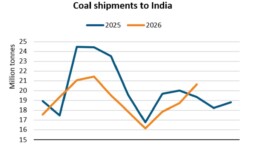
Coal shipments to India drop 7%, but limited recovery may lie ahead "Between January and October, coal shipments to India dropped 7% y/y due to the…
November 9, 2026
Hapag-Lloyd marks 20 years in South Africa and targets further growth
South Africa has become a cornerstone of Hapag-Lloyd's business in Africa Hapag-Lloyd surpasses 1 million TEU in Africa for the first time in its…
Subscribe to our newsletter!
if you dont want to swim alone in the ocean of news, sign up for the newsletter, and you will receive daily all the important news of world shipping!
Design & Development by P.KAN.DESIGNER
© 2026 Cyprus Shipping News. All rights reserved
Design & Development by P.KAN.DESIGNER
© 2026 Cyprus Shipping News. All rights reserved