

COVID steered shipping markets in 2000-2022. Geopolitics has steered markets ever since — and future war effects on ocean trade could be even more extreme than they are today.
Russia’s invasion of Ukraine rerouted crude oil, refined products, LNG, coal and grain trades. The Israel-Hamas war spawned attacks by Houthi rebels on vessels in the Red Sea, which have rerouted container ships, LNG carriers, liquefied petroleum gas (LPG) ships and, to an growing extent, refined product tankers.
The Middle East war could grow into a regional conflict that affects tanker traffic through the Strait of Hormuz. Venezuela could invade Guyana, curbing a promising new source of crude exports. China could invade Taiwan, leading to an economically cataclysmic war between China and the U.S.
And then there’s North Korea, which is increasingly allied with Russia.
The consensus is that a North Korean attack on South Korea and/or Japan is very unlikely — but it’s a known threat, definitely not a “black swan.” North Korea has fired missiles over Japan and North Korea’s state media said last Tuesday that the country’s leader, Kim Jong Un, no longer seeks reunification with South Korea and wants to subjugate its neighbor, through nuclear war if necessary.
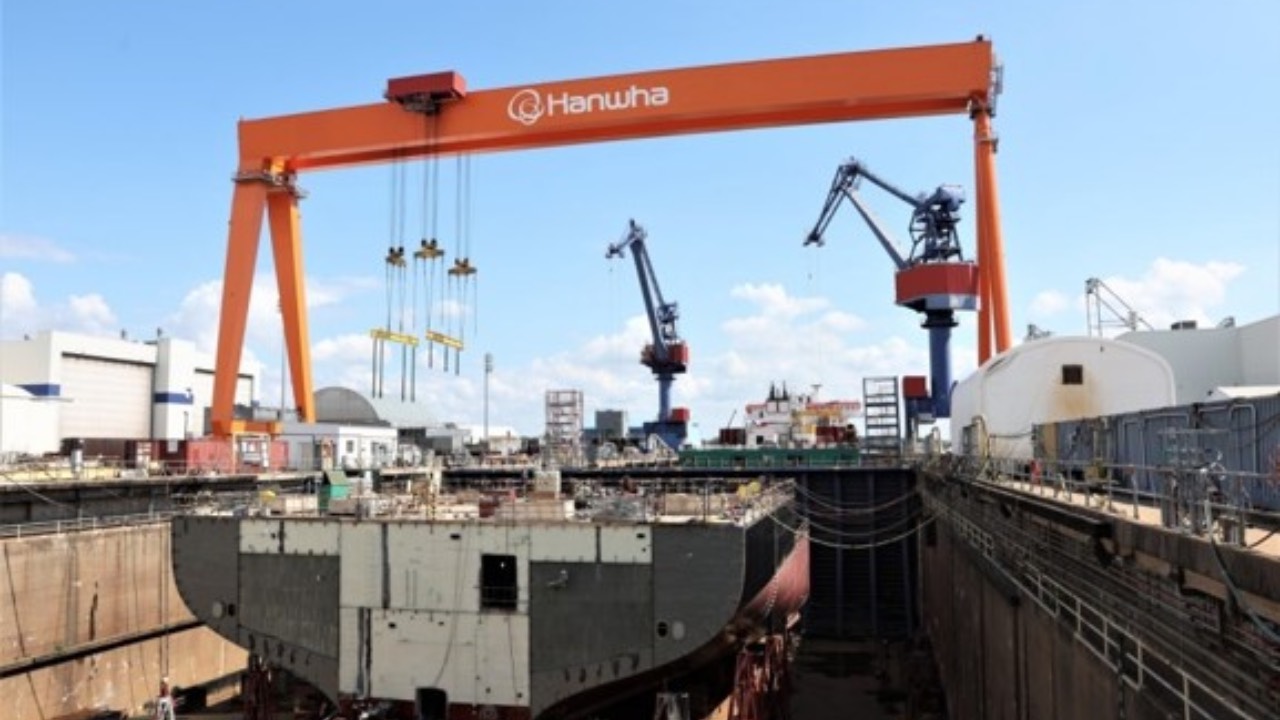
A war in the region would be highly material to ocean shipping. South Korea and Japan are major exporters of goods to the U.S., and 40% of the world’s shipbuilding production is in those two countries — with almost all of the other yard capacity in China.
Warning on ‘decision to go to war’
A new warning has been issued by two highly regarded experts on North Korea: Robert Carlin, a former CIA and State Department lead analyst on North Korea, and nuclear scientist Siegfried Hecker.
“The situation on the Korean Peninsula is more dangerous than it has been at any time since early June 1950,” they wrote. “We believe Kim Jong Un has made a strategic decision to go to war.” They maintained that Western policymakers’ belief that North Korea would not dare to attack is “a grievous failure of imagination that could be leading to a disaster.”
“North Korea has a large nuclear arsenal, by our estimate, of potentially 50 or 60 warheads deliverable on missiles that can reach all of South Korea, virtually all of Japan (including Okinawa) and Guam. [Kim’s] recent words and actions point toward the prospects of a military solution using that arsenal.”
The New York Times and The Washington Post recently highlighted Carlin and Hecker’s warning. The New York Times noted that nuclear threats from North Korea are intensifying “while the world is preoccupied with other wars.”
South Korea and Japan’s share of US imports
According to Census Bureau data, the U.S. imported 7.46 million metric tons of containerized goods from South Korea in 2023, or 4.2% of total U.S. seaborne containerized imports. Last year’s U.S. imports from South Korea were valued at $51.3 billion or 5.7% of total value.
America’s imports from South Korea were led by motor vehicles, vehicle parts, electrical equipment and components, household appliances, chemical products and general-purpose machinery.
Imports from Japan totaled 4.47 million tons (2.5% of the total) in 2023, valued at $53.8 billion (5.9% of total import value).
Topping the U.S. import list from Japan were vehicle parts, chemical products, farm and construction machinery, engines, turbines, power transmission equipment, and electrical equipment and components.
South Korea and Japan’s share of shipbuilding
The hypothetical threat to shipbuilding is an even bigger variable for the broader shipping industry than the risk to seaborne goods volumes.
A war in the region that affected yard output would limit new capacity for ocean transport, supporting higher future freight rates.
According to Clarksons Research Services’ annual shipbuilding review, South Korea accounted for 26% of global newbuilding tonnage delivered last year. Japan accounted for 14%. China led the market by far, delivering 51% of new tonnage in 2023, with remaining countries’ yards delivering just 9%.
South Korea dominated LNG carrier deliveries in 2023, accounting for 83% tonnage. South Korean yards delivered 39% of tanker newbuilding tonnage, 33% of dry bulk tonnage and 29% of container-ship tonnage.
Clarksons expects South Korean yard output to increase this year, with Japan’s to increase by a lesser extent and Chinese output to remain stable.
In terms of new orders placed in 2023, 60% of contracted tonnage went to China, 24% to South Korea, 11% to Japan, and 5% to other countries.
Source: Freight Waves by Greg Miller



Related News.

Cyprus Maritime Innovation takes Centre Stage at SMM Hamburg 2026
Underscoring its expanding role as a premier international hub for cutting-edge maritime technology and sustainable shipping, the Republic of Cyprus…

Trump seeks to refill US oil reserve with Venezuela deal but faces long delay
U.S. President Donald Trump said on the 30th (local time) that he would refill the U.S. Strategic Petroleum Reserve, which has been depleted with…
US Navy Official visits South Korean Shipyards in private
With U.S. President Donald Trump pushing a plan to allow overseas construction of U.S. warships, attention is focusing on whether the building of…
SES and De Boer Marine expand collaboration with FlexMaritime deployment across Global Markets
SES, a leading space solutions company, and De Boer Marine, a leading provider of top-quality marine equipment and maritime connectivity services,…

New ESG guidance to help maritime industry turn sustainability into commercial advantage
New framework helps shipowners and ports align ESG strategy with access to capital, charterer expectations and long-term asset value. Maritime…

Britannia P&I Club analysis finds four in five crew deaths linked to illness rather than accidents
New report highlights cardiovascular disease as leading cause of fatalities and raises concerns over mental health risks among younger seafarers.…

The Swedish Club launches new Loss Prevention podcast, Knot Another Lesson
The Swedish Club has launched Knot Another Lesson, a new podcast exploring the practical lessons, emerging risks and operational challenges shaping…

Lloyd’s Register appoints Jens Grunenberg as Senior Representative for Germany
Lloyd’s Register has appointed Jens Grunenberg as its Senior Representative for Germany, effective 1 September. Based in Hamburg, Grunenberg will…

Indian Register of Shipping sets sights on Hamburg for European Expansion
Indian Register of Shipping, a leading international classification society and full member of the International Association of Classification…
MOL completes Merger of 6 Ship Management Companies
Unifying Management of Over 200 Vessels and Strengthening Safety Mitsui O.S.K. Lines, announced that it has completed the integration of the MOL…
Subscribe to our newsletter!
if you dont want to swim alone in the ocean of news, sign up for the newsletter, and you will receive daily all the important news of world shipping!
