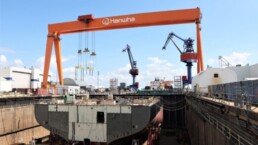

With U.S. President Donald Trump pushing a plan to allow overseas construction of U.S. warships, attention is focusing on whether the building of U.S. naval vessels in South Korea will become a reality
A key figure from the U.S. Department of the Navy, overseeing the construction of the next-generation fleet and the reconstruction of the shipbuilding industry, reportedly visited South Korea in private and toured major domestic shipyards. With U.S. President Donald Trump pushing to allow the overseas construction of U.S. warships, attention is drawn to whether the construction of U.S. warships in South Korea will become reality.
According to the industry on Aug. 31, a delegation led by Richard Breckenridge, Senior Advisor for Shipbuilding at the U.S. Department of the Navy, visited the business sites of major domestic shipbuilders such as Hanwha Ocean, HD Hyundai Heavy Industries, and SK oceanplant last week. The delegation reportedly toured the core business sites of each company, examining from various angles whether they possess the production capacity and technology to respond to the demands of the U.S. Navy.
Senior Advisor Breckenridge is a retired U.S. Navy vice admiral who served as a nuclear submarine commander, Deputy Commander of the U.S. Fleet Forces Command, and vice president at defense company Northrop Grumman, making him a high-ranking working-level official in the field of warship construction and shipbuilding policy. He currently reports directly to the Secretary of the Navy, overseeing practical affairs such as overall warship construction policy for the U.S. Navy, simplification of procurement procedures, and reconstruction of shipbuilding infrastructure.
This visit took place immediately after the announcement of the National Security Presidential Memorandum on ‘Rebuilding the U.S. Navy and Shipbuilding Industry Base’ signed by President Donald Trump. President Trump granted a special exemption allowing foreign shipbuilders that invest in U.S. shipyards and create local employment to build up to 2 initial vessels at their parent company’s shipyard in their home country. Subsequent additional ships are, in principle, to be built locally in the United States. This is an expansion and application of the ‘Finland Model,’ which was utilized during the introduction of the U.S. Coast Guard’s icebreakers, to Navy warships. The targets for overseas construction are 3 types: surface combatants capable of anti-submarine and surface warfare, oil tankers for at-sea cargo replenishment, and roll-on/roll-off cargo ships.
Trump has repeatedly mentioned South Korea as the optimal partner in the field of warship construction. Following his inquiry to President Lee Jae-myung at the Group of Seven (G7) summit in June, asking, “Can you quickly build 10 U.S. warships?”, he also revealed plans to utilize overseas shipyards at the North Atlantic Treaty Organization (NATO) summit and the Defense and Innovation Summit in July. The U.S. government already sent a Request for Information (RFI) regarding combat ships and oilers to 3 domestic shipbuilders last month.
The domestic shipbuilding industry is also accelerating its entry into the massive U.S. warship market. Hanwha, which acquired Philly Shipyard, is also pursuing the acquisition of Austal USA, which builds small surface combatants and logistics support ships for the U.S. Navy. HD Hyundai Heavy Industries recently established ‘HD Hyundai USA’ and began preliminary work to acquire local shipyards. SK oceanplant has signed a Master Ship Repair Agreement (MSRA), a qualification to participate in the U.S. Navy’s maintenance, repair, and overhaul (MRO) business, and is seeking to enter the lower defense supply chain, such as manufacturing warship blocks.
The direct tour of South Korean shipyard sites by a key figure from the U.S. Department of the Navy is interpreted as a practical move to gauge the actual field application of the Finland Model, such as ‘allowing the construction of 2 ships in the home country.’ However, there are numerous obstacles before it leads to actual new warship construction contracts. Congressional approval and budget allocation are essential to proceed with the overseas construction of warships, and fierce opposition from the local U.S. shipbuilding industry must also be overcome. Immediately after the announcement of Trump’s memorandum, the Shipbuilders Council of America (SCA) criticized, “The Navy’s attempt to rely on foreign shipyards is merely a short-term prescription and will weaken the investment will of U.S. shipbuilders.”
Source:Business Korea



Related News.

Hong Kong Global Maritime Trade Summit to return for third edition
The International Chamber of Shipping, in collaboration with the Transport and Logistics Bureau of the Government of Hong Kong and the Hong Kong…

Appetite for US crude oil exports climbs despite high freight
South Korea tops US crude destinations at 568,600 b/d VLCC rates to Asia double, closing arbitrage window European refining margins…
Shipping stocks Rally as Hormuz Traffic plunges 75%
Ship traffic through the Strait of Hormuz — a critical chokepoint handling about 20% of global crude oil and liquefied natural gas shipments — has…
Diana Shipping announces Time Charter Contract for m/v G P Zafirakis with Classic Maritime
Diana Shipping, a global shipping company specializing in the ownership and bareboat charter-in of dry bulk vessels, announced that, through a…
New IMO ESP Code framework for Remote Inspection Techniques
The International Maritime Organisation, through Resolution MSC.584(111) , has adopted amendments to the International Code on the Enhanced…

ABS opens Offshore & Marine Support Center in Bergen
ABS has expanded its capabilities in the Norwegian maritime market with the opening of a cutting-edge support center in Bergen, bringing advanced…
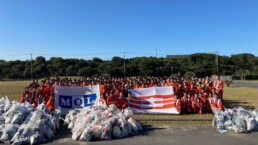
MOL holds giant step memorial ceremony and beach cleanup at Kashima Coast
Memorial and Reflection 20 Years After the Accident: Learning from the Past to Foster an Even Stronger Safety Culture Mitsui O.S.K. Lines, announced…

KEZAD-based Arabian Gulf Steel Industries achieves lowest verified Carbon Footprint for Rebar
CARES UK verified Environmental Product Declaration confirms 139 kg CO₂e per tonne for rebar produced at AGSI’s KEZAD Abu Dhabi facility Arabian…
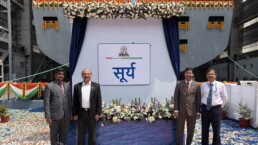
Indian Register of Shipping announces launch of first fleet support ship INS Surya
Indian Register of Shipping continues to strengthen its role in supporting the Indian Navy and India’s naval shipbuilding capabilities through the…

VLCCs Climbing the Record Charts
LR2 The TC1 75kt MEG/Japan index decreased by only a single point this week to WS928. The corresponding Baltic round-trip TCE fell by $2,000 to…
Subscribe to our newsletter!
if you dont want to swim alone in the ocean of news, sign up for the newsletter, and you will receive daily all the important news of world shipping!
