Red Sea shipping slumps after US airstrikes in Yemen trigger retaliation fears
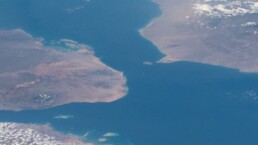

Commercial shipping entering the Bab al-Mandab Strait to exit or transit the Red Sea slumped sharply early Jan. 12, after major shipping bodies urged operators to avoid the Red Sea for up to 72 hours amid risks of retaliatory attacks by Houthi rebels in Yemen following US-led airstrikes overnight.
By 1230 GMT, 20 commercial ships had entered the narrow waterway that connects the Red Sea and the Gulf of Aden, down from an average of 38 commercial ships over the same period in the four preceding days, according to S&P Global Commodities at Sea.
Bimco, whose members cover 62% of the world’s tonnage, advised its members to halt Red Sea transit for up to 72 hours as a result of the US strikes and the potential for wider escalation. Intertanko, the International Association of Independent Tanker Owners, also recommended its members halt Red Sea transit for up to 24 hours.
Danish tanker company Torm said it was halting all transit through the southern Red Sea until further notice, and a number of tankers headed toward the Bab el-Mandab Strait changed direction to avoid the Red Sea route, CAS data showed.
As of 1700 GMT, however, there were still more than 290 commercial ships still in transit or underway in the Red Sea and Suez Canal waterways, of which 125 were oil, chemical, LNG or LPG tankers, according to S&P Global data.
Brent crude futures jumped by over 4% to hit $80.76/b in early European trading, leading a broad uptick in commodities, as traders weighed the increased risks to shipping in the Red Sea as officials from both sides exchanged threats, and fears escalated of a conflict in the Middle East disrupting trade flows from a region providing 60% of the world’s seaborne crude.
The Houthis vowed that US and UK strikes on their positions in Yemen will not go without “punishment or retaliation,” while US President Joe Biden said the US “will not hesitate” to order further military action if necessary.
Broader threat
The US-led strikes also follow the Iranian seizure of a tanker loaded with Iraqi crude in the Gulf of Oman in a separate retaliatory move against the impounding of the same tanker last year by the US for carrying sanctioned Iranian crude.
In a BBC radio interview, James Heappey, the UK armed forces minister, defended the decision to escalate hostilities in the Red Sea and warned “the world cannot be held to ransom with the Houthis seeking to deny the movement of commercial shipping.”
Despite the rally in commodity prices, some market participants in the tanker industry in Asia expressed relief with “extreme caution” after the strikes on Houthi fighters in the hope this would trigger a respite from the attacks on shipping. However, a chartering source in Tokyo said there was a genuine risk of escalation, which could further threaten shipping lanes. Japan is a regular buyer of naphtha from the Red Sea region.
The US government has tracked 27 attacks on commercial shipping in the Red Sea, forcing more than 2,000 ships to divert voyages thousands of miles, Biden said Jan. 11.
Despite the US-led strikes, British maritime security firm Ambrey said it expects the Houthi threat to shipping to extend beyond the areas highlighted by the Bimco and Intertanko given their military capabilities, adding threats are expected to last for “several days at least.”
“Though the Houthi capability is likely to have been significantly degraded, Ambrey assesses that attacks by the Houthis on merchant shipping are highly likely to continue and broaden,” it said in a note.
Shipbroker BRS said it now expects many shipowners will likely wait for 72 before committing to costly reroutings.
“Although today’s development represents an escalation, I still do not believe that it will lead to the mass rerouting of tankers,” BRS’ head of research, Andrew Wilson, said. “I think the market is in a wait-and-see mode. If there is a further escalation during this time, then we could see rerouting early next week. On the contrary, if there is no further action from the Houthis, then traffic could once again resume next week.”
Risk premium
Shipping transiting the Red Sea had dropped by more than half over the second half of December, data from S&P Global shows. Container shipping has been most affected, with the longer voyage around the Cape of Good Hope boosting freight costs and displacing marine fuel demand.
The potentially higher costs of transporting commodities was not restricted to freight alone. One of the charterers reiterated that the additional war risk premium has already risen by six to 10 times since early October for tankers passing through the Gulf of Aden, depending on the value and size of the ship.
All tankers on Persian Gulf-Europe routes “definitely” have an option to move via the Cape of Good Hope, though it has been scarcely exercised so far, a source with one tanker owner said.
Long Range, or LR, ships moving via the Cape of Good Hope can command a premium of up to $1 million over Suez Canal voyages, although for owners, around half of this is offset with savings on canal fees, which have increased from this year.
Platts, part of S&P Global Commodity Insights, assessed East of Suez benchmark for clean LR1 tankers on the Persian Gulf-North Asia routes w3 higher day on day, with Japan deliveries at w190, while Suezmaxes were unchanged day on day at w88 on the Persian Gulf-UK Continent route.
Source: Platts



Related News.

RINA’s Hellenic Technical Committee puts energy-efficient newbuilding design and AI in focus
Project Mermaid, battery integration and practical AI applications highlight opportunities for more efficient ship design and fleet operations…
From mine to market – NORDEN connects Comilog’s manganese ore with global markets
NORDEN’s dedicated transhipment operation in Gabon, run under a long term contract with long-standing customer Comilog, has loaded more than 54…
Oldendorff reflags two capesize vessels to Germany
Oldendorff Carriers is reflagging two of its Capesize bulk carriers to Germany, underlining the company’s long standing ties to the country and its…

AskChief surpasses 100-vessel milestone in under a year and opens its specialised maritime AI to the wider market
Putting each company’s own knowledge to work for maritime Technical and HSQE teams. AskChief, Specialised AI for maritime Technical and HSQE…

Dalian Maritime University’s Yu Jiajia receive 2027 IMO Gender Equality Award
From the bridge to the classroom, Ms Yu has helped build a more inclusive maritime sector in China, serving as a role model for the global maritime…
“K” LINE releases video update on forecasts for FY2026 and progress of the medium-term management plan
Kawasaki Kisen Kaisha, has released a video on its official website explaining its forecasts for FY2026 and progress of its Medium-Term Management…
 …

MOL and MOL CAREER sign 3-way deal with Nagasaki Prefecture to promote recruitment and retention of foreign workers
Mitsui O.S.K. Lines, and MOL CAREER, have entered into a tripartite partnership agreement with Nagasaki Prefecture to promote the revitalization of…
Hapag-Lloyd completes acquisition of 25% stake in APM Terminals Maasvlakte II
Transaction successfully completed following antitrust approval Investment strengthens Hapag-Lloyd’s terminal portfolio and position in Rotterdam…
11th chainPORT annual meeting at Tanger Med Focuses on scaling AI in ports
Representatives from leading ports around the world gathered in Tangier, Morocco, on 29 and 30 October for the 11th chainPORT Annual Meeting, hosted…
Subscribe to our newsletter!
if you dont want to swim alone in the ocean of news, sign up for the newsletter, and you will receive daily all the important news of world shipping!
