Weak cargo demand plagues liner division of NYK


Qualitative Information on Quarterly Results
(1)Review of Operating Results
In the first six months of the fiscal year ending March 31, 2024 (April 1, 2023 to September 30, 2023), consolidated revenues amounted to ¥1,168.3 billion (decreased by ¥197.5 billion compared to the first six months of the previous fiscal year), operating profit amounted to ¥98.7 billion (decreased by ¥64.5 billion), recurring profit amounted to ¥159.2 billion (decreased by ¥606.0 billion), profit attributable to owners of parent amounted to ¥113.3 billion (decreased by ¥592.6 billion).
Equity in earnings of unconsolidated subsidiaries and affiliates of ¥59.1 billion in non-operating income was recorded. Within this amount, equity in earnings of affiliates from OCEAN NETWORK EXPRESS PTE. LTD. (ONE), our equity-method affiliate, was ¥37.3 billion.
Changes in the average exchange rate between the U.S. dollar and yen as well as the average bunker oil price during the first six months of the current and previous fiscal years are shown in the following tables.
Overview by Business Segment
Business segment information for the six months ended September 30, 2023 (April 1, 2023 to September 30, 2023) is as follows.
From the first quarter of the current consolidated fiscal year, in order to more appropriately reflect the business performance by reporting segment, the method used to calculate interest affiliated with each segment has been changed. This change will have no impact on the revenue of each segment. Also, recurring profit for the cumulative period through the second quarter of the previous consolidated fiscal year has been calculated and disclosed based on the revised calculation method.
Liner Trade
In the container shipping division, despite summer typically being the period of seasonally strong demand, cargo demand was weak due to the impact of inflation and higher interest rates mainly in the United States and Europe and high inventories in North America. At the same time, shipping capacity increased following the completion of new ships, and as a result, market levels were lower compared to the same period last year. At ONE, freight rates and profit levels fell year on year.
At the terminals in Japan, handling volumes increased year on year following the normalization of the containership schedules. At the overseas terminals, handling volumes declined due to weaker cargo volumes compared to the same period last year.
As a result of the above, profit declined on higher revenue compared to the same period last year in the overall Liner Trade Business.
In addition, an extraordinary income was recorded following the sale of all shares of an affiliate at a terminal on the west coast of North America at the end of September.
Air Cargo Transportation
In the Air Cargo Transportation Business, along with lower cargo volumes compared to the same period last year, the supply of space increased following the resumption of international passenger flights. These factors led to looser supply-and-demand conditions, causing freight rate levels to fall year on year. As a result of the above, profit declined on lower revenue compared to the same period last year in the Air Cargo Transportation Business.
Logistics
In the air freight forwarding business, while the supply of space increased following the restoration of international passenger flights, demand was weak, and cargo volumes fell compared to the same period last year. Although efforts were made to reduce procurement prices through agile procurement, handling volumes and profit levels greatly declined compared to the same period last year.
In the ocean freight forwarding business, cargo volumes were weak mainly in the services within Asia and long-distance services from Asia, and both handling volumes and profit levels declined compared to the same period last year.
In the contract logistics business, the results were steady due to strong cargo volumes in the e- commerce, healthcare and automotive industries within Europe and firm demand for general consumer goods within North America.
As a result of the above, profit decreased on lower revenue compared to the same period last year in the overall Logistics Business.
Bulk Shipping
In the automotive business division, while the port congestion caused by labor shortages and restrictions of transiting the Panama Canal remained ongoing, recovering automobile production volumes and firm vehicle sales demand caused supply-and-demand conditions to tighten. Within this business environment, vessel utilization was increased through efficient deployment plans, and the number of vehicles transported was higher compared to the same period last year. In the auto logistics business, handling volumes increased year on year in Europe, Mexico and parts of Southeast Asia. Also, efforts were made to expand the business in growth markets, including a new investment in a terminal business in Indonesia.
In the dry bulk business division, the Capesize market trended slightly below the same period last year due to the impact of the economic slowdown in China. In the Panamax and smaller segments, although shipment volumes of coal and grain were firm, markets trended below the high levels recorded during the same period last year. Within this business environment, efforts were made to reduce the risk of market volatility through the use of futures contracts, stabilize earnings through the acquisition of long-term contracts and reduce costs through efficient operations.
In the energy business division, the VLCC (Very Large Crude Carrier) market softened from July after entering the seasonal period of weak demand and the decision by major oil producing countries to cut production. However, supported by the strong levels during the first quarter, markets trended at levels above the same period last year. In the petrochemical tanker market, the trade patterns changed due to the impact of the ongoing situation in Russia and Ukraine, and the longer shipping distances caused supply-and-demand conditions to tighten. In the VLGC (Very Large LPG Carrier) segment, the increased long-distance shipments from the United States to Asia, as well as the impact of transit restrictions at the Panama Canal, caused supply-and-demand conditions to tighten. The market recorded record highs in September and trended at levels greatly exceeding the same period last year. In the LNG carrier segment, the results were steady on support from the long-term contracts that generate stable earnings. Also, in the offshore business, FPSO (Floating, Production, Storage and Offloading), drill ships and shuttle tankers were steady.
As a result of the above, both profit and revenue declined slightly compared to the same period last year in the overall Bulk Shipping Business.
Full ReportSource: NYK



Related News.

Cyprus Maritime Innovation takes Centre Stage at SMM Hamburg 2026
Underscoring its expanding role as a premier international hub for cutting-edge maritime technology and sustainable shipping, the Republic of Cyprus…

Trump seeks to refill US oil reserve with Venezuela deal but faces long delay
U.S. President Donald Trump said on the 30th (local time) that he would refill the U.S. Strategic Petroleum Reserve, which has been depleted with…
US Navy Official visits South Korean Shipyards in private
With U.S. President Donald Trump pushing a plan to allow overseas construction of U.S. warships, attention is focusing on whether the building of…

SES and De Boer Marine expand collaboration with FlexMaritime deployment across Global Markets
SES, a leading space solutions company, and De Boer Marine, a leading provider of top-quality marine equipment and maritime connectivity services,…

New ESG guidance to help maritime industry turn sustainability into commercial advantage
New framework helps shipowners and ports align ESG strategy with access to capital, charterer expectations and long-term asset value. Maritime…

Britannia P&I Club analysis finds four in five crew deaths linked to illness rather than accidents
New report highlights cardiovascular disease as leading cause of fatalities and raises concerns over mental health risks among younger seafarers.…
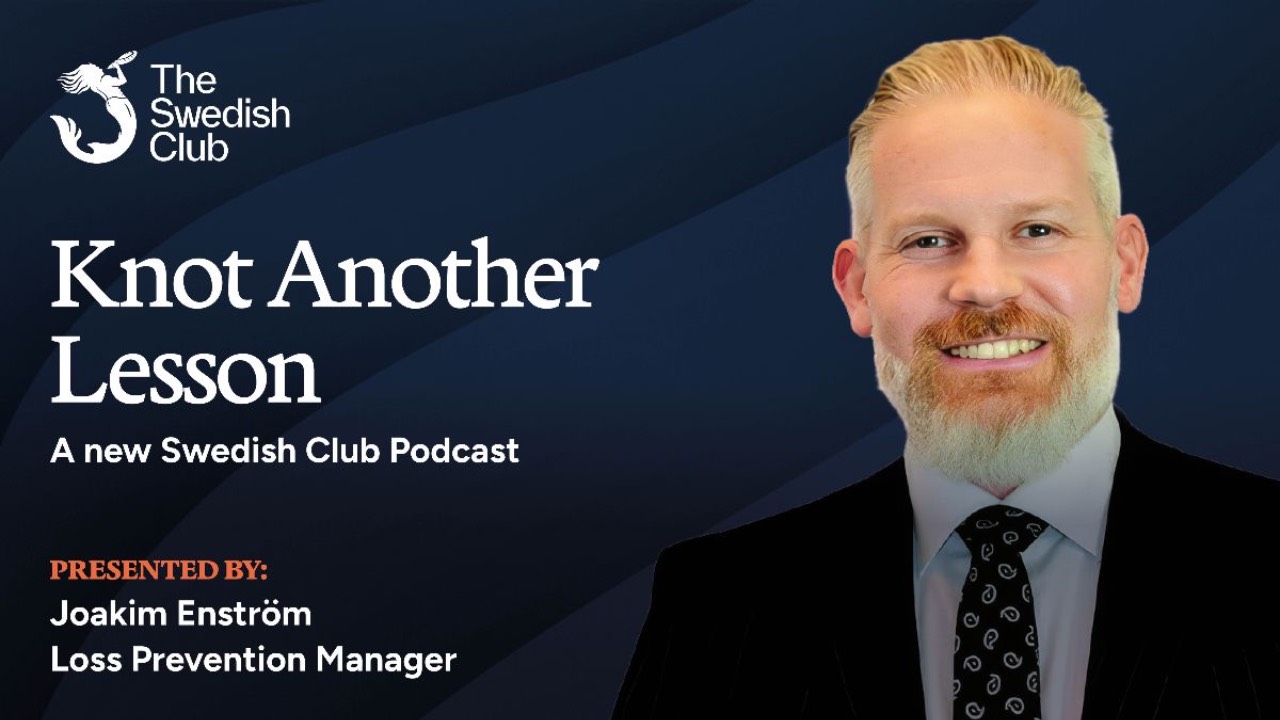
The Swedish Club launches new Loss Prevention podcast, Knot Another Lesson
The Swedish Club has launched Knot Another Lesson, a new podcast exploring the practical lessons, emerging risks and operational challenges shaping…

Lloyd’s Register appoints Jens Grunenberg as Senior Representative for Germany
Lloyd’s Register has appointed Jens Grunenberg as its Senior Representative for Germany, effective 1 September. Based in Hamburg, Grunenberg will…

Indian Register of Shipping sets sights on Hamburg for European Expansion
Indian Register of Shipping, a leading international classification society and full member of the International Association of Classification…
MOL completes Merger of 6 Ship Management Companies
Unifying Management of Over 200 Vessels and Strengthening Safety Mitsui O.S.K. Lines, announced that it has completed the integration of the MOL…
Subscribe to our newsletter!
if you dont want to swim alone in the ocean of news, sign up for the newsletter, and you will receive daily all the important news of world shipping!
