Unlocking opportunities in derivative markets

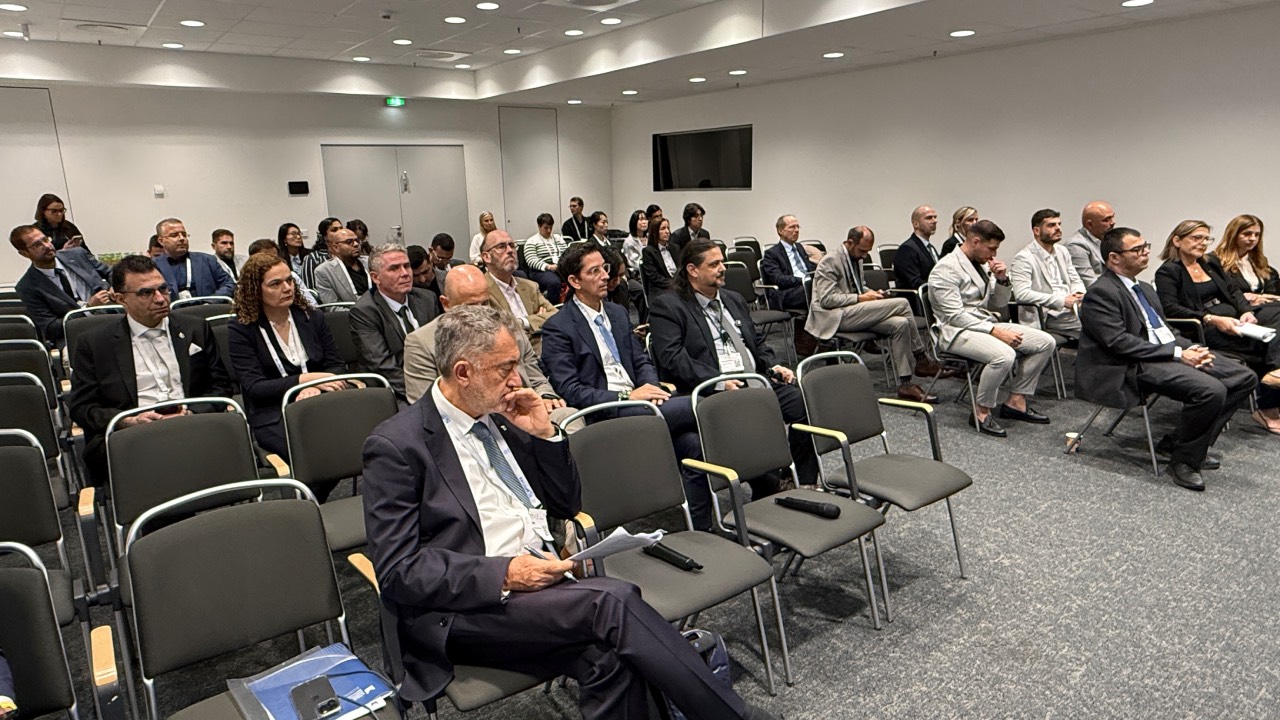
The event, supported by the FFA Brokers Association (FFABA), hosted a panel discussion led by John Banaskiewicz, chairman of the FFABA, digging into the current state of the FFA market.
Kicking off, Vassilis Karakouladis, from Clarksons Securities, addressed one of the prevailing misconceptions regarding FFAs. He emphasised the importance of recognising FFAs as derivative products and their fundamental role in the market:
“It’s complete nonsense to be honest. What do we have is derivative products. A derivative, as everybody knows, is an instrument and a security which always trades in multiples, value-wise, on the underlying asset that it represents in trade, either premiums or discounts. That’s the nature of derivatives.”
Karakouladis went on to explain how the inherent volatility of the spot market can be leveraged to create opportunities through the use of derivative products. He stressed that FFAs offer a valuable tool for owners, traders, charterers, and operators, promoting increased liquidity in the market: “It’s an opportunity for owners, an opportunity for traders and charterers and operators. I think owners should play ball because FFAs are the tool that brings in more operators in the business and more liquidity from operators – which is only good for owners.
“The liquidity created by the FFA curve brings in smaller or bigger operators in more volumes on a daily basis is what gives opportunities,” he said.
Funds presence
Banaskiewicz provided further insights into the evolving landscape of the FFA market, noting that an increasing percentage of FFA players in the dry cargo sector do not have ships, identifying them as funds: “We estimate today maybe 30%-35% of the FFA players in dry don’t have ships. They don’t operate; they are just different types of funds.”
Joanna Buick, the head of trading and analytics at Berge Bulk, added her perspective on the impact of funds in the market. She recognised the value of increased liquidity that funds bring and emphasised the ongoing financialisation of commodity markets:
Markets have become a lot more financialised, and I think it’s just a phase of natural evolution for commodity markets.
“The size of the financial market is relatively small in terms of the ratio of financial to physical, so I think we’re not to the stage yet where we can see that the market is really dominated by funds and financial players.”
Buick also highlighted a change in market dynamics due to the involvement of funds, with increased volatility and tighter trading ranges. She framed these changes as a natural evolution of the market: “One thing that I can say is that the involvement of the funds has changed the nature of the market. There’s a lot more intraday volatility, but volatility has dropped off on the whole, and there are tighter ranges for the most part throughout this year, as compared with previous years. I think while the funds are a good thing for the market, we’ve sort of adjusted the way we trade, and we turn around positions a lot more. It has changed the way that we’ve traded, not for the worse, I just see it as a natural evolution.”
Questions of costs
Banaskiewicz raised another critical point concerning the perceived costs associated with FFA trading. He acknowledged that some argue it may be more cost-effective to fix a ship’s charter in the physical market rather than employ hedging strategies through FFAs: “Often people say the costs are high to trade, and there are some sort of barriers, particularly with margins for companies. Some people will say to me, it’s cheaper to fix the ship for six months or 12 months because they don’t have to pay it, instead of putting a hedge on paper.”
Mels Boer, freight and options trader at ETG Commodities, countered this by emphasising the importance of cost-benefit analysis and risk management. He said that costs are relative and that the key is to ensure that they can be covered while achieving profits. Boer also stressed the value of liquidity that derivatives bring and the ability to manage risks effectively: “For me, risk management is very important. As I do it purely on a speculative basis, being able to measure risk is extremely important.
Owners also have unlimited risks in their books by owning assets that they can’t sell within the next 48 hours. From that point of view, either protect yourself with options or futures, or if you want to speculate, buy some upsides. I think derivatives are very good because they enable you to have liquidity. You can quickly go in and out.
“Derivatives, if properly used, can be very good. But you also have to know where the risks are not manageable,” he concluded
Source: Baltic Exchange



Related News.
Cyprus Maritime Innovation takes Centre Stage at SMM Hamburg 2026
Underscoring its expanding role as a premier international hub for cutting-edge maritime technology and sustainable shipping, the Republic of Cyprus…

Trump seeks to refill US oil reserve with Venezuela deal but faces long delay
U.S. President Donald Trump said on the 30th (local time) that he would refill the U.S. Strategic Petroleum Reserve, which has been depleted with…

US Navy Official visits South Korean Shipyards in private
With U.S. President Donald Trump pushing a plan to allow overseas construction of U.S. warships, attention is focusing on whether the building of…

SES and De Boer Marine expand collaboration with FlexMaritime deployment across Global Markets
SES, a leading space solutions company, and De Boer Marine, a leading provider of top-quality marine equipment and maritime connectivity services,…
New ESG guidance to help maritime industry turn sustainability into commercial advantage
New framework helps shipowners and ports align ESG strategy with access to capital, charterer expectations and long-term asset value. Maritime…

Britannia P&I Club analysis finds four in five crew deaths linked to illness rather than accidents
New report highlights cardiovascular disease as leading cause of fatalities and raises concerns over mental health risks among younger seafarers.…
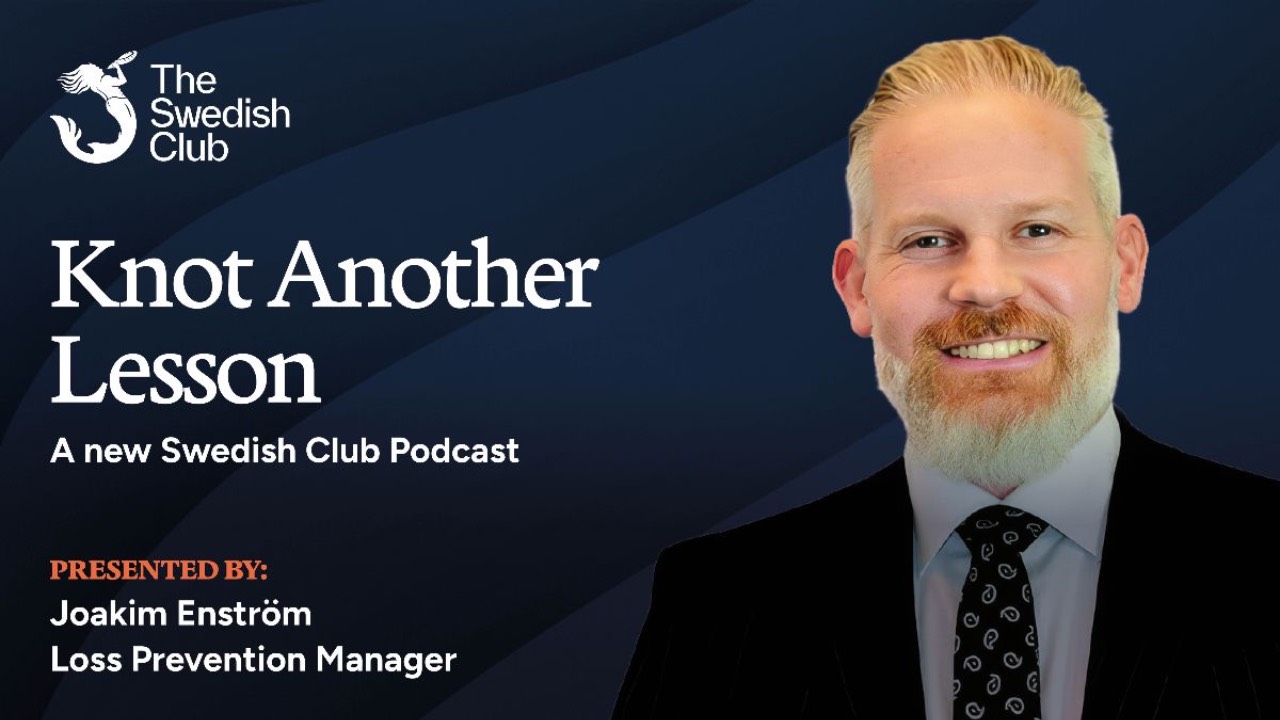
The Swedish Club launches new Loss Prevention podcast, Knot Another Lesson
The Swedish Club has launched Knot Another Lesson, a new podcast exploring the practical lessons, emerging risks and operational challenges shaping…

Lloyd’s Register appoints Jens Grunenberg as Senior Representative for Germany
Lloyd’s Register has appointed Jens Grunenberg as its Senior Representative for Germany, effective 1 September. Based in Hamburg, Grunenberg will…
Indian Register of Shipping sets sights on Hamburg for European Expansion
Indian Register of Shipping, a leading international classification society and full member of the International Association of Classification…
MOL completes Merger of 6 Ship Management Companies
Unifying Management of Over 200 Vessels and Strengthening Safety Mitsui O.S.K. Lines, announced that it has completed the integration of the MOL…
Subscribe to our newsletter!
if you dont want to swim alone in the ocean of news, sign up for the newsletter, and you will receive daily all the important news of world shipping!
