Dry Bulk freight rate recovery – The Waiting is the hardest part


At the end of the summer, while sitting at a neighborhood barbeque under the glorious sun, rocker Tom Petty came on over the speakers with the classic song ‘The Waiting’. It was a quote from Janis Joplin that inspired Petty to write the song when she said, “I love being onstage, the rest is just the waiting.” At this point, a very minor dry bulk market epiphany occurred.
While there are, in our view, a number of positive aspects to the supply side of dry bulk shipping that should be very supportive of freight rates, which have improved over the few weeks, macro- economic, geopolitical and regional impacts have kept rates at poor levels for much of 2023. We are optimistic that market conditions will continue to improve, albeit there was little room to get worse, and we may sustain a prolonged cycle of improved dry bulk freight rates in the coming years. However, as Petty once said “the waiting is the hardest part”.
The Good… the Supply Side.
At approximately 7.8%, the dry bulk orderbook as a percentage of the fleet is at a multi-decade lows. This has been driven by poor rates in recent years, which has been offset by some notable, and welcome, higher freight rate periods. However, the modest orderbook has also been driven by steadily increasing shipbuilding material costs. The dearth in ordering, combined with shipyard consolidation, has also reduced the number of active shipyards globally to the lowest since 1999 with average forward cover for shipyards being more than 3.5 years, the highest since the 2008– 09financial crisis. Finally, compliance with emissions regulations (particularly EEXI and CII) over the coming years will likely slow the fleet to reduce emissions and fuel consumption, something that will particularly impact older vessels (62% of the fleet is over 10 years of age, while 24% is over 15 years1). As a result, we hypothesize that older vessels that less competitive relative to emissions standards may be recycled earlier than the historical norm. This is further supported by firm recycle values, which may stay firm as recycled steel is far less carbon intensive than the traditional manufacture of steel. From this supply-side perspective, we continue to believe that owning dry bulkers that are on the water today or due for delivery over the next 12 months is a rather attractive prospect.
The Baltic Investor Indices show this dynamic at work during 2023. When we compare the Baltic Dry Health of Earnings Index (representing the ratio of earnings to running costs over all dry bulk size categories) to the Baltic Dry Residual Value Index (calculated by taking the purchase price of a five-year old dry bulk vessel and deducting the net earnings over a five-year period at current five-year timecharter rates), asset values have shown resilience despite weak rates.
1 Clarksons Shipping Intelligence Network

The two indices have a slight negative correlation of -0.07x meaning asset values have effectively had no relationship to rates this year. In the Cape space, this relationship has a modest positive correlation of 0.28x, meaning asset values have reacted to the low rates, albeit modestly. In the Panamax and Supramax sectors, there are modest negative correlations of -0.24x and -0.29x, respectively, as asset values have been resilient to the weaker freight rates experienced over the summer.
2500 Baltic Dry Health of Earnings Index to Residulal Value Index 2000
1500 1000 500
25000 20000 15000 10000 5000


00 3-Jan 3-Feb 3-Mar 3-Apr 3-May 3-Jun 3-Jul 3-Aug 3-Sep
BDHEI BDRVI
The Questionable… Dry Bulk Demand.
As we have noted before, the variables to dry bulk demand are myriad. There is no game- changing cargo type, no “secret sauce”, and no single technology that appears to be a driver of dry bulk demand in the coming years.
The largest driver of dry bulk demand is China and recent indications from that country have been sluggish at best. China’s slow post-Covid recovery persists and pundits expect a concerted effort by the Politburo to add liquidity to their economy, supporting domestic consumption and real estate. However, no pundits we have heard from anticipate the “shock and awe” of Chinese stimulus of 2008, which still casts a debt shadow over China’s real estate market, while youth unemployment is over 20% and prices are on the precipice of deflation. The population is aging and its current account surplus is 2% indicating weak demand at home2. China may well reach its 5% GDP growth goal, but without liquidity being added to the system by a government that has low indebtedness and can afford it, domestic consumption and demand may falter further. The tragedy in Ukraine is nothing to celebrate, but it could add to grain ton mile demand over the harvest season. The United States, so far, appears to have engineered a “soft-landing” and will have reasonable growth this year with what appears to be moderating inflation. The higher interest rate regime in the US may pause toward the end of 2023 and possibly moderate somewhat in 2024. That being said, appearances can be deceiving and soft landings are a historical rarity and the Federal Reserve sounds hawkish. There is hope that a Eurozone recession may be modest and may show signs of recovery in 2024, but the European Central Bank continues to jawbone the market with a hawkish stance.
The Risks Appear to be Rising, though moderating of late…
The Baltic Dry Residual Risk Index (BDRRI) is the ratio of the residual value of a vessel (calculated by taking the purchase price of a five-year-old dry bulk vessel and deducting the net earnings over a five-year period at current five-year timecharter rates) against the recycling value of the vessel at current market levels. While ship recycling rates are relatively robust and may stay that way (for reasons noted above), freight rates have been rather low for much of the year and BDRII has been rising for much of this year across all sectors.

3500 3000 2500 2000 1500 1000
500
Baltic Dry Residual Risk Indices
Dry Bulk Freight Rate Recovery: How long is “the Waiting”?
With freight rates being low for much of 2023 and asset values relatively robust, buyers of dry bulk assets are seeing more potential in the positive market attributes than perilous ones, and we generally agree. The orderbook is bullish for dry bulk freight rates, as are emissions standards for the freight rate outlook for modern eco-vessels. In addition, while Covid feels to be long in the rear-view mirror, restarting an economy the size of China’s from strict lockdowns (which only ended nine months ago) takes time and signals indicate further liquidity and loosening monetary policy may be on China’s horizon. Some western economies may also be in a looser monetary policy stance at some time in 2024 as well.
If one bought a five-year-old bulker today, across the sectors, with leverage at 70% at “market” amortization and interest levels, the vessel will be operating at just about cash breakeven given today’s rates. If one had purchased earlier in the year, then the vessel would be operating below cash breakeven. This meant buying earlier this year meant paying a higher price, effectively, and that is not for the meek. Even those with lower leverage, operating in 2023 has been very challenging. However, there are positive signs on the horizon, such as the orderbook, which has not been this attractive in more than 20 years. We like the odds of a stronger and more profitable 2024 and 2025, especially as ordering is challenging and newbuild deliveries take time. Nevertheless, the waiting is the hardest part.



Related News.

Beyond Technical Skills: WISTA Cyprus explores the human side of leadership
WISTA Cyprus hosted The Art of Leadership & Emotional Mastery, an interactive workshop held on 15 October at the Alasia Hotel in Limassol,…

The human cost of sending merchant mariners into war zones extends far beyond the immediate danger of missiles and drones. It raises a harder question: who is really protecting the seafarer?
Who protects the seafarer? I have spent much of my professional life at sea. I am a Master Mariner. I have stood on the bridge, made decisions…

Loss of bridge control: Human failure is normal – context is key
When bridge control is lost in a functioning system, it can be easy to blame human error. But accidents rarely happen because of one mistake…

Danish Shipping announces the transport of live animals by sea new rules should improve safety for animals, seafarers and the environment
Revised rules on the transport of live animals by sea are being negotiated in the EU. Danish Shipping wants to ensure good animal welfare,…

Japan’s flawed shipping proposal leaves developing countries adrift
A new analysis by Opportunity Green warns governments of the wide-ranging risks posed by Japan’s proposal at the International Maritime Organization…

Intermodal Report Week 42 2026
Pls find below the Intermodal Report - Week 42 2026 Intermodal Report Week 42 2026

Allied Weekly Market Review Week 42
Pls find below the Allied - Weekly Market Review - Week 42 ALLIED - Weekly Market Report- Week 42
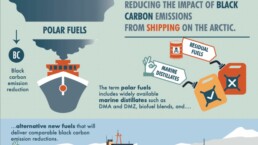
EU Arctic Strategy NGOs welcome EU ambition on on cutting shipping’s Arctic Black Carbon Emissions
Responding to today’s publication of the EU’s Arctic Strategy, which definitively states the EU’s intention to support International Maritime…

The final quarter of 2026 is expected to see softer bauxite flows
Chinese front-loading is expected to have run its course, pointing to softer bauxite flows in 2026 Q4. Global bauxite flows increased by 2.8% y/y…

DP World Foundation and Belewan new container terminal mark groundbreaking of AED 3.7 million school project in Indonesia
Classrooms of Hope initiative expands to Belawan, Medan with a new junior high school designed to provide modern learning facilities and greater…
Subscribe to our newsletter!
if you dont want to swim alone in the ocean of news, sign up for the newsletter, and you will receive daily all the important news of world shipping!
