National and regional policy for green shipping corridors
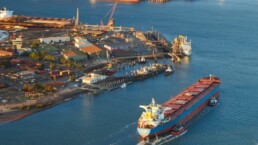
The success of green shipping corridors hinges on focused, timely, and transformative policy action by national governments.
“The single most important objective for governments is to narrow the cost gap associated with scalable, zero-emission technologies – thus unlocking private sector investments.”
Green shipping corridors are approaching their make-or-break moment. In November 2021 at the Conference of the Parties in Glasgow, 21 countries signed the Clydebank Declaration, signalling their intent to promote the development of green shipping corridors – specific shipping routes where the feasibility of zero-emission shipping is catalysed by a combination of public and private actions.
The next couple of years will determine whether they will succeed in their task of accelerating decarbonisation of the shipping sector and building the bridge to the post-2030 compliance regime that should follow from the International Maritime Organization’s revised Greenhouse Gas Strategy. While initiative from the private sector is important, only national governments have the means, and arguably the incentives, to enable this success. The single most important objective for governments is to narrow the cost gap associated with scalable, zero-emission technologies – thus unlocking private sector investments.
The best way to achieve this objective is through subsidies. Direct subsidisation of international shipping through domestic budgets is a relatively novel concept, but there are credible options – many of which build on policies already under development around the world. This insight brief explores the rationale for different subsidies and compares the potential advantages of different policy combinations.
The analysis suggests that governments have real options for action. The political feasibility of these subsidies will depend on how well green corridors align with the broader national objectives, and how well these strategic benefits are captured and communicated in the policy-making process.
Potentially relevant subsidy schemes include fuel subsidies, vessel subsidies, broader industrial transformation support, and research and development funding for the enabling technologies. Each of these can be designed in multiple ways and be combined with others for increased impact. The appropriate choice for any government will likely depend on which policy measures are already under development – particularly given the large commitments governments are making in energy and particularly hydrogen. Smart combinations will also seek to provide a best balance between incentivising fuel production – which may need to serve many markets – and ensuring shipping-specific consumption on the corridor or corridors in question. These policies should also promote the development of new value chains that deliver deep decarbonization as opposed to near-term solutions.
Recently announced, planned or implemented support schemes for hydrogen in many countries create an opportunity for green corridors to tap into existing schemes, rather than advocate for additional subsidies, meaning that policy support could be accessible soon. Early experience with these policies suggests that the lack of demand for hydrogen-based fuels is a major bottleneck, so developing demand-side policies that promote the use of these fuels in shipping could help supply-side policies designed to promote production deliver their intended impact. Combined demand and supply-side support does not automatically translate to a higher bill for the governments, since, ultimately, the total cost gap being filled remains the same. Nonetheless, additional cost efficiency strategies can be considered, such as splitting the funding between the countries along the corridor and encouraging broad value chain action.
Just as green shipping corridors challenge the traditional ways of doing business within the shipping sector, they also require innovative approaches to policymaking. The corridors’ cross-border, cross-sectoral nature calls for countries to set aside the principle of technological neutrality, strengthen collaboration between governmental agencies and across countries, and embrace a participative, proactive, and systems-wide approach to designing and implementing policies.



Related News.

Beyond Technical Skills: WISTA Cyprus explores the human side of leadership
WISTA Cyprus hosted The Art of Leadership & Emotional Mastery, an interactive workshop held on 15 October at the Alasia Hotel in Limassol,…
The human cost of sending merchant mariners into war zones extends far beyond the immediate danger of missiles and drones. It raises a harder question: who is really protecting the seafarer?
Who protects the seafarer? I have spent much of my professional life at sea. I am a Master Mariner. I have stood on the bridge, made decisions…

Loss of bridge control: Human failure is normal – context is key
When bridge control is lost in a functioning system, it can be easy to blame human error. But accidents rarely happen because of one mistake…
Danish Shipping announces the transport of live animals by sea new rules should improve safety for animals, seafarers and the environment
Revised rules on the transport of live animals by sea are being negotiated in the EU. Danish Shipping wants to ensure good animal welfare,…

Japan’s flawed shipping proposal leaves developing countries adrift
A new analysis by Opportunity Green warns governments of the wide-ranging risks posed by Japan’s proposal at the International Maritime Organization…

Intermodal Report Week 42 2026
Pls find below the Intermodal Report - Week 42 2026 Intermodal Report Week 42 2026
Allied Weekly Market Review Week 42
Pls find below the Allied - Weekly Market Review - Week 42 ALLIED - Weekly Market Report- Week 42
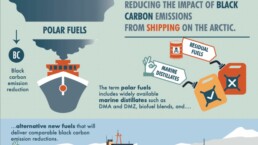
EU Arctic Strategy NGOs welcome EU ambition on on cutting shipping’s Arctic Black Carbon Emissions
Responding to today’s publication of the EU’s Arctic Strategy, which definitively states the EU’s intention to support International Maritime…
The final quarter of 2026 is expected to see softer bauxite flows
Chinese front-loading is expected to have run its course, pointing to softer bauxite flows in 2026 Q4. Global bauxite flows increased by 2.8% y/y…
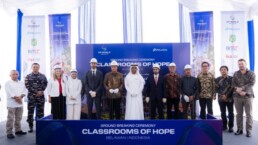
DP World Foundation and Belewan new container terminal mark groundbreaking of AED 3.7 million school project in Indonesia
Classrooms of Hope initiative expands to Belawan, Medan with a new junior high school designed to provide modern learning facilities and greater…
Subscribe to our newsletter!
if you dont want to swim alone in the ocean of news, sign up for the newsletter, and you will receive daily all the important news of world shipping!
